Key Takeaways:
- Understanding the importance of staying updated with regulatory changes.
- Exploring tools and strategies for effective compliance management.
- Recognizing the role of technology in streamlining compliance processes.
Table of Contents
Organizations today operate in a dynamic business environment marked by rapidly evolving laws and regulations. Compliance extends far beyond simply adhering to rules; it encompasses building trust with customers, partners, and regulators. As new regulations emerge and existing ones shift, leaders must be proactive in their commitment to compliance management. The stakes are high: failure to remain compliant can result in steep fines, reputational harm, and lost business opportunities. Staying up to date and leveraging a strong compliance advisory service are foundational strategies for long-term business success.
Organizations that focus on compliance are better equipped to adapt to market changes, avoid unnecessary risks, and demonstrate integrity in their industries. Implementing robust processes and expertise allows businesses to anticipate legislative shifts and respond quickly, keeping their operations aligned with the latest guidelines. Taking a proactive approach, rather than a reactive one, has become a critical differentiator in this highly scrutinized landscape.
The Importance of Timely Compliance Updates
In recent years, regulatory agencies worldwide have ramped up oversight, issuing frequent updates and new rules designed to address developments in data privacy, ESG concerns, cybersecurity, and more. For example, a 2024 Gartner survey found that nearly 90 percent of large organizations are now leveraging compliance management technology, compared with just over half only five years ago. This dramatic shift highlights the necessity of real-time monitoring and rapid response when compliance requirements change. Ignorance of an updated regulation is not an excuse; penalties for non-compliance can include hefty financial losses, operational disruptions, or civil and even criminal liabilities for executives and boards.
Regulations also serve as a signal to the marketplace that an organization values transparency and ethical business practices. Leaders who prioritize timely compliance demonstrate a strong risk management culture that benefits every aspect of their operation, from client relationships to investor confidence. The need for organizations to closely monitor legislative changes has never been greater.
Tools and Strategies for Effective Compliance Management
Establishing an effective compliance program requires a combination of well-defined internal procedures, ongoing education, and transparent communication. Key strategies for fostering a culture of compliance include:
- Regular Training: Organizations must regularly educate employees at all levels on evolving laws, policies, and ethical responsibilities. Interactive, ongoing training ensures staff can recognize potential pitfalls and know how to respond when ethical dilemmas arise.
- Internal Audits: Proactive audits are essential for assessing the efficacy of company protocols, uncovering gaps, and identifying risks before they result in violations. Routine evaluations not only highlight areas for improvement but also provide evidence of diligence to regulators and auditors.
- Clear Communication Channels: Open and accessible reporting systems empower employees to report concerns or suspected violations safely. Fostering a speak-up environment supports early issue mitigation and upholds a culture of transparency.
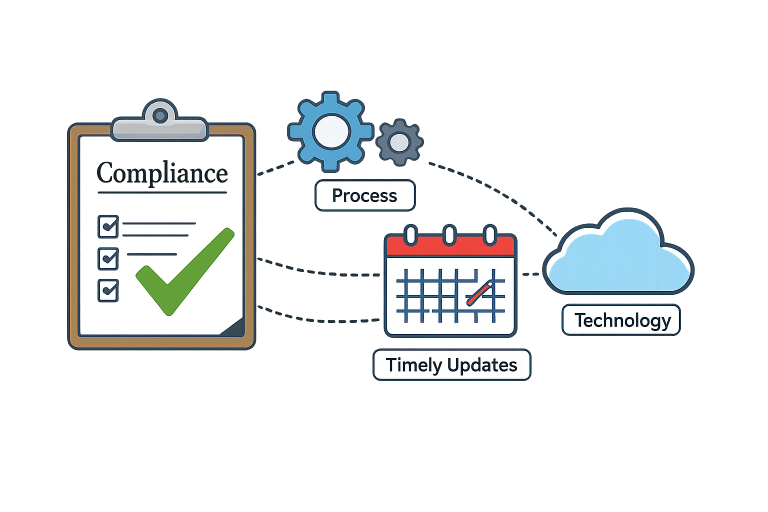
Leveraging Technology in Compliance
Modern compliance demands digital solutions capable of monitoring complex regulatory landscapes in real time. Artificial intelligence (AI) and machine learning tools can scan regulatory feeds, flag relevant changes, and automate risk assessments. Integration of such technologies significantly reduces lag between updates and compliance action, minimizing human error and allowing compliance teams to focus on more strategic initiatives. For example, Wolters Kluwer’s Compliance Intelligence solution illustrates how unified, real-time systems support data-driven decision-making and efficient compliance management across sectors.
Cloud-based platforms further streamline documentation, maintenance, and reporting, making compliance processes more accessible and transparent to both internal stakeholders and external regulators. These advancements underscore the partnership between human expertise and technology, with the most effective compliance programs utilizing both for optimal results.
Case Study: Successful Compliance Implementation
Consider the example of a mid-sized financial institution seeking to navigate tightening regulatory expectations and expanded oversight. The firm introduced an AI-based compliance management tool that not only tracked regulatory changes but also generated automated action plans for relevant departments. Within six months, the institution reported a 40 percent decline in compliance-related incidents, improved audit readiness, and increased employee engagement in compliance activities. Perhaps most importantly, the organization reported fewer costly delays and a stronger reputation with clients and regulators as a trusted market participant. This real-world example demonstrates how embracing new technologies and comprehensive strategies can deliver substantial, measurable benefits in today’s regulatory climate.
Conclusion
Remaining compliant in a rapidly shifting regulatory landscape requires vigilance, agility, and a willingness to embrace both tried-and-true strategies and modern solutions. Investing in staff training, robust internal controls, and cutting-edge technology is critical to successfully managing compliance risks and capitalizing on opportunities for growth and efficiency. With a proactive stance, organizations can not only reduce their risk exposure but also nurture trust, credibility, and lasting success in increasingly regulated markets.

The Editorial Team at Healthcare Business Today is made up of experienced healthcare writers and editors, led by managing editor Daniel Casciato, who has over 25 years of experience in healthcare journalism. Since 1998, our team has delivered trusted, high-quality health and wellness content across numerous platforms.
Disclaimer: The content on this site is for general informational purposes only and is not intended as medical, legal, or financial advice. No content published here should be construed as a substitute for professional advice, diagnosis, or treatment. Always consult with a qualified healthcare or legal professional regarding your specific needs.
See our full disclaimer for more details.