Key Takeaways
- Breakthroughs in dental technology have greatly expanded options for full-mouth tooth replacement.
- Techniques such as All-on-4 and All-on-6 implants provide stable and long-lasting solutions.
- 3D printing and minimally invasive surgeries prioritize patient comfort and speedier recovery.
Table of Contents
Advancements in dental care have made complete tooth replacement in the mouth more accessible, predictable, and comfortable for patients. Today’s dental professionals can combine modern technology with refined clinical techniques to provide results that restore both appearance and function. With options ranging from implant-supported teeth to precise, custom restorations, individuals seeking a better quality of life have choices that were not previously available. Patients researching dental implants in Newton will find a wide array of innovative solutions tailored to their unique needs.
Choosing the proper method for a full-mouth restoration not only improves chewing and speech but also bolsters self-confidence and overall well-being. In recent years, techniques such as All-on-4 and All-on-6 dental implants, 3D printing tailored to oral anatomy, and digital workflows have set new standards for patient comfort and outcomes. Clinicians can now achieve greater precision with shorter healing times, minimizing discomfort and maximizing success rates across a spectrum of dental cases.
For individuals dealing with tooth loss, these modern advances are transformative, offering custom-fit, durable, and aesthetically pleasing alternatives to traditional dentures. They eliminate common concerns like slippage and discomfort while restoring a natural-looking smile. Understanding these cutting-edge options is essential for anyone considering full-mouth restoration or upgrading from outdated dental solutions.
In this article, we will break down a range of contemporary tooth-replacement techniques, explore how digital tools enhance patient care, and discuss how each option suits different needs and lifestyles. This guide serves as a roadmap for making an informed decision about your oral health, supported by the most advanced dental science today.
All-on-4 and All-on-6 Implants
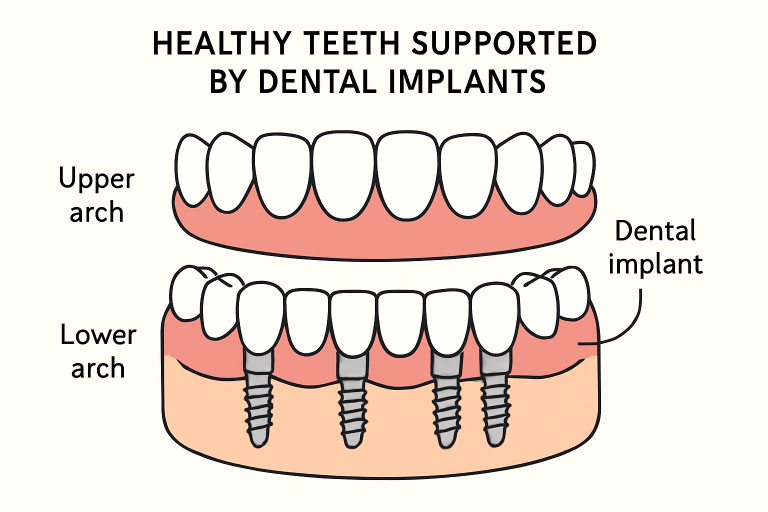
Traditional dentures often fall short in terms of comfort and stability, leading to problems such as slipping and difficulty speaking or chewing. All-on-4 and All-on-6 implants have changed the landscape of full mouth restoration. By anchoring an entire arch of teeth onto four or six strategically placed titanium implants, these procedures provide a secure foundation for prosthetic teeth. The placement of the implants is designed to maximize available bone, often eliminating the need for extensive bone grafting and reducing treatment complexity.
One of the greatest benefits is the natural feeling these solutions deliver. Patients can enjoy improved function, a stronger bite, and the confidence that comes with a permanent restoration. The streamlined approach also makes these treatment options faster to complete compared to traditional methods.
3D Printing in Dental Implants
The introduction of 3D printing technology into dentistry has been a game-changer, especially regarding implant fabrication and surgical guides. Dentists can now produce highly accurate models and prosthetic components based on precise scans of a patient’s mouth. This level of customization means that implants fit more perfectly, leading to greater comfort and a more natural appearance. The digital workflow also allows dental professionals to predict and plan each procedure with exceptional accuracy, reducing time spent in the dental office.
Faster production and reduced need for adjustments mean less chair time for patients. The future is likely to bring even greater sophistication in the integration of 3D-printed crowns, bridges, and dentures, offering new hope to millions seeking reliable, aesthetically pleasing full-mouth solutions. For more on how 3D printing is transforming healthcare fields, including dentistry, read this coverage from Live Science.
Minimally Invasive Surgical Techniques
Advances in surgical technology have paved the way for minimally invasive implant procedures. Using digital imaging, dentists can pinpoint the precise placement of an ecomplete implant, often requiring only small incisions. This modern approach minimizes trauma to the surrounding tissue, resulting in faster recovery, less pain during healing, and a significant reduction in complications.
For patients anxious about surgery, these techniques offer both reassurance and tangible benefits. Many can resume normal activities much sooner than most significant plant methods, and the outcomes are highly predictable due to guided surgery.
Root Analogue Dental Implants
Root analogue dental implants (RAIs) represent another leap forward in personalized dental care. Unlike conventional implants, RAIs are individually designed to replicate the shape and size of the patient’s extracted tooth root. This tailored approach fits naturally into the existing bone and often allows for immediate placement following extraction, reducing the treatment timeline.
Many RAI are made from zirconia, a biocompatible ceramic material that resists staining and offers a highly aesthetic result for people concerned with the look and longevity of their new smile. By closely mimicking the original tooth structure, RAIs provide a seamless and discreet solution. For more information on RAIs, refer to this Wikipedia article.
Customized Dental Crowns
Innovations in dental crown construction have made these restorations more accurate and realistic than ever. Transformer-based digital design techniques, combined with advanced scanning tools, create restorations that are precise down to the smallest detail. Crown margins are custom-crafted to fit perfectly against the prepared tooth, reducing the chance of decay or discomfort.
Patients benefit from crowns that are virtually indistinguishable from natural teeth, both in look and feel. This ensures full mouth replacements deliver long-term satisfaction and resilience, improving lives beyond just a better smile. More information on advances in restorative dentistry is available on Healthline’s dental implants resource page.
Conclusion
The landscape of full mouth tooth replacement has changed dramatically with the advent of modern dental technologies and implant techniques. Options like All-on-4 and All-on-6 implants, 3D printing for dental prosthetics, minimally invasive surgical procedures, root analogue implants, and fully customized crowns all contribute to results that emphasize patient comfort, function, and natural aesthetics.
Patients now have access to solutions that are faster, more effective, and longer-lasting, ensuring they can enjoy renewed confidence and a significantly improved quality of life. As innovations continue to shape the future of restorative dentistry, the prospects for those seeking full-mouth replacement will only improve.

The Editorial Team at Healthcare Business Today is made up of experienced healthcare writers and editors, led by managing editor Daniel Casciato, who has over 25 years of experience in healthcare journalism. Since 1998, our team has delivered trusted, high-quality health and wellness content across numerous platforms.
Disclaimer: The content on this site is for general informational purposes only and is not intended as medical, legal, or financial advice. No content published here should be construed as a substitute for professional advice, diagnosis, or treatment. Always consult with a qualified healthcare or legal professional regarding your specific needs.
See our full disclaimer for more details.