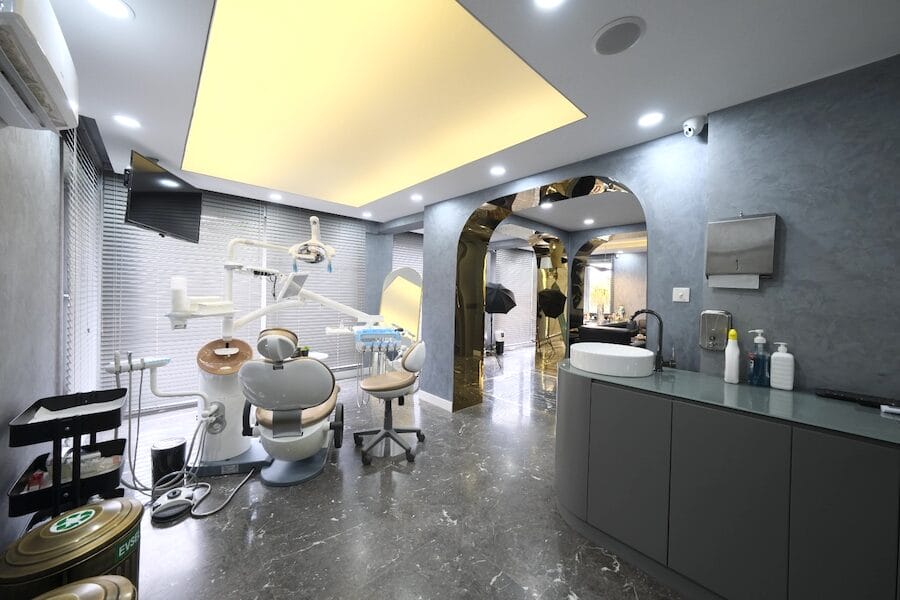
Photo: DentPrime via FL Comms
Dental tourism is no longer a fringe consumer trend. It is a fast-growing segment of elective care that blends clinical delivery, hospitality operations, and reputational risk management. For healthcare business leaders, the question is not whether patients will travel. The question is which providers can standardize quality, reduce variance, and communicate accountability across borders.
This matters because the most demanded “travel dentistry” services are not low-acuity. They are high-impact, high-visibility interventions with real downstream implications for function, maintenance, and patient satisfaction. The market is dominated by three categories: Hollywood Smile makeovers, zirconium crowns, and dental implants. Each one can produce excellent outcomes, but each one also exposes operational weaknesses when planning and governance are thin.
Quality in dental tourism is a systems problem, not a marketing problem
The clinics that scale sustainably in cross-border care tend to share a common operating model: digitized diagnostics, documented treatment planning, defined quality checkpoints, and explicit aftercare expectations. This is digital dentistry as an operational control layer.
From a business lens, digital workflows reduce three key risks:
- Expectation mismatch: clearer pre-treatment visualization and communication reduce dissatisfaction and revision cycles.
- Clinical variance: standardized planning and production decrease case-to-case unpredictability.
- Timeline compression risk: structured sequencing makes short travel windows feasible without turning the process into a rushed experience.
In practical terms, this means intraoral scanning instead of traditional impressions, 3D imaging for more reliable anatomical assessment, CAD/CAM-supported design and lab consistency, and a plan that can be reviewed before irreversible steps begin. For international patients, predictability is not a luxury. It is the primary value proposition.
Dental implants are the clearest indicator of planning discipline
If you want to audit whether a provider is truly process-led, examine how it handles implants. Dental implants are not a single procedure. They are a chain of interdependent decisions: diagnostic imaging, bone evaluation, placement strategy, prosthetic design, occlusion, soft-tissue management, and long-term maintenance.
That chain is why implant pathways expose operational maturity. Providers that cannot articulate their planning logic, revision checkpoints, and aftercare assumptions are often operating with avoidable variance.
For a concrete reference point in Antalya, Turkey, DentPrime positions its international patient offering around structured coordination and modern workflow. If a patient is researching dental implants in Turkey, what matters most is not the headline promise. It is how the provider validates implant positioning against the final restorative plan, how it manages function and bite, and what it expects the patient to do post-treatment.
Hollywood Smile and zirconium crowns: aesthetics still require governance
Cosmetic dentistry often gets framed as “art,” but the clinics that deliver consistent, premium-looking results treat aesthetics as a controlled design process.
A Hollywood Smile is not simply whitening. It is proportion planning, smile line design, symmetry, shade strategy, and how the result reads in different lighting conditions, especially in close-up video. The operational issue is expectation alignment. If the design intent is not communicated and validated early, dissatisfaction becomes more likely, and revision time becomes harder to manage in a travel window.
Zirconium crowns are frequently chosen for durability and full-coverage needs, but “zirconium” alone does not guarantee quality. Fit accuracy, marginal integrity, and occlusal balance determine long-term comfort and stability. From a business perspective, zirconium work highlights production controls: scanning accuracy, lab consistency, and quality checks before final cementation.
A governance checklist for cross-border dental care
Healthcare leaders evaluating partnerships, referrals, or brand positioning in this category should focus on operational signals that correlate with outcomes:
- Pre-treatment diagnostics standard: what is required before a plan is finalized?
- Planning documentation: is the plan recorded, reviewable, and explainable to the patient?
- Quality checkpoints: where are the gates before irreversible steps?
- Revision protocol: how are adjustments handled, and what is the realistic time buffer?
- Aftercare assumptions: what maintenance is required and how is continuity handled after the patient returns home?

Photo: DentPrime via FL Comms.
For an external organizational reference on oral health best practices and prevention-oriented thinking, see the FDI World Dental Federation. Their emphasis on education, prevention, and long-horizon oral health is a useful framing for any elective dentistry model where success depends on both execution and maintenance.
Dental tourism will keep expanding, but the providers who win long-term will be the ones who operate like healthcare organizations, not travel sellers: standardized planning, measurable checkpoints, and transparent patient guidance that holds up after the flight home.

The Editorial Team at Healthcare Business Today is made up of experienced healthcare writers and editors, led by managing editor Daniel Casciato, who has over 25 years of experience in healthcare journalism. Since 1998, our team has delivered trusted, high-quality health and wellness content across numerous platforms.
Disclaimer: The content on this site is for general informational purposes only and is not intended as medical, legal, or financial advice. No content published here should be construed as a substitute for professional advice, diagnosis, or treatment. Always consult with a qualified healthcare or legal professional regarding your specific needs.
See our full disclaimer for more details.