
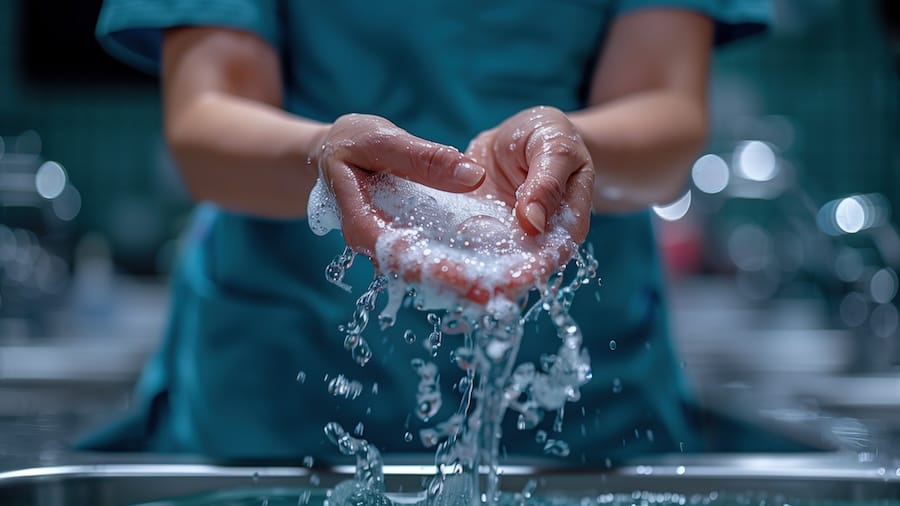

Infection prevention is one of the most pressing challenges in healthcare, and the simple act of hand hygiene remains at its core. Every nurse, infection preventionist, and environmental services professional knows just how critical effective handwashing and sanitizing can be. Yet the realities of modern clinical environments, from staffing shortages to equipment upkeep, often stand in the way of best practices.
Against this backdrop, GP PRO, a division of Georgia-Pacific, has released new survey findings and scientific insights into the state of hand hygiene in healthcare.
The company’s work sheds light on the lived experiences of nurses and offers a roadmap for improving infection control through advanced formulations, touchless dispensing systems, and smart monitoring technology.
This article draws from the organization’s survey of 100 nurses working in acute and long-term care facilities, alongside insights from Dr. Mary Glesner, R&D Director at Georgia-Pacific’s Neenah Technical Center. Together, the research and commentary offer a comprehensive view of the barriers to hand hygiene and the innovations designed to overcome them.
Hand Hygiene Under Pressure: What Nurses Are Experiencing on the Front Lines
Nurses are the backbone of infection prevention efforts, yet their daily workflow often places immense strain on their ability to maintain proper hand hygiene. Dr. Glesner explains that while “92% assert that practicing proper hand hygiene is critical,” more than half say it is easy to miss a hygiene opportunity during a busy shift. The reasons include “emergency situations; empty, inaccessible or non-working soap or sanitizer dispensers; and skin irritation making hand washing and sanitizing uncomfortable or painful.”
These findings echo broader concerns in healthcare. Labor shortages, high acuity patient populations, and the increasing complexity of care all contribute to hand hygiene gaps. For infection preventionists (IPs) and environmental services (EVS) staff, even the most dedicated efforts can be undermined by inconsistent access to supplies or malfunctioning dispensers.
Dr. Glesner notes that this operational reality is a central driver behind GP PRO’s innovation strategy. “Today’s healthcare environments face ongoing labor shortages and high employee turnover, which create operational obstacles for nurses, IPs and EVS staff,” she says. Meeting these challenges requires designing systems that work reliably under pressure and support seamless workflow.

Addressing Empty Dispensers and Operational Gaps
One of the most frequently reported obstacles is surprisingly simple: empty or non-working dispensers. These failures not only hinder compliance but increase infection risks during crucial moments.
As Dr. Glesner states, “A major barrier to effective hand hygiene is encountering an empty or non-working soap or sanitizer dispenser.” To reduce these failures, GP PRO prioritizes dispenser reliability and the ease of maintaining supply levels. For EVS staff tasked with upkeep, small improvements can lead to significant time savings and reduced frustration.
GP PRO’s innovations extend beyond durability to integrated workflows. The company’s KOLO® Smart Monitoring System, for instance, helps ensure dispensers are tracked and maintained proactively. By providing real-time alerts on product usage and refills, facilities can keep dispensers ready and available more consistently.
The result is a more reliable infrastructure that supports IPs and EVS teams while minimizing unnecessary checks or manual oversight.
The Skin Toll of Hand Hygiene and How GP PRO Is Responding
Frequent handwashing remains a cornerstone of infection control, but it carries a cost. Nurses in the survey reported a variety of skin issues, ranging from dryness to cracking and discomfort. Only 14 percent described their hands as “normal, with no issues.”
GP PRO’s response is rooted in deep scientific research. Dr. Glesner explains that the company “conducts exhaustive research to evaluate how every ingredient affects skin-layer functions along with its potential impact on the entire skin structure.” This attention to detail allows GP PRO to formulate products that both kill germs and nourish the skin.
Glesner highlights that their antimicrobial formulations include ingredients to address environmental stressors while protecting and moisturizing the hands. Among these are “unique ingredients, like green tea and acai, to combat oxidative stress and environmental damage while the soothing properties of oat extract moisturize and increase skin-barrier support.”
These formulations are vital because nurses often wash or sanitize their hands “up to 100 times during a single 12-hour shift.” Without proper hydration and barrier support, repeated washing can lead to painful conditions that jeopardize both staff comfort and compliance.
Empathy as a Driver of Scientific Innovation
A striking element of GP PRO’s R&D process is its emphasis on empathy. The team intentionally puts themselves in the shoes of healthcare workers to gain firsthand understanding of the challenges they face. Dr. Glesner adds, “We have great empathy for anyone who works with red, chapped, and cracked skin caused by excessive hand washing and sanitizing.”
This empathy is brought to life in creative simulated exercises. During one of GP PRO’s innovation workshops, researchers set timers to go off every five minutes, signaling staff to sanitize their hands throughout the session. “This experience was eye-opening in defining what ‘high frequency’ hand hygiene really means in a healthcare setting,” she recalls.
Another memorable exercise involved wetting hands and attempting to put on medical gloves, simulating a common real-world challenge nurses face when drying is inadequate. The researchers quickly learned how moisture can slow down patient care and increase frustration.
These immersive experiences inform the company’s approach to formulations, dispenser engineering, and system design. They also reinforce the importance of research that integrates human realities with scientific rigor.
From the Lab to the Patient Room: How Formulations and Dispensers Work Together
One of GP PRO’s guiding principles is the belief that formulations and dispensers must be designed as an integrated system. This approach, which the company calls “hygiene ready,” goes beyond simply offering reliable products. It prioritizes a full ecosystem of touchless dispensing, effective hygiene solutions, and technology-enabled monitoring.
Dr. Glesner describes this strategy by saying, “Our holistic view of the formulation-dispenser equation is based on a ‘hygiene ready’ concept, which embodies an entire system to elevate a facility’s readiness in preventing the spread of infection.”
Touchless dispensers help reduce cross-contamination by minimizing physical contact. The KOLO Smart Monitoring System ensures dispensers are stocked and functioning. And GP PRO’s soaps and sanitizers offer both germ-killing efficacy and skin-supportive benefits.
By combining these elements, GP PRO strives to correct systemic issues that often go unaddressed when products are developed in isolation.
Inside the Science: How GP PRO’s enMotion® Sanitizer Delivers Efficacy and Hydration
One of GP PRO’s flagship technologies is the enMotion foam hand sanitizer. Known for its gentle yet effective properties, the formulation represents years of rigorous scientific testing and real-world evaluation.
Dr. Glesner explains the technical foundation clearly: “GP PRO’s enMotion hand sanitizer includes 70% Ethyl Alcohol, which was tested against 45 microorganisms generally found in healthcare settings.” Two clinical studies from BioScience Laboratories confirmed its effectiveness at killing 99.99% of many harmful germs.
But the product’s standout feature is its ability to hydrate skin even under intense usage. The R&D team conducted rounds of in-vitro studies, synthetic skin testing, and analysis of factors like Transepidermal Water Loss (TEWL). “This is a vital indicator of skin barrier health,” she says, and directly connected to the ability to retain moisture and resist irritants.
Through strategic ingredient blending, the team enhanced the sanitizer with “aloe and vitamin B5, along with a botanical blend of more than six moisturizing ingredients,” resulting in a formula “clinically proven to increase skin hydration in just two days.”
This dual focus on efficacy and hydration addresses one of the most challenging contradictions of clinical hygiene: how to disinfect without damaging.
The Often-Overlooked Step: Why Hand Drying Matters
While handwashing and sanitizing receive the most attention, drying is often the forgotten step in effective hygiene. Yet incomplete drying not only prolongs discomfort but significantly increases the risk of microbial transfer.
The survey results corroborate this reality. Dr. Glesner says that “nearly all participants (99%) agreed that thorough hand drying after washing with soap and water is important for effective hand hygiene while most (59%) agree that hands are not thoroughly cleaned unless they are also thoroughly dried.”
She points out that damp hands can spread dramatically more bacteria than dry hands and create complications with glove application. The glove exercise conducted in GP PRO’s workshop illustrated this challenge in a memorable way. “If a nurse’s hands are not completely dry, it becomes a time-consuming struggle to put on gloves,” she recalls.
Designing dispensers and paper towel systems optimized for absorption, comfort, and usability is crucial for addressing this overlooked step.
Smart Monitoring as a Path to Compliance, Efficiency, and Cost Savings
Manual checks on dispensers have long been a burden for EVS teams, leading to inefficiencies and frequent missed outages. The KOLO Smart Monitoring System tackles this challenge through real-time data collection and alerts.
Dr. Glesner highlights its impact: “As a result, 99.5% of GP PRO dispensers equipped with KOLO Smart Monitoring are fully stocked at all times.” The system also reduces unnecessary dispenser checks by 95 percent, improves labor allocation, and minimizes waste.
In high-stakes healthcare environments, the ability to ensure consistent access to hygiene supplies can translate directly to reduced infection risks and smoother clinical workflows.
Partnering With APIC and Infection Preventionists to Drive Real-World Solutions
GP PRO’s commitment to infection control extends beyond products. As an APIC Visionary Partner, the company collaborates closely with infection preventionists to translate insights into meaningful innovations.
Dr. Glesner says, “We spend a lot of time talking—and carefully listening—to stakeholders on the frontlines of infection control.” This includes IPs, nurses, EVS leaders, and clinical teams whose insights shape the direction of research and product development.
She emphasizes that APIC’s mission “to advance the science and practice of infection control” aligns directly with GP PRO’s goals.
Looking Ahead: Trends Shaping Hand Hygiene in 2026 and Beyond
The future of healthcare hygiene is shifting rapidly, shaped by new pathogens, workforce challenges, and technological advances. GP PRO is preparing by monitoring ingredient innovations, expanding smart monitoring capabilities, and responding to changing regulatory environments.
A key trend, according to Dr. Glesner, is “the increasing need to capture and collect more actionable insights across healthcare environments.”
Data-driven hygiene systems will not only support compliance but also create new roles for staff who specialize in monitoring and optimizing these technologies.
She predicts continued expansion in smart monitoring adoption, alongside new opportunities for professionals skilled in interpreting hygiene-related data.
A Final Word: Supporting Clinicians Through Education and Resources
Beyond product innovation, GP PRO also invests in clinical education through its Hand Hygiene Advantage Program. Dr. Glesner notes, “We recognize the difficulty that nurses, IPs and EVS teams face in their jobs, so it’s important to come alongside them with multiple resources and useful tools.”
The goal is to reduce the burden on clinicians and give them more time to focus on patient care.
Conclusion
GP PRO’s research and innovative solutions illuminate an essential truth: effective infection prevention requires more than rules and reminders. It requires systems that work under pressure, formulations that protect skin as much as they protect patients, and technology that keeps supplies ready when and where they are needed.
By combining scientific rigor with frontline empathy, GP PRO is helping healthcare organizations bridge the gap between hand hygiene theory and real-world practice. In an era when infection prevention has never been more critical, these efforts are not just innovative. They are indispensable.
For more information, visit gppro.com. You can read the results of the survey here.
Cover image: ID 329346137 | Hand Hygiene ©
Emilio Manzaneque Crespo | Dreamstime.com

Daniel Casciato is a seasoned healthcare writer, publisher, and product reviewer with two decades of experience. He founded Healthcare Business Today to deliver timely insights on healthcare trends, technology, and innovation. His bylines have appeared in outlets such as Cleveland Clinic’s Health Essentials, MedEsthetics Magazine, EMS World, Pittsburgh Business Times, Post-Gazette, Providence Journal, Western PA Healthcare News, and he has written for clients like the American Heart Association, Google Earth, and Southwest Airlines. Through Healthcare Business Today, Daniel continues to inform and inspire professionals across the healthcare landscape.


