
Key Takeaways
- Job security concerns among U.S. workers are at an all-time high, making it essential to understand employment rights.
- Remote work remains a key factor, with growing opportunities despite a push to return to the office.
- Artificial intelligence is transforming hiring and management, necessitating that employees monitor fairness and privacy.
Table of Contents
Modern employment is defined by rapid change, uncertainty, and new opportunities. Workers are navigating historical shifts in job security, the evolution of remote work, and the fast integration of artificial intelligence into everyday procedures. Understanding your entitlements and protections is essential to ensuring your voice and value remain recognized and respected in this evolving landscape. Robinson & Henry employment lawyers can help employees better understand their workplace rights and how to protect them during these transitions.
As companies adjust to economic pressures and technological influences on hiring, American employees are increasingly finding themselves needing to protect their interests in the workplace proactively. Whether you’re negotiating a flexible work arrangement or facing concerns about layoffs, knowing your rights empowers you to make informed decisions and safeguard your future.
Simultaneously, there’s a growing awareness around the risks and rewards of artificial intelligence in employment, demanding both vigilance and adaptability. In addition, those working in increasingly diverse environments must remain vigilant regarding issues such as workplace discrimination and rapidly evolving employment laws.
Staying educated about both your rights and the broader context of employment trends is the foundation of job security and workplace satisfaction. By focusing on prevention, documentation, and professional guidance, today’s employees can navigate complexities and preserve their workplace protections.
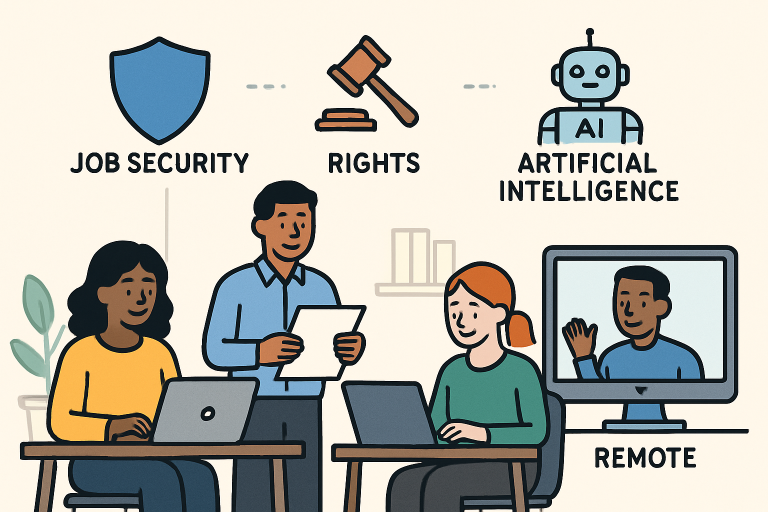
Job Security in the Current Market
The notion of job security has shifted sharply in recent years. According to a survey cited by CNBC, 42% of American workers feel less secure in their jobs than they did just a year prior. Contributing factors include cost-cutting layoffs, restructuring, and economic volatility. Employees must be aware of their rights regarding layoffs, including advance notice under the Worker Adjustment and Retraining Notification (WARN) Act, eligibility for severance pay, and their rights to unemployment benefits. These rights can differ by state and employer, so consulting reputable resources and staying informed about current trends is vital.
Navigating Remote Work Policies
Even as media reports highlight a potential return to traditional office settings, remote work continues to rise. Labor market statistics reveal an 8% increase in remote job postings during the second quarter of 2025, indicating that flexible work arrangements remain in high demand. Employees exploring remote opportunities should carefully examine their company’s telework policies and consider legal factors when working across state or international borders. Variations in time zones, wage regulations, and data privacy laws can affect employee rights and responsibilities. Understanding these considerations is essential for maintaining compliance, productivity, and a balanced remote work experience.
Understanding AI’s Impact on Employment
Artificial intelligence is rapidly transforming recruitment, performance evaluations, and workplace monitoring. While AI promises increased efficiency and can help reduce bias, studies published by Forbes highlight ongoing worries about algorithmic fairness, data privacy, and potential job displacement. Employees should ask their employers how AI is being utilized, how performance data is evaluated, and what safeguards are in place to ensure that automation supports rather than threatens workplace equity. Transparency and consultation are paramount as organizations deploy AI-driven systems.
Addressing Workplace Discrimination
Discrimination based on race, gender, disability, or other protected characteristics remains a persistent workplace challenge. The California Civil Rights Department and similar agencies nationwide report consistently high levels of workplace discrimination claims. Employees subjected to discriminatory practices should document every incident, maintain records of their reports to management, and be aware of the process for filing a complaint with the U.S. Equal Employment Opportunity Commission (EEOC). Protecting one’s rights often demands proactive and well-documented action—creating a fair and respectful work environment is the responsibility of everyone.
Staying Informed About Employment Laws
Employment laws evolve in response to technological, cultural, and economic changes. For example, the UK’s recent Employment Rights Act 2025 seeks to update protections and highlight a global trend of strengthening employee rights. American workers must stay up-to-date with federal regulations, as well as those from resources such as the U.S. Department of Labor (DOL) and state labor boards. Changes relating to minimum wage, family leave, overtime, or harassment protections frequently occur, and being unaware of new rules may leave employees unprotected.
Practical Steps to Protect Your Rights
- Educate Yourself: Regularly visit official labor resources, such as the U.S. Department of Labor, to stay informed about changes that affect your rights.
- Document Everything: Maintain detailed records of work hours, communications, and any incidents related to workplace disputes or discrimination.
- Seek Professional Advice: If you suspect your rights are being violated, consult with a qualified attorney or an employee advocacy organization for expert guidance specific to your circumstances.
- Engage in Open Communication: Address concerns promptly with your employer or the human resources department. Open dialogue often leads to quicker and more equitable solutions and can help de-escalate potential conflict.
In today’s fast-changing job market, remaining informed and proactive is essential for safeguarding your workplace rights and securing fair treatment. Understanding employment laws, company policies, and industry standards enables you to recognize potential issues early and respond effectively. Taking initiative by seeking reliable information, documenting concerns, and pursuing professional guidance when necessary strengthens your position as an employee. This awareness not only helps prevent misunderstandings and disputes but also empowers you to make confident career decisions. By staying engaged and prepared, you can protect your interests while developing a resilient and sustainable career path over the long term.

The Editorial Team at Healthcare Business Today is made up of experienced healthcare writers and editors, led by managing editor Daniel Casciato, who has over 25 years of experience in healthcare journalism. Since 1998, our team has delivered trusted, high-quality health and wellness content across numerous platforms.
Disclaimer: The content on this site is for general informational purposes only and is not intended as medical, legal, or financial advice. No content published here should be construed as a substitute for professional advice, diagnosis, or treatment. Always consult with a qualified healthcare or legal professional regarding your specific needs.
See our full disclaimer for more details.


