
The Evolution of Healthcare Management and Care in Modern Medicine
 Healthcare is a vital and complex field. Its effective management is crucial for the well-being of communities worldwide. As medical science advances, so must the strategies that deliver care efficiently and equitably. This includes everything from routine check-ups to specialized treatments.
In this extensive guide, we will delve into the dynamic world of healthcare management and care. We will explore its evolution and core responsibilities. Our discussion will cover how educational programs prepare future leaders. We will also examine the promising career outlook and emerging trends shaping the industry. Join us as we uncover how strong leadership transforms patient care and health systems for the better.
The landscape of healthcare has undergone a profound transformation, moving beyond the traditional confines of clinics and hospitals to encompass a broader, more integrated approach to well-being. This evolution has necessitated a shift in how healthcare is managed and delivered. Historically, “healthcare administration” often referred to the operational oversight of medical facilities—scheduling, billing, and day-to-day logistics. While crucial, this perspective has broadened significantly. “Healthcare management,” as we understand it in June 2026, involves a more strategic, systemic leadership role, focusing on the overall health ecosystem rather than just individual organizational units.
This contemporary view emphasizes patient-centered care, where the individual’s needs, preferences, and values guide clinical decisions and service delivery. It requires managers to think systemically, understanding how various components of the healthcare system—from public health initiatives to specialized treatments like urology incontinence care—interact to influence patient outcomes. The practice of health management today is about providing guidance and leadership to promote and support health at multiple levels: individual, organizational, and systemic. This holistic vision recognizes the profound impact of behavioral, social, and environmental factors on health, extending its reach beyond traditional care settings. As a foundational concept, health management now embraces the “One Health” approach, acknowledging the interconnectedness of human, animal, and environmental health, as discussed in a seminal article defining health management’s conceptual foundation for excellence through efficiency, sustainability, and equity. 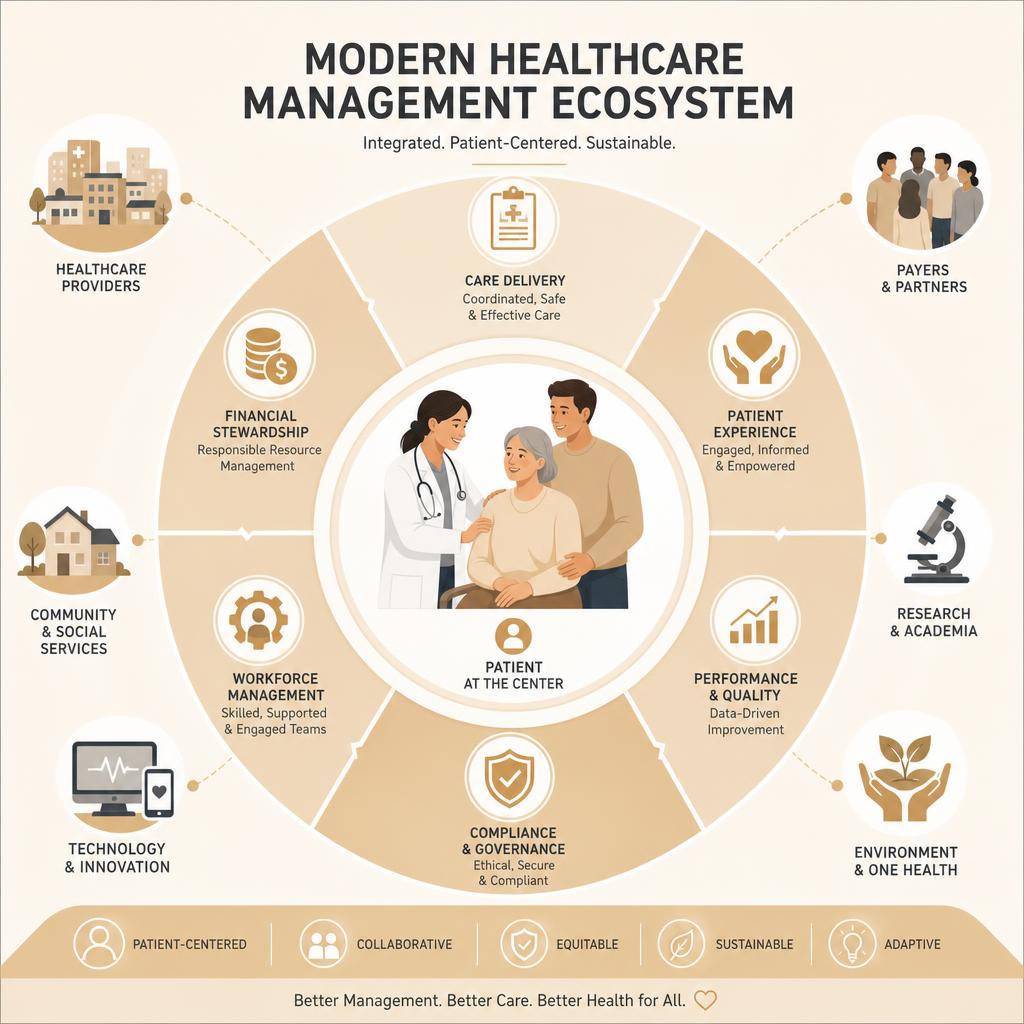
This expanded scope means that healthcare leaders are no longer just managing facilities; they are stewarding complex systems designed to improve population health, enhance patient experiences, and control costs, all while adapting to rapid technological advancements and shifting societal needs. The distinction between administration and management has blurred, with management now encompassing strategic foresight, policy influence, and a deep understanding of the broader determinants of health.
Core Competencies in Healthcare Management and Care
Effective healthcare managers are the linchpins of a high-functioning health system, requiring a diverse skill set that blends business acumen with a profound understanding of healthcare’s unique challenges. At the heart of their responsibilities lies strategic planning, which involves setting long-term goals and developing action plans to achieve them, ensuring the organization remains responsive to evolving patient needs and industry trends. This might include forecasting demand for services, planning for new technologies, or designing innovative care models.
Financial budgeting is another critical competency. Healthcare organizations operate within tight fiscal constraints, making sound financial management indispensable. Managers must skillfully allocate resources, manage revenue cycles, and identify cost-saving opportunities without compromising quality of care. For many practices, optimizing these processes often involves specialized expertise in areas like healthcare practice management, which can significantly enhance efficiency and financial health. Regulatory compliance is equally vital, given the highly regulated nature of the healthcare industry. Managers must navigate a labyrinth of federal, state, and local laws, ensuring their organizations adhere to standards related to patient privacy (HIPAA), quality assurance, billing practices, and workplace safety. Non-compliance can lead to severe penalties, reputational damage, and compromised patient trust.
Beyond these foundational business skills, healthcare managers often oversee specific patient care processes. A prime example is case management, a healthcare process where professionals assist patients in developing a coordinated plan that integrates various support services. This approach aims to optimize both healthcare and psychosocial outcomes, ensuring patients receive comprehensive, well-coordinated care tailored to their individual needs. As detailed in resources like StatPearls, case management is a fundamental element of care coordination, helping patients navigate complex medical journeys effectively. These core competencies empower managers to lead their teams, optimize operations, and ultimately enhance the quality and accessibility of patient care.
Addressing Social and Environmental Determinants of Health
Modern healthcare management extends its purview far beyond the clinic walls, actively engaging with the broader social and environmental determinants of health. This holistic approach recognizes that health is not solely a product of medical intervention but is deeply influenced by where people live, work, and play. The “One Health” concept, which acknowledges the intrinsic link between human, animal, and ecosystem health, has become a guiding principle. Health managers are increasingly tasked with understanding and addressing these interconnected factors to foster true population well-being.
Equity is a central pillar of this expanded role. Healthcare managers strive to reduce disparities in access and outcomes, ensuring that quality care is available to all, regardless of socioeconomic status, race, or geographic location. This involves designing inclusive service delivery models, advocating for underserved communities, and implementing programs that address the root causes of health inequities. Sustainability is another critical area, encompassing both the environmental impact of healthcare operations and the long-term viability of health systems. Managers are exploring ways to reduce carbon footprints, manage waste responsibly, and build healthcare infrastructure that is resilient to climate-related disruptions. They also consider the financial sustainability of care models, aiming for efficiency that allows for continued high-quality service.
Community co-design plays a crucial role, involving local populations in the planning and implementation of health initiatives. By engaging community members, managers can develop more relevant, effective, and culturally sensitive programs that truly meet local needs. This collaborative approach fosters trust and ensures that interventions are sustainable. Furthermore, managers are increasingly involved in climate resilience efforts, preparing health systems to cope with the health impacts of climate change, such as extreme weather events, new disease patterns, and resource scarcity. This proactive stance underscores the evolving responsibility of health management to safeguard public health in the face of global challenges.
Educational Pathways and Academic Concentrations
Aspiring healthcare leaders embark on diverse educational journeys to prepare for the complexities of the field. Academic preparation in healthcare management is inherently interdisciplinary, drawing from business, public health, medicine, and social sciences. Programs are designed to equip students with the analytical, leadership, and ethical frameworks necessary to navigate the dynamic healthcare environment. Whether pursuing a bachelor’s, master’s, or graduate certificate, students develop a comprehensive understanding of healthcare systems, policy, finance, and operations.

These programs emphasize the development of critical thinking skills, problem-solving abilities, and an understanding of the regulatory landscape. For instance, a Bachelor of Science in Health Care Management, such as those offered at institutions like California State University Long Beach, provides foundational knowledge in healthcare administration, policy, and organizational behavior. Such programs lay the groundwork for entry-level management positions or further graduate study. The curriculum often includes core business courses alongside specialized healthcare topics, ensuring graduates possess a well-rounded skill set. The goal is to cultivate leaders who can not only manage daily operations but also contribute to strategic decision-making and systemic improvements, ultimately enhancing patient outcomes and organizational efficiency.
Educational Pathways in Healthcare Management and Care
The journey into healthcare management and care leadership typically involves a structured educational progression, offering various entry points and specialization opportunities. Bachelor’s degrees, such as a B.S. in Health Care Management, serve as the foundational step, providing students with a broad understanding of healthcare systems, business principles, and administrative practices. These undergraduate programs prepare individuals for entry-level management roles or for continued education at the graduate level.
For those seeking to advance their careers or specialize, master’s programs are highly recommended and often required for senior positions. Master of Health Administration (MHA), Master of Business Administration (MBA) with a healthcare concentration, or Master of Public Health (MPH) with a management focus are common choices. These programs delve deeper into strategic management, financial analysis, healthcare policy, and operational efficiency, equipping graduates with advanced leadership capabilities. Many are designed for working professionals, offering flexible online formats. For example, the University of Illinois Springfield offers an Online Graduate Certificate in Healthcare Management, providing a focused credential that can be completed in as few as six months, with credits often transferable towards a full MBA program. Similarly, McGill University’s Desautels Faculty of Management offers a Graduate Certificate in Healthcare Management (GCHM), an online program tailored for healthcare professionals looking to build management skills without interrupting their careers. These certificates are excellent pathways for professionals to gain specialized knowledge and enhance their resumes.
Healthcare Professional vs. Executive Management Concentrations
Within graduate-level healthcare management degrees, students often encounter distinct concentrations tailored to different career trajectories and prior experiences. Two prominent pathways are the Healthcare Professional Concentration and the Executive Management Concentration. Understanding their differences is crucial for prospective students to align their education with their career aspirations.
The Healthcare Professional Concentration is typically designed for individuals who already possess a clinical background, such as nurses, therapists, or other allied health professionals, seeking to transition into management roles. These programs often recognize and build upon existing clinical knowledge, sometimes allowing for clinical transfer credits. The curriculum focuses on equipping these professionals with the business, leadership, and operational skills needed to manage clinical departments, oversee patient care units, or lead specific health programs. The emphasis is on translating clinical expertise into effective administrative and leadership practices within a healthcare setting.
In contrast, the Executive Management Concentration is generally geared towards individuals with significant administrative or business experience, or those aiming for high-level strategic leadership positions within larger healthcare organizations, such as hospitals, health systems, or government agencies. These programs delve into broader strategic operations, organizational development, financial stewardship, and policy analysis. The focus is on developing senior leaders capable of influencing organizational strategy, managing large-scale projects, and navigating complex healthcare ecosystems. For instance, an Online M.S. in Management with a Health Care Management Concentration might offer flexible options for working adults to develop strategic thinking and leadership skills essential for executive roles.
The table below highlights key distinctions:
Feature Healthcare Professional Concentration Executive Management Concentration Target Audience Clinicians, allied health professionals transitioning to management Experienced administrators, business professionals, aspiring C-suite Prior Experience Clinical expertise, patient-facing roles Administrative, business, or general management experience Curriculum Focus Clinical operations, departmental management, patient care delivery Strategic planning, financial management, policy, organizational leadership Credit Transfer May allow for clinical experience/credits Typically business-focused, less emphasis on clinical transfer Leadership Dynamics Leading clinical teams, managing specific programs Systemic leadership, organizational strategy, large-scale change Typical Role After Grad. Clinical manager, department head, program director Hospital administrator, CEO, VP of operations, health system executive Adapting to Emerging Trends: Digital Transformation and Value-Based Care
The healthcare industry is in a constant state of flux, driven by technological advancements and evolving demands for more efficient and effective care. Healthcare management programs are rapidly adapting their curricula to prepare future leaders for these emerging trends, particularly digital transformation and value-based care.
Digital transformation refers to the integration of digital technology into all areas of a healthcare organization, fundamentally changing how it operates and delivers value to patients. This includes the adoption of electronic health records (EHRs), telemedicine, artificial intelligence (AI) for diagnostics, predictive analytics for population health, and blockchain for secure data management. Healthcare managers must be adept at leveraging these technologies to improve efficiency, enhance patient experience, and optimize clinical outcomes. Programs are now incorporating modules on health informatics, data analytics, cybersecurity, and digital strategy to equip students with these essential skills.
Value-based care represents a paradigm shift from the traditional fee-for-service model, where providers are reimbursed based on the quantity of services they provide, to a system that rewards them for the quality and effectiveness of care. This model emphasizes patient outcomes, cost-efficiency, and coordinated care. Healthcare managers play a pivotal role in designing and implementing value-based care models, which require expertise in population health management, risk stratification, care coordination, and performance measurement. Educational programs, such as the Master Health Care Management at Erasmus University Rotterdam, are integrating specialized tracks on topics like Digital Transformation and Value-Based Health Care, alongside Sustainable Health Care, to ensure graduates are well-prepared to lead in these complex areas. These programs focus on developing skills in organizational behavior, quality and safety, capacity management, and governance, all crucial for navigating the transition to a more digitally integrated and value-driven healthcare system.
Career Outlook and Professional Advancement Opportunities
The field of healthcare management is experiencing robust growth, making it an attractive career path for individuals seeking to make a significant impact. The demand for skilled medical and health services managers is projected to outpace many other occupations, reflecting the increasing complexity and expansion of the healthcare sector.

According to the U.S. Bureau of Labor Statistics, employment of medical and health services managers is projected to grow by an impressive 23% from 2024 to 2034. This growth rate is significantly faster than the average for all occupations, underscoring the critical need for qualified professionals in this sector. This translates to approximately 62,100 job openings each year, on average, over the decade. The median annual wage for medical and health services managers was reported at $117,960 in May 2024, highlighting the financial rewards associated with these vital roles. This strong job outlook and competitive compensation are driven by several factors, including an aging population, advancements in medical technology, and the evolving regulatory landscape. For those interested in specialized areas such as senior healthcare management, these trends indicate a particularly high demand for expertise in managing care for older adults, including long-term care facilities and home health services.
Job Growth and Market Drivers
The exceptional job growth in healthcare management is not accidental; it is underpinned by powerful demographic and systemic forces. The most significant driver is the aging population. As the baby boomer generation continues to age, the demand for healthcare services—from routine medical care to complex chronic disease management and long-term care—is escalating dramatically. This demographic shift necessitates more facilities, more services, and, consequently, more managers to oversee their efficient operation.
Concurrently, advancements in medical technology and treatments are expanding the scope and complexity of healthcare delivery. New diagnostic tools, innovative therapies, and sophisticated electronic health records (EHRs) require skilled managers to implement, integrate, and optimize their use. The sheer volume of data generated in modern healthcare also creates a need for managers who can analyze information to improve patient outcomes and operational efficiency. Furthermore, the evolving regulatory environment and the transition towards value-based care models demand leaders who can navigate complex compliance requirements and implement strategies that prioritize quality and cost-effectiveness. The projected 23% growth rate, translating to 62,100 annual openings, reflects this multifaceted demand. With a median wage of $117,960 in May 2024, the field offers both professional fulfillment and substantial economic opportunity for those equipped to lead.
Diverse Career Paths and Settings
A degree in healthcare management opens doors to a wide array of career paths and work settings, offering professionals the flexibility to specialize or lead in various capacities. The most common employers for medical and health services managers include hospitals, which account for a significant portion of the workforce (around 29%). Here, managers might oversee entire departments, such as surgery, intensive care, or emergency services, ensuring smooth operations, staff coordination, and adherence to quality standards.
Offices of physicians and other healthcare practitioners also represent a substantial employment sector (about 14%). In these settings, managers are crucial for running group medical practices, specialty clinics, or individual physician offices. Their responsibilities often include managing billing, scheduling, human resources, and ensuring patient satisfaction. Nursing and residential care facilities (around 9%) also heavily rely on healthcare managers, particularly nursing home administrators who manage everything from admissions and resident care to facility maintenance and regulatory compliance.
Beyond these traditional settings, opportunities exist in home healthcare services, public health departments, insurance companies, pharmaceutical firms, and health information technology companies. Specific roles can include clinical managers, who focus on the daily operations of a particular clinical area; health information managers, who ensure the accuracy, security, and accessibility of patient records; and long-term care administrators, who oversee facilities for elderly or disabled individuals. The diversity of these roles means that graduates can tailor their careers to their interests, whether that’s direct patient service coordination, strategic planning, or technological innovation within the healthcare ecosystem.
Frequently Asked Questions about Healthcare Management
What is the difference between healthcare management and healthcare administration?
While often used interchangeably, healthcare management and healthcare administration have subtle but important distinctions. Healthcare administration typically refers to the day-to-day operational tasks required to keep a healthcare facility running smoothly. This includes managing staff schedules, handling patient records, overseeing billing and insurance, and ensuring the physical plant is maintained. It’s largely focused on the internal, functional aspects of an organization.
Healthcare management, on the other hand, encompasses a broader, more strategic scope. It involves planning, directing, and coordinating medical and health services with a focus on long-term goals, organizational strategy, and systemic improvement. Managers are concerned with the overall performance, sustainability, and adaptability of the healthcare system or organization. They often deal with policy, finance, public relations, and the external environment, working to ensure the organization remains competitive and responsive to community health needs. Administrators handle the “how” of daily operations, while managers address the “what” and “why” of strategic direction and systemic leadership.
What are the entry-level educational requirements for this field?
For most entry-level positions in medical and health services management, a bachelor’s degree is typically required. Common undergraduate majors include healthcare administration, public health, business administration, nursing, or related fields. These programs provide foundational knowledge in healthcare systems, management principles, finance, and regulatory compliance.
However, for advancement into more senior or executive leadership roles, a master’s degree is often preferred or even necessary. Popular graduate degrees include a Master of Health Administration (MHA), Master of Business Administration (MBA) with a healthcare concentration, or a Master of Public Health (MPH) with a focus on management. These advanced degrees provide specialized skills in strategic planning, financial management, policy analysis, and leadership. Additionally, many professionals enter the field with a clinical background (e.g., as a registered nurse or physician) and then pursue a master’s degree in management to transition into administrative roles, leveraging their clinical experience with enhanced leadership capabilities. Work experience in a related healthcare setting is also highly valued, often complementing formal education.
How do healthcare managers improve patient care quality?
Healthcare managers play a pivotal role in enhancing patient care quality through a multifaceted approach that integrates operational efficiency with patient-centered strategies. Firstly, they are instrumental in process optimization, meticulously analyzing existing workflows and implementing improvements to streamline care delivery, reduce wait times, and minimize errors. This might involve adopting new technologies, redesigning patient pathways, or implementing best practices derived from evidence-based research.
Secondly, managers are responsible for establishing and enforcing robust safety protocols. They develop and monitor quality assurance programs, ensure compliance with accreditation standards, and foster a culture of patient safety where staff are empowered to report and address potential risks. This includes everything from infection control measures to medication error prevention systems. Thirdly, they champion patient-centered care initiatives, ensuring that the patient’s voice is heard and incorporated into care planning and service design. This involves implementing patient feedback mechanisms, promoting shared decision-making, and training staff in empathetic communication. By focusing on these areas—process optimization, safety protocols, and patient-centered care—healthcare managers directly contribute to better patient outcomes, higher patient satisfaction, and a more effective and compassionate healthcare system.
Conclusion
The field of healthcare management and care stands at the forefront of innovation, constantly evolving to meet the complex demands of modern medicine. From understanding the nuanced differences between strategic management and day-to-day administration to embracing digital transformation and value-based care, the role of a healthcare manager is more critical than ever. We’ve seen how dedicated professionals, equipped with diverse skills and specialized education, are driving improvements in efficiency, sustainability, and equity across health systems.
The robust job outlook, fueled by an aging population and technological advancements, underscores the vital importance of this profession. As healthcare continues to expand its reach to address broader determinants of health, the demand for visionary leaders who can navigate these intricate challenges will only grow. By fostering a collaborative environment and continually adapting to emerging trends, healthcare managers are not just overseeing operations; they are shaping the future of patient care, ensuring that health systems are responsive, resilient, and ultimately, more effective for everyone.

The Editorial Team at Healthcare Business Today is made up of experienced healthcare writers and editors, led by managing editor Daniel Casciato, who has over 25 years of experience in healthcare journalism. Since 1998, our team has delivered trusted, high-quality health and wellness content across numerous platforms.
Disclaimer: The content on this site is for general informational purposes only and is not intended as medical, legal, or financial advice. No content published here should be construed as a substitute for professional advice, diagnosis, or treatment. Always consult with a qualified healthcare or legal professional regarding your specific needs.
See our full disclaimer for more details.


