Introduction

Many of us know stretch marks well. These lines appear on our skin due to big changes like growth spurts, pregnancy, or weight changes. While harmless, they can make us feel less confident about our skin’s appearance. For a long time, truly effective treatments were hard to find. But in April 2026, advances in regenerative aesthetics have opened new doors.
Today, laser technology offers powerful ways to address stretch marks. These treatments work by helping the skin heal itself. They aim to improve both the look and feel of affected areas.
In this guide, we will explore laser stretch mark removal. We will break down how different lasers target these marks and what improvements you can expect. We will also cover the treatment journey, from preparing for your sessions to aftercare. Our goal is to give you a clear understanding of these innovative methods. You will learn about how Regenerative aesthetics stretch mark laser treatments are transforming skin care. We will also look at how to choose the right professional for your needs.
The Science of Dermal Repair: How Lasers Target Striae
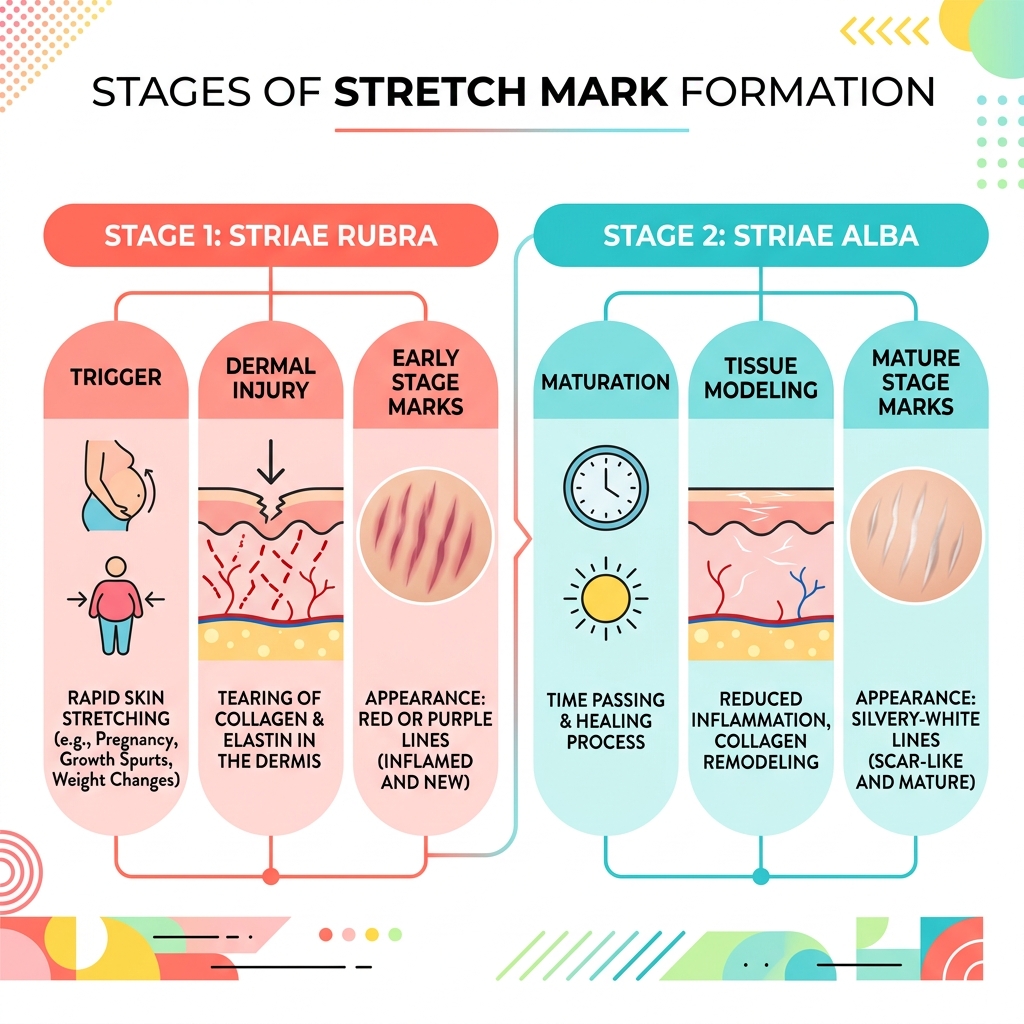
Stretch marks, medically known as striae distensae, are a common dermatological concern affecting a vast number of individuals. These distinctive lines emerge when the skin undergoes rapid expansion or contraction, often during periods such as pregnancy, puberty, significant weight fluctuations, or even rapid muscle gain. The underlying cause lies in the dermis, the middle layer of the skin, where the connective tissues—collagen and elastin—rupture. This tearing disrupts the skin’s structural integrity, leading to the characteristic appearance of stretch marks, which can range in color from red or purple (striae rubra, indicating newer marks) to silvery-white (striae alba, representing older, matured marks).
Traditional topical creams often fall short in addressing stretch marks because they struggle to penetrate beyond the epidermis to reach the damaged dermal layer. This is where advanced laser technology in regenerative aesthetics offers a significant advantage. Laser treatments work by delivering targeted energy into the skin, stimulating the body’s natural healing processes to repair and regenerate the compromised tissue. The goal is to encourage new collagen and elastin production, thickening the skin, improving its texture, and reducing the visibility of the marks.

A variety of laser types are employed in stretch mark removal, each with a specific mechanism of action tailored to different characteristics of the marks and skin types:
- Fractional CO2 Lasers: These ablative lasers create microscopic thermal zones in the skin, vaporizing tiny columns of tissue while leaving surrounding areas intact. This controlled injury triggers a robust wound healing response, leading to significant collagen remodeling and resurfacing of the skin. Fractional CO2 lasers are particularly effective for older, white stretch marks, as they can significantly improve texture and depth.
- Pulsed Dye Lasers (PDL): PDLs are non-ablative vascular lasers that specifically target the red pigment (hemoglobin) in newer, red or purple stretch marks (striae rubra). By selectively heating the blood vessels, they reduce the redness and inflammation associated with early-stage stretch marks, preventing them from maturing into more prominent white marks.
- Er:YAG Lasers: Erbium-doped YAG lasers offer versatility, capable of both non-ablative collagen stimulation and ablative resurfacing. Fotona’s LineLase™ protocol, for instance, utilizes a two-step procedure combining non-ablative SMOOTH® mode for deep collagen remodeling and skin tightening with ablative resurfacing to refine scar characteristics. This approach is noted for its safety and effectiveness across all skin types, including darker tones, minimizing the risk of post-inflammatory hyperpigmentation. For more details on this advanced technique, you can explore the information on Fotona’s LineLase™ technology.
- Picosecond Lasers: These ultra-fast lasers deliver energy in picosecond pulses, creating a photoacoustic effect that shatters pigment and stimulates collagen without significant heat, making them safe for various skin types and particularly effective for older marks.
- Combination Therapies: Often, the most effective approach involves a combination of different laser technologies, sometimes alongside other treatments like radiofrequency (RF) or microneedling. For example, combining RF with fractional CO2 lasers can achieve deeper penetration and more comprehensive collagen stimulation. This multi-modal strategy is discussed further in articles such as “Lasers In Practice: Reducing the Appearance of Stretch Marks with Multiple Laser Technologies,” which highlights how various laser technologies can be synergistically used to achieve optimal outcomes.
By targeting the dermis and initiating a cascade of cellular repair mechanisms, these innovative laser treatments offer a sophisticated approach to skin resurfacing, helping to soften, flatten, and blend stretch marks more seamlessly with the surrounding skin.
Clinical Efficacy and Expected Outcomes in Regenerative Aesthetics
The effectiveness of laser treatments for stretch marks is a frequently asked question, and scientific studies provide encouraging insights into the level of improvement patients can expect. While complete, 100% removal of stretch marks is rarely guaranteed, significant reduction in their appearance, texture, and color is consistently observed across various laser modalities.
Research indicates a wide range of improvement percentages depending on the laser type, the age and characteristics of the stretch marks, and the individual’s skin type. For instance, some studies show that a series of up to 20 sessions over several weeks can lead to a 20% to 60% improvement in appearance. More specifically, in certain clinical settings, all patients have demonstrated between 51% and 75% improvement in the size and severity of their stretch marks after just three treatments with specific laser systems.
For older, more stubborn stretch marks, newer technologies like picosecond lasers have shown promising results, with more than 90% of people experiencing improvement after six months. Similarly, erbium glass lasers have demonstrated improvement in stretch mark appearance for 50% of treated individuals after six months or more, even for marks up to 40 years old. Fotona SMOOTH® mode, a specific Er:YAG laser protocol, has been associated with up to 75% improvement in skin texture. When combination laser therapy is employed, reductions in the appearance of stretch marks typically range from 25% to 50%. These improvements are largely attributed to the laser’s ability to stimulate collagen remodeling and new collagen synthesis, leading to texture refinement and a more uniform skin tone.
Here’s a simplified comparison of typical results:
Laser Type Primary Target Typical Improvement Range Notes Fractional CO2 Laser Older, white/silvery marks 50-75% improvement in texture and depth Ablative, stimulates collagen, resurfaces skin. Pulsed Dye Laser (PDL) Newer, red/purple marks Significant reduction in redness Non-ablative, targets vascular component. Picosecond Laser Older marks >90% improvement (in some studies) Photoacoustic effect, stimulates collagen, safe for various skin types. Erbium Glass Laser Older marks (up to 40 years) 50% improvement Non-ablative, stimulates collagen. Fotona SMOOTH® mode All types Up to 75% improvement in skin texture Er:YAG, non-ablative for tightening, ablative for resurfacing. Combination Therapy All types 25-50% reduction Utilizes multiple technologies for comprehensive results. The number of sessions required varies significantly based on the severity and age of the stretch marks, the specific laser technology used, and individual patient response. Most patients typically require a series of 3 to 6 sessions, though some may need as many as 8 to 10 for optimal results. These sessions are usually spaced several weeks apart to allow the skin to heal and regenerate between treatments.
While laser treatments can dramatically improve the appearance of stretch marks, it’s crucial to understand that they are a form of scar tissue. The goal of regenerative aesthetics is to remodel and blend this scar tissue with the surrounding healthy skin, making it far less noticeable. The results are generally considered permanent in terms of the improved texture and color of the treated marks. However, new stretch marks can form if the skin undergoes further rapid stretching, such as during another pregnancy or significant weight change. Therefore, maintaining a stable weight and healthy skin practices is vital for preserving long-term outcomes.
For those interested in the cutting-edge of regenerative aesthetics stretch mark laser treatments, exploring options that incorporate advanced technologies like picosecond lasers, such as those highlighted by PicoSure Pro, can offer exceptional results with minimal downtime. Further insights into achieving perfect skin and no downtime with PicoSure can provide a deeper understanding of these innovative approaches.
Fractional Laser Systems in Regenerative Aesthetics
Fractional laser systems, including fractional CO2, Fraxel, and Icon lasers, represent a cornerstone of modern regenerative aesthetics for addressing stretch marks. These technologies operate on the principle of creating thousands of microscopic treatment zones within the skin, leaving healthy, untreated tissue surrounding each treated micro-column. This “fractional” approach allows for rapid healing and significantly reduces downtime compared to traditional ablative laser resurfacing.
The micro-thermal zones created by these lasers extend deep into the dermis, where the stretch marks originate. This precise energy delivery stimulates the body’s natural wound healing response. As the skin repairs itself, it initiates a cascade of cellular activities, including the production of new collagen and elastin fibers. This process effectively rebuilds the extracellular matrix—the intricate network of proteins and other molecules that provide structural support to the skin. Over time, this leads to dermal thickening, improved skin elasticity, and a smoother, more even skin texture.
The Icon Aesthetic System, for example, is renowned for its ability to deliver microbeams that trigger new collagen and elastin without harming the surrounding skin, making it safe and effective for various skin types. These systems are widely utilized in clinics offering laser resurfacing in Fremont, CA, and other advanced aesthetic centers, demonstrating their versatility in treating a range of skin concerns, including stretch marks. The efficacy of fractional lasers extends to improving both the color and texture of stretch marks, whether they are new or old. Patients seeking stretch mark removal in Stockton, CA, or similar regions often find these fractional technologies to be a highly effective solution for achieving significant cosmetic improvement.
Long-term Results in Regenerative Aesthetics
One of the most critical considerations for individuals undergoing stretch mark treatment is the longevity and permanence of the results. In regenerative aesthetics, the aim is to induce lasting changes within the skin’s structure. When laser treatments stimulate the production of new collagen and elastin, these newly formed proteins become an integral part of the skin’s dermal matrix. This means that the improvements in texture, elasticity, and overall appearance of the stretch marks are generally considered permanent. The skin has been biologically remodeled at a cellular level.
However, “permanent” does not imply immunity from new stretch marks. If the underlying causes—such as rapid weight gain, pregnancy, or significant body changes—recur, new striae can develop in previously unaffected or even treated areas. Therefore, maintaining a stable body weight and adopting a consistent skincare regimen that supports skin elasticity and health are crucial for preserving the long-term benefits of laser therapy.
While laser therapy can significantly reduce the appearance of stretch marks, transforming their texture and color, it’s important to set realistic expectations. As noted in resources like “Can Laser Therapy Get Rid of Your Stretch Marks?”, these treatments are highly effective at reducing visibility, but they may not achieve 100% eradication. The degree of improvement can range from a 20% to 60% reduction in appearance, making the marks far less noticeable and improving overall skin confidence. For comprehensive care and advanced laser solutions, consulting with specialized centers like the California Skin & Laser Center can provide tailored treatment plans to optimize long-term outcomes. Regular follow-up appointments and adherence to a dermatologist’s recommendations can further ensure the durability of the results.
Navigating the Treatment Journey: Preparation to Aftercare
Embarking on a laser stretch mark removal journey involves careful preparation, understanding the procedure, and diligent aftercare to ensure optimal results and minimize potential side effects. This comprehensive approach is key to harnessing the full benefits of regenerative aesthetics.
Preparation for Treatment: Proper preparation is crucial for the safety and effectiveness of laser therapy. Typically, patients are advised to:
- Consultation and Medical Review: A thorough medical history and physical examination will be conducted by your provider. This includes discussing any medications, health conditions, and previous cosmetic procedures. This ensures you are a suitable candidate and helps tailor the treatment plan.
- Sun Avoidance: For at least two weeks prior to treatment, it’s imperative to avoid direct sun exposure, tanning beds, and self-tanning products on the treatment area. Sunburned or tanned skin can increase the risk of complications such as hyperpigmentation.
- Medication Adjustments: Your provider may recommend temporarily discontinuing certain medications, such as aspirin, anti-inflammatory drugs (NSAIDs), and herbal supplements, as they can increase the risk of bleeding or bruising.
- Avoid Irritants: Refrain from using perfumes, deodorants, or any irritating topical products in the treatment area for a few days before your session.
- Other Treatments: Avoid waxing, chemical peels, or collagen injections in the treatment area for at least two weeks beforehand.
During the Treatment Procedure: The laser treatment itself is typically an outpatient procedure. What to expect can vary slightly depending on the laser type and the size of the area being treated:
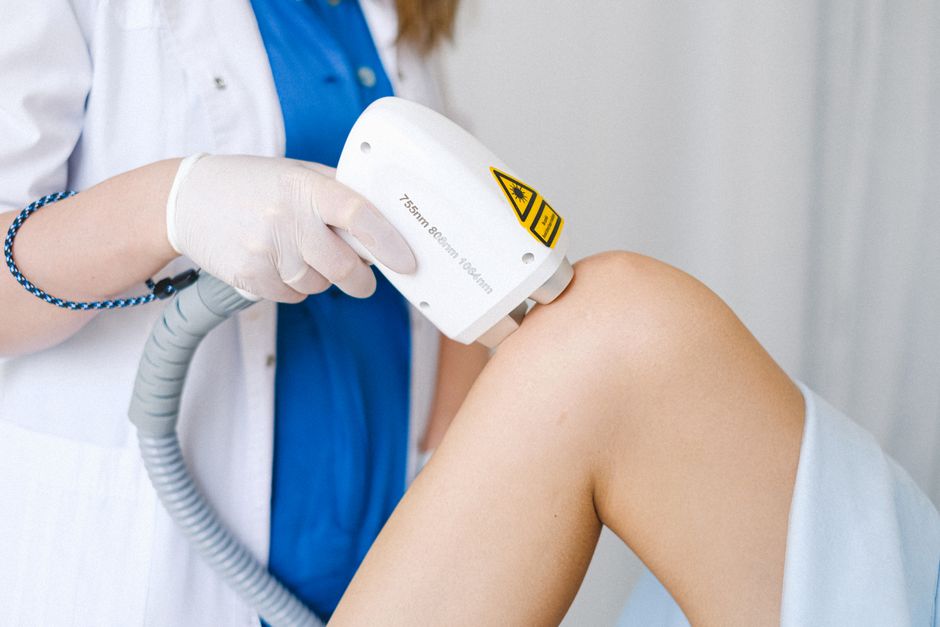
- Comfort Measures: A topical anesthetic cream may be applied to the skin beforehand to minimize discomfort. Some lasers also incorporate cooling systems to enhance patient comfort.
- Sensation: Patients often describe the sensation as similar to a rubber band snapping against the skin or a warm tingling.
- Duration: A single session can last anywhere from 30 minutes to two hours, depending on the extent of the stretch marks.
- Number of Sessions: Most individuals require multiple sessions for significant improvement. The average ranges from 4 to 8 sessions, though some protocols may involve 3-5 sessions, or up to 10 for very stubborn marks. These are typically spaced 3 to 5 weeks apart to allow the skin to heal and regenerate. For those exploring comprehensive solutions for stretch mark & scar removal in El Dorado Hills, understanding these session requirements is vital.
Common Side Effects, Risks, and Recovery: After the treatment, you can expect some temporary side effects:
- Redness (Erythema) and Swelling (Edema): The treated area will likely appear red and feel swollen, similar to a mild sunburn. This usually subsides within 4 to 8 hours, though mild swelling might linger for a few days.
- Stinging Sensation: A stinging sensation, akin to a sunburn, is common immediately after treatment and typically resolves within 4 to 6 hours.
- Temporary Blistering or Crusting: With more aggressive ablative lasers, minor blistering or crusting can occur, which will heal within a few days to a week.
- Recovery Timeline: For most non-ablative treatments, there is minimal to no downtime, allowing an immediate return to normal activities. More intensive ablative procedures may require a few days of social downtime.
- Potential Risks: While generally safe when performed by a qualified professional, risks can include temporary changes in pigmentation (darkening or lightening), infection (rare), and scarring (very rare).
Aftercare Post-Treatment: Diligent aftercare is paramount for optimizing results and preventing complications:
- Moisturizing Regimen: Apply a gentle, approved moisturizing lotion twice daily to the treated area to keep the skin hydrated and support healing.
- Sun Protection: Continue to rigorously protect the treated area from the sun using broad-spectrum sunscreen (SPF 30 or higher) and protective clothing. Sun exposure can lead to hyperpigmentation.
- Avoid Irritants: For at least 24 hours (or until redness subsides), avoid applying makeup, harsh cleansers, or lotions that could irritate the skin.
- Cool Packs: Using cool packs or moist cloths can help alleviate any stinging or swelling.
- Follow-up: Adhere to all post-treatment instructions provided by your clinician. If you experience severe pain, excessive swelling, signs of infection, or unexpected side effects, contact your provider immediately.
Understanding the principles of skin healing and laser interaction, as explored in discussions about how lasers work for other aesthetic concerns, such as how laser tattoo removal works, can provide a broader context for the recovery process. For individuals seeking effective solutions for stretch mark removal in Sacramento & Roseville, CA, or surrounding areas, a detailed understanding of this journey ensures a smoother and more successful outcome.
Beyond the Beam: Holistic and Alternative Approaches
While laser therapy stands out as a highly effective method for addressing stretch marks in regenerative aesthetics, it’s important to recognize that it’s part of a broader spectrum of treatments. For some individuals, laser therapy might not be the most suitable option, or they may choose to combine it with other modalities for enhanced results. Exploring these holistic and alternative approaches ensures a comprehensive strategy for skin rejuvenation.
Alternative and Complementary Treatments Include:
- Radiofrequency (RF) Therapy: RF devices deliver heat energy to the deeper layers of the skin, stimulating collagen production and tightening tissues. This non-invasive treatment can improve skin elasticity and texture, making it a good option for stretch marks, either alone or in combination with lasers.
- Microneedling: This procedure involves using a device with fine needles to create controlled micro-injuries in the skin. These micro-channels trigger the body’s natural wound healing response, leading to increased collagen and elastin synthesis. Microneedling can significantly improve the texture and appearance of stretch marks.
- Chemical Peels: Professional-grade chemical peels use acids to exfoliate the top layers of the skin, promoting cell turnover and stimulating collagen production. While typically less effective for deep stretch marks than lasers, they can improve superficial texture and discoloration.
- Topical Retinoids: Prescription-strength retinoid creams (like tretinoin) can help stimulate collagen production and improve the appearance of newer, red stretch marks. They are often used as an adjunct to in-office procedures.
- Microdermabrasion: This involves exfoliating the outermost layer of the skin using fine crystals or a diamond-tipped wand. It can improve superficial texture and promote cell regeneration but is generally less effective for significant stretch mark reduction compared to lasers.
For a deeper dive into the various ways to manage and treat stretch marks, including both advanced and traditional methods, resources like “Stretching the Truth: Treating Stretchmarks” offer valuable perspectives on different approaches.
Choosing a Qualified Provider:
Regardless of the treatment path chosen, the most critical factor for safety and efficacy is selecting a highly qualified and experienced provider. This is especially true for laser treatments, which require a deep understanding of skin anatomy, laser physics, and patient-specific considerations (like skin type, stretch mark age, and location).
When seeking treatment, consider the following:
- Board Certification: Look for dermatologists or plastic surgeons who are board-certified and have experience in laser and aesthetic procedures.
- Specialized Training: Ensure the provider and their staff have specific training and certification in the laser technologies they utilize.
- Clinic Reputation: Research the clinic’s reputation, read patient reviews, and ask for before-and-after photos of their stretch mark patients.
- Personalized Consultation: A good provider will conduct a thorough consultation, assess your stretch marks, discuss your medical history, explain all treatment options (including alternatives), and set realistic expectations.
The landscape of aesthetic treatments is broad, and understanding the principles behind various laser applications, even those for different concerns like laser tattoo removal, can highlight the importance of expert knowledge. Whether you’re considering advanced laser treatments or exploring complementary therapies, choosing a reputable clinic, such as Fremont | Beyond a Med Spa, ensures that you receive care from professionals dedicated to delivering safe and effective results. This commitment to expertise is paramount in achieving your aesthetic goals.
Frequently Asked Questions about Regenerative Aesthetics
As we delve into the innovative world of laser stretch mark removal, several common questions arise. Here, we address some of these to provide clarity and set realistic expectations for anyone considering these advanced regenerative aesthetic treatments.
Can laser therapy completely remove stretch marks?
While laser therapy offers significant improvements, it’s important to manage expectations regarding complete removal. Stretch marks are a form of scar tissue, and while lasers can dramatically reduce their appearance, texture, and color, achieving 100% eradication is generally not possible. The goal of laser treatment is to remodel the dermal layer, stimulate new collagen and elastin, and blend the stretch marks more seamlessly with the surrounding healthy skin. Many patients experience a substantial reduction in visibility, making the marks much less noticeable and improving overall skin confidence. Studies show improvements ranging from 20% to over 90%, depending on the laser type, the age of the marks, and individual response.
How many sessions are typically required for visible results?
The number of sessions needed for visible results varies considerably based on several factors, including the type of laser used, the severity and age of your stretch marks, your skin type, and your body’s individual healing response. Generally, most patients require a series of multiple treatments. This typically ranges from 3 to 6 sessions, though some individuals with more stubborn or extensive stretch marks may benefit from 8 to 10 sessions. These treatments are usually spaced several weeks apart (e.g., 3-5 weeks) to allow the skin adequate time to heal and regenerate between sessions. Your provider will develop a personalized treatment plan during your initial consultation, outlining the estimated number of sessions.
Is laser stretch mark removal safe for all skin types?
The safety of laser stretch mark removal for all skin types has been a significant area of advancement in regenerative aesthetics. Historically, some lasers posed a higher risk of post-inflammatory hyperpigmentation (dark spots) for individuals with darker skin tones. However, modern laser technologies and protocols have largely addressed this concern.
Many newer lasers, such as picosecond lasers and certain Er:YAG lasers (like those used in Fotona’s LineLase™), are designed to be safe and effective for a broader range of skin types, including darker complexions. These lasers use mechanisms that minimize thermal damage to the surrounding tissue, reducing the risk of pigmentary changes. Nonetheless, it is paramount that laser treatments for stretch marks, especially on darker skin, are performed by a highly experienced and qualified practitioner who understands the nuances of different skin types and laser parameters. A thorough consultation is essential to assess your skin type and determine the most appropriate and safest laser technology for your specific needs.
Conclusion
The journey to smoother, more confident skin has been profoundly transformed by the innovative approaches in regenerative aesthetics. Laser technology, with its precision and ability to stimulate the body’s natural healing mechanisms, offers a powerful solution for individuals seeking to diminish the appearance of stretch marks. From understanding the science of dermal repair to navigating the treatment journey and exploring complementary therapies, we have seen how these advanced methods work to remodel skin, improve texture, and restore a more uniform complexion.
As we look towards the future of dermatology, the emphasis remains on personalized care, leveraging cutting-edge technologies like fractional CO2, pulsed dye, and picosecond lasers to achieve remarkable improvements. While complete erasure of stretch marks may be an unrealistic expectation, the significant reduction in their visibility and the enhancement of skin quality are tangible and lasting benefits that empower individuals with renewed aesthetic confidence. The key to successful outcomes lies in choosing a qualified provider who can tailor a treatment plan to your unique needs, ensuring both safety and efficacy.
If you are considering addressing your stretch marks and are ready to explore how regenerative aesthetics can help you achieve revitalized skin, we encourage you to seek expert guidance. Learn more about skin tightening and revision and how these advanced treatments can transform your skin’s appearance and boost your self-assurance.
Learn more about skin tightening and revision

The Editorial Team at Healthcare Business Today is made up of experienced healthcare writers and editors, led by managing editor Daniel Casciato, who has over 25 years of experience in healthcare journalism. Since 1998, our team has delivered trusted, high-quality health and wellness content across numerous platforms.
Disclaimer: The content on this site is for general informational purposes only and is not intended as medical, legal, or financial advice. No content published here should be construed as a substitute for professional advice, diagnosis, or treatment. Always consult with a qualified healthcare or legal professional regarding your specific needs.
See our full disclaimer for more details.