Key Takeaways
- Choosing the right commercial roofing system directly impacts durability, energy efficiency, and long-term operational costs.
- Popular options such as BUR, modified bitumen, single-ply membranes, metal, and green roofs each offer unique advantages depending on building needs and climate.
- Climate considerations, especially in high-rainfall regions, play a critical role in determining the most effective roofing solution.
- Balancing upfront costs with lifecycle value helps ensure a smarter, more sustainable investment.
- Regular maintenance and inspections are essential for extending the roof’s lifespan and preventing costly repairs.
Introduction to Peptides
Peptides are short chains of amino acids that play vital roles in many of the body’s most essential biological processes. These small molecules are involved in cell communication, hormone activity, and enzyme catalysis. As research into peptides advances, companies like Spartan Peptides are expanding access to research-grade peptides for scientific and therapeutic exploration. Understanding how peptides work can help us appreciate their broad significance in health and emerging medicine.
What makes peptides remarkable is their ability to act as signaling agents within the body. Unlike larger proteins, peptides can move quickly and efficiently, stimulating a range of reactions from hormonal regulation to immune responses. Their size and structure enable precise interactions with cellular targets, offering unique opportunities in drug development and nutrition science.
Structural Characteristics of Peptides
Peptides are composed of between two and fifty amino acids joined by peptide bonds. While they share some properties with proteins, their smaller size enables them to fulfill specialized roles in the body. The specific sequence and structure of a peptide dictate how it interacts with cellular receptors, other peptides, and enzymes. Some peptides act as messengers, while others serve purely structural or functional purposes within tissues.
These unique structural qualities give rise to a diverse range of peptides, each with distinct biological effects. For example, the skin-regenerating peptide GHK-Cu has gained attention for its potential in wound healing and cosmetic applications, revealing just one facet of the broad spectrum of peptide functions.
Peptides as Signaling Molecules
Within the vast landscape of cellular communication, many peptides serve as crucial signaling molecules. Neuropeptide Y (NPY), for instance, regulates vital functions like appetite, stress adaptation, and circadian rhythms. Research has shown that NPY’s interactions with its receptors can influence cell proliferation, highlighting the complexity of peptide signaling pathways. A deeper understanding of these mechanisms not only opens the door to more targeted therapies but also enhances our appreciation of molecular biology’s complexities. For example, studies into NPY and its receptor interactions may inform new treatments for disorders like anxiety or metabolic syndrome.
Peptides in Immune Defense
Peptides are frontline players in the body’s innate immune defense through antimicrobial peptides (AMPs). These small molecules can destroy bacteria, fungi, and viruses by disrupting their membranes or interfering with their metabolism. What makes AMPs particularly valuable in the modern era is their ability to combat pathogens without contributing to antibiotic resistance at the same rate as conventional antibiotics. According to research published in the Journal of Immunology Research, antimicrobial peptides not only kill invaders directly but also modulate immune responses, enhancing the body’s ability to detect and destroy foreign threats.
Peptides and Gut Health
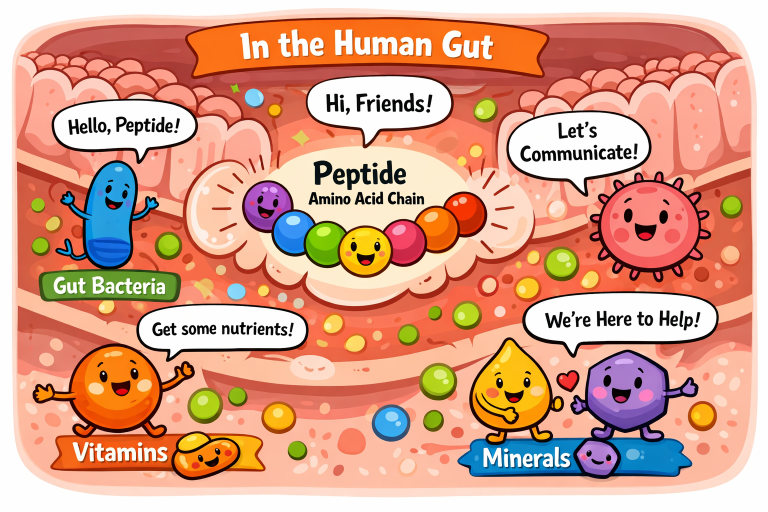
The impact of bioactive peptides reaches deep into digestive health. Peptides derived from food or produced in the gut can influence the composition and behavior of gut microbiota. They help maintain a healthy balance of microbes, enhance nutrient absorption, and facilitate the production of beneficial metabolites, such as short-chain fatty acids. This interplay plays a pivotal role in gut barrier function and overall well-being. As knowledge grows, dietary interventions using specific peptide blends may be developed to target common digestive disorders or promote optimal gut function.
Therapeutic Applications of Peptides
Due to their ability to precisely mimic and enhance natural biological processes, peptides are an area of intense interest for therapeutic application. They are already used in hormone therapies, in the treatment of metabolic and endocrine disorders, and as agents in wound healing. Peptides can deliver highly targeted results, often producing fewer side effects than their synthetic or protein-based counterparts. Furthermore, because they degrade into harmless amino acids after use, peptides generally do not accumulate or cause toxicity within the body. Modern research aims to build on early successes to expand the reach of peptide-based therapies, from cancer treatments to regenerative medicine and cosmetic applications.
Challenges and Future Directions
Although peptides are promising, several challenges remain for their widespread use. They often have limited stability in the bloodstream and can be quickly broken down by enzymes. Efficient delivery methods such as encapsulation, nanoparticle carriers, or conjugation to protect against degradation are areas of ongoing innovation. Production costs remain a hurdle, but advances in synthetic biology and peptide engineering are making it increasingly feasible to manufacture custom peptides for therapeutic and research use. Looking to the future, continued progress in peptide synthesis and formulation could unlock treatments for conditions currently lacking effective therapies.
Final Thoughts
Peptides stand at the intersection of biology, medicine, and nutrition. Their ability to act as messengers, defenders, and therapeutic agents underscores the essential role these molecules play in maintaining health and fighting disease. As research accelerates, peptides promise to reshape healthcare strategies, offering hope for more targeted, natural, and effective solutions for a wide range of conditions.

The Editorial Team at Healthcare Business Today is made up of experienced healthcare writers and editors, led by managing editor Daniel Casciato, who has over 25 years of experience in healthcare journalism. Since 1998, our team has delivered trusted, high-quality health and wellness content across numerous platforms.
Disclaimer: The content on this site is for general informational purposes only and is not intended as medical, legal, or financial advice. No content published here should be construed as a substitute for professional advice, diagnosis, or treatment. Always consult with a qualified healthcare or legal professional regarding your specific needs.
See our full disclaimer for more details.