Table of Contents
Fostering creativity in fourth graders is essential for both their cognitive and emotional development. When educators design lesson plans that encourage innovation, students become more eager to learn, explore, and express themselves. Visit this link to discover practical lesson plan ideas that bring an extra spark to your classroom. By weaving creativity into the curriculum, teachers help nurture curious, resilient thinkers prepared to meet challenges in and out of school.
Creative lesson plans can also promote better classroom engagement and foster an inclusive environment. Students thrive when they are given opportunities to collaborate, solve problems inventively, and utilize their unique strengths. Building creative thinking into daily lessons not only supports academic achievement but also establishes a joy for lifelong learning. Facilitating hands-on, technology-enhanced, and artistic experiences ensures every child finds their own voice.
Teaching approaches that blend art, music, storytelling, and collaboration allow children to participate actively in their education. This multifaceted learning helps solidify knowledge while building critical 21st-century skills. For additional guidance on supporting creative growth through education, the Edutopia creativity resources offer further insights and classroom strategies.
Integrating Art Across Subjects
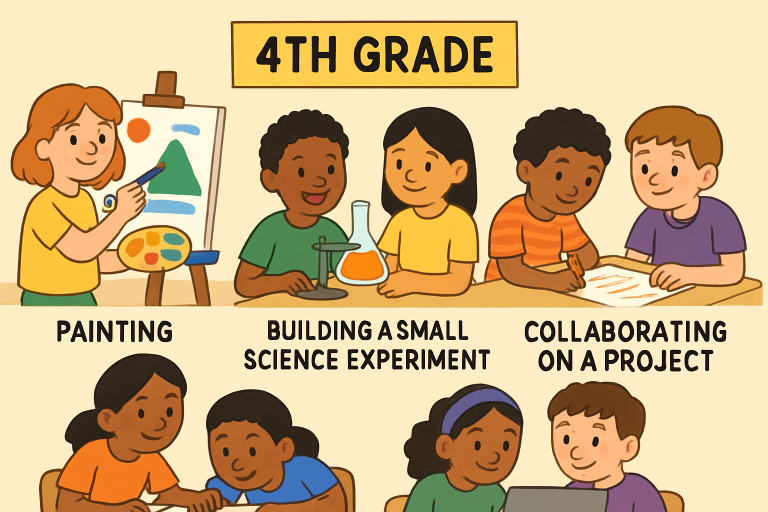
Incorporating art into different subject areas provides students with myriad opportunities to demonstrate their learning creatively. For example, children can solidify their understanding of literature, science, or social studies through painting, sculpture, and collage. After reading about the changing seasons, students can create collages using leaves, cotton, and paper flowers to represent different seasons. This method not only fosters comprehension but also develops fine motor skills and self-expression.
Art integration encourages students to visualize concepts in their unique ways and make connections between subjects. Teachers might ask fourth graders to illustrate scenes from a historical event, design posters for math concepts, or build dioramas showcasing animal habitats. These activities help students retain knowledge and cultivate confidence in their creative abilities.
Interactive Storytelling Sessions
Storytelling becomes even more engaging and memorable when students help shape the narrative. Teachers can initiate a story and then pause at crucial moments, encouraging students to predict or write what happens next. This method supports both comprehension and critical thinking, allowing students to analyze scenarios and offer imaginative solutions.
Interactive storytelling sessions can also strengthen listening and speaking skills by prompting students to share with a partner or the class. Retelling stories in their own words or creating alternative endings boosts their confidence, fosters empathy, and lets every child’s imagination shine. Storytelling is a powerful tool for building both literacy and creativity.
Hands-On Science Experiments
Science lessons are brought to life through hands-on experiments that let students observe concepts in action. Classic activities like constructing a volcano with baking soda and vinegar or observing plant growth cycles make abstract ideas tangible and fun. Guiding students through experiments fosters curiosity while improving scientific reasoning and observation skills.
When students participate directly in their own learning, they become more invested and remember information longer. Hands-on science also allows for collaboration and the development of problem-solving skills, as children work together to make predictions, gather data, and draw conclusions. For more hands-on project inspiration, see the Smithsonian Guide to Science Experiments.
Technology-Enhanced Learning
Integrating technology enhances engagement while preparing students to succeed in an increasingly digital world. Interactive whiteboards and educational apps transform traditional lessons into dynamic, hands-on experiences. Platforms like Scratch introduce children to coding, logical reasoning, and problem-solving by having them build animations, games, and digital stories.
Virtual field trips expand horizons by connecting children with museums, scientists, and resources worldwide. Technology-enabled activities teach resilience, computational thinking, and collaboration. By striking a balance between digital tools and hands-on methods, educators ensure that learners become thoughtful users and creators of technology.
Collaborative Group Projects
Working in groups fosters cooperation, communication, and an appreciation for different perspectives. Teachers might assign students to research animals, invent eco-friendly products, or create classroom presentations about their community. Through group projects, children learn how to share responsibilities, negotiate solutions, and support their peers.
Collaboration is a key life skill that helps students understand the value of teamwork while building confidence in expressing their own ideas. These experiences encourage empathy and respect and reinforce positive social interactions that transfer outside the classroom.
Creative Writing Prompts
Imaginative writing prompts inspire students to explore language, narrative structure, and their own imaginations. Prompts such as “Imagine you discovered a secret door at school. Where does it lead?” invite original storytelling and self-discovery. Writing exercises also strengthen grammar, vocabulary, and composition skills while providing a safe space for creative risk-taking.
Encouraging regular reflection through journaling, poetry, or short stories helps fourth graders develop as writers and thinkers. Creative writing activities contribute to both academic and emotional growth, making writing feel relevant and enjoyable.
Incorporating Music and Movement
Music and movement activities bring energy and excitement to the classroom. Singing math facts, clapping rhythms for language lessons, or dancing to explore historical events helps anchor learning in physical experience. These strategies also support kinesthetic learners and keep all children engaged.
Teachers can connect movement to core subjects by choreographing dances that interpret science cycles or composing songs that summarize key information. In addition to enhancing memory and focus, music and movement improve coordination and rhythm, fostering a more dynamic and joyful classroom community.
Conclusion
Creative and engaging lesson plans empower fourth-grade students to reach their full potential as learners and thinkers. By integrating art, storytelling, hands-on science and technology, group collaboration, creative writing, and music into the curriculum, educators ensure a richer, more meaningful educational experience. These strategies support academic achievement while nurturing curiosity, confidence, and a lifelong passion for learning.

The Editorial Team at Healthcare Business Today is made up of experienced healthcare writers and editors, led by managing editor Daniel Casciato, who has over 25 years of experience in healthcare journalism. Since 1998, our team has delivered trusted, high-quality health and wellness content across numerous platforms.
Disclaimer: The content on this site is for general informational purposes only and is not intended as medical, legal, or financial advice. No content published here should be construed as a substitute for professional advice, diagnosis, or treatment. Always consult with a qualified healthcare or legal professional regarding your specific needs.
See our full disclaimer for more details.