Key Takeaways
- Early assessments help identify developmental and emotional concerns quickly.
- Timely intervention improves cognitive, social, and behavioral outcomes.
- Testing evaluates multiple areas, including learning, behavior, and emotions.
- Collaboration with professionals ensures accurate and well-rounded insights.
- Early support can reduce long-term academic and developmental challenges.
- Parents gain clear guidance to support their child’s growth and needs.
Understanding the Importance of Early Psychological Assessments
Early identification of developmental and psychological issues in children is crucial for effective intervention. Studies indicate that approximately 1 in 6 children in the United States has a developmental disability, emphasizing the need for timely assessments. Research shows that early intervention can lead to significant improvements in cognitive and social-emotional skills.
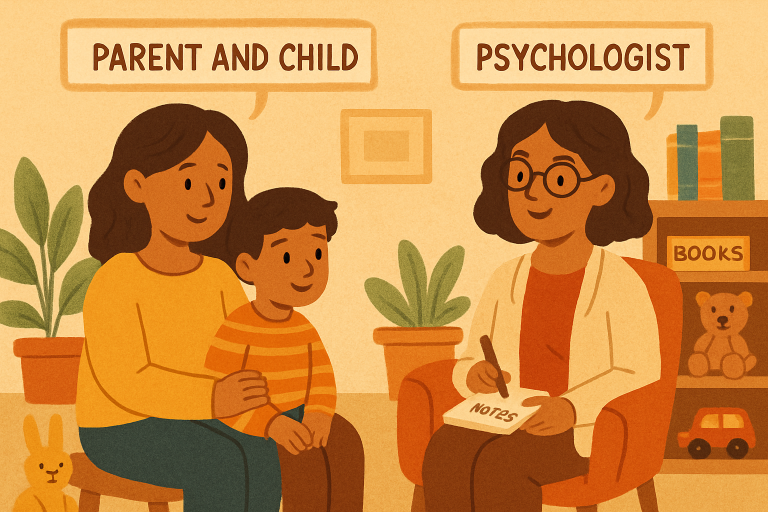
For families seeking expert evaluations, child psychological testing is a vital resource. Parent and Child Psychological Services, PLLC, located on the Upper West Side of Manhattan, specializes in comprehensive psychological assessments tailored to each child’s unique needs. Their team of experienced professionals offers a range of services, including cognitive testing, achievement assessments, and personality evaluations, ensuring a holistic understanding of a child’s development.
What Does Comprehensive Child Psychological Testing Entail?
Comprehensive psychological testing involves a series of standardized assessments designed to evaluate various aspects of a child’s development, including cognitive abilities, academic skills, and emotional functioning. These evaluations provide a detailed understanding of a child’s strengths and challenges, forming the basis for personalized intervention plans.
Child psychological testing is often an interdisciplinary process that engages not only psychologists but also speech-language pathologists, occupational therapists, and educators when necessary. The collaborative approach ensures a broader perspective, enabling the identification of coexisting developmental disorders, such as speech delays coupled with attentional issues. As part of the evaluation, professionals may use a combination of observational methods, standardized testing instruments, teacher and parent interviews, and behavioral checklists to create a comprehensive developmental profile. Gathering input from multiple sources ensures that recommendations are well-rounded and consider the child’s functioning across home, school, and peer settings.
The Role of Psychological Testing in Early Intervention
Psychological testing is a cornerstone of early intervention strategies. By identifying developmental delays or disorders early, interventions can be tailored to address specific needs, thereby enhancing the child’s developmental trajectory. For instance, early detection of autism spectrum disorder (ASD) through comprehensive testing has been associated with improved outcomes in communication and social skills.
In addition to ASD, early psychological testing can facilitate timely support for children with other developmental, behavioral, and emotional concerns, such as attention-deficit/hyperactivity disorder (ADHD), anxiety disorders, learning disabilities, and language impairments. Early identification of these challenges enables educators and therapists to create Individualized Education Plans (IEPs) and provide targeted interventions, ensuring access to support services as early as possible. Research consistently demonstrates that children who receive intervention in their preschool years are more likely to achieve higher academic success, demonstrate resilience, and improve their emotional regulation than those whose difficulties are detected later in life.
Benefits of Early Psychological Assessments
- Improved Developmental Outcomes: Early assessments allow for interventions that can significantly enhance cognitive and social-emotional development.
- Reduced Need for Special Education: Timely interventions can decrease the necessity for special education services later in life, leading to better academic performance and social integration.
- Cost-Effectiveness: Investing in early psychological testing and intervention can reduce long-term educational and healthcare costs.
Furthermore, early psychological assessments empower parents by providing them with clarity and direction. Understanding a child’s unique strengths and vulnerabilities allows families to advocate effectively for their needs within healthcare and educational settings. It also relieves anxiety or uncertainty parents may feel about their child’s behaviors and abilities, replacing doubt with a concrete action plan aimed at maximizing their child’s potential. Early assessments can facilitate access to community resources, educational accommodations, and therapeutic programs, ensuring the child’s holistic growth and long-term well-being.
Case Study: The Abecedarian Early Intervention Project
The Abecedarian Project, a controlled study conducted in North Carolina, demonstrated that children who received early educational interventions showed significant improvements in reading and math achievement, as well as higher IQ scores. This underscores the long-term benefits of early psychological assessments and interventions.
Moreover, the project highlighted the positive impact of individualized support stemming from comprehensive evaluations—children were able not only to catch up with their peers but, in many cases, to surpass typical developmental milestones. The study followed participants into adulthood, noting enduring benefits, including higher educational attainment, greater employment opportunities, and reduced reliance on social services. These long-term advantages exemplify the profound influence that timely and thorough psychological assessment, paired with specialized intervention, can offer. In a broader context, early intervention can contribute to healthier communities by reducing the prevalence of social, emotional, and academic difficulties in later life.
How Parent and Child Psychological Services Facilitate Early Intervention
Parent and Child Psychological Services offers comprehensive psychological testing tailored to each child’s unique needs. Their evaluations encompass cognitive testing, achievement assessments, and personality evaluations, providing a holistic understanding of the child’s development. This thorough approach ensures that interventions are precisely aligned with the child’s requirements, promoting optimal developmental outcomes.
At Parent and Child Psychological Services, the professionals understand that every child’s developmental trajectory is unique. In addition to delivering a comprehensive evaluation, they provide detailed feedback sessions and collaborate closely with parents, caregivers, teachers, and allied health professionals to design bespoke intervention plans. Their commitment extends to advocating for the child across various settings, providing support with educational placements, and referring for supplementary services such as speech or occupational therapy when indicated. The clinic’s client-centered model places families at the heart of the process, equipping them with information and practical tools to foster their child’s growth beyond the assessment.
Frequently Asked Questions
At what age is it appropriate for a child to undergo psychological testing?
Psychological testing can be conducted at various ages, but early assessments, even before age 2, are particularly beneficial for identifying and addressing developmental issues promptly.
How long does a comprehensive psychological evaluation take?
The duration varies depending on the child’s needs, but typically involves multiple sessions over several days to ensure a thorough assessment.
Will my child need ongoing assessments?
Follow-up assessments may be recommended to monitor progress and adjust intervention strategies as needed.
How can I prepare my child for psychological testing?
Maintaining a calm and supportive environment and explaining the process in an age-appropriate manner can help ease any anxiety your child may have about the testing.
Final Thoughts
Comprehensive child psychological testing is a vital component of early intervention, offering detailed insights that inform effective, personalized strategies. By partnering with experienced professionals like those at Parent and Child Psychological Services, parents can ensure their children receive the support necessary for optimal development.

The Editorial Team at Healthcare Business Today is made up of experienced healthcare writers and editors, led by managing editor Daniel Casciato, who has over 25 years of experience in healthcare journalism. Since 1998, our team has delivered trusted, high-quality health and wellness content across numerous platforms.
Disclaimer: The content on this site is for general informational purposes only and is not intended as medical, legal, or financial advice. No content published here should be construed as a substitute for professional advice, diagnosis, or treatment. Always consult with a qualified healthcare or legal professional regarding your specific needs.
See our full disclaimer for more details.