The Evolution of Medical Aesthetics and Wellness
 Achieving radiant, youthful skin is a common goal for many of us. We often seek effective ways to address concerns like fine lines, uneven texture, or sun damage. With a growing number of facial resurfacing treatments available today, choosing the right option can feel overwhelming.
This extensive guide will explore the diverse world of face resurfacing. We will examine how modern aesthetic medicine is transforming skin. Our focus will be on the latest technological advancements in this field.
These advanced treatments do more than just smooth the skin’s surface. They work deeper, promoting vital biological processes. These include neocollagenesis (new collagen formation) and neoelastinogenesis (new elastin formation). They also encourage healthy epidermal turnover. This natural renewal helps to reveal fresher, healthier skin beneath.
Understanding these scientific principles is key to appreciating treatment outcomes. (For more on how new collagen and elastin are formed, you can explore research on Neocollagenesis and Neoelastinogenesis: From the Laboratory to the Clinic).
The landscape of medical aesthetics has undergone a profound transformation, moving beyond superficial cosmetic enhancements to embrace a more holistic approach to health and wellness. This evolution is largely driven by remarkable technological integration, allowing practitioners to offer non-surgical innovations that deliver impressive patient outcomes. Modern aesthetic practices now focus on preventive care and regenerative medicine, aiming to not only correct existing concerns but also to promote long-term skin health and vitality.
This comprehensive perspective recognizes that true beauty emanates from within, supported by healthy cellular function and a proactive approach to skin maintenance. Clinics at the forefront of this movement, such as ProMD Health aesthetic wellness, exemplify this commitment by combining advanced technology with personalized care plans. They understand that each individual’s skin is unique, requiring tailored solutions that consider everything from genetic predispositions to lifestyle factors. The goal is to achieve natural-looking results that enhance one’s inherent beauty, restoring confidence and promoting a sense of overall well-being. This shift towards integrated aesthetic wellness reflects a deeper understanding of dermatological science and a dedication to patient satisfaction through safe, effective, and forward-thinking treatments.
Categorizing the Best Face Resurfacing Treatment Options
Facial resurfacing treatments are broadly categorized by their mechanism of action and the depth of skin penetration. Each type offers distinct advantages and is suited to different skin concerns and patient tolerances for downtime. Understanding these categories is crucial for making an informed decision about the best approach for your skin.
Laser Resurfacing
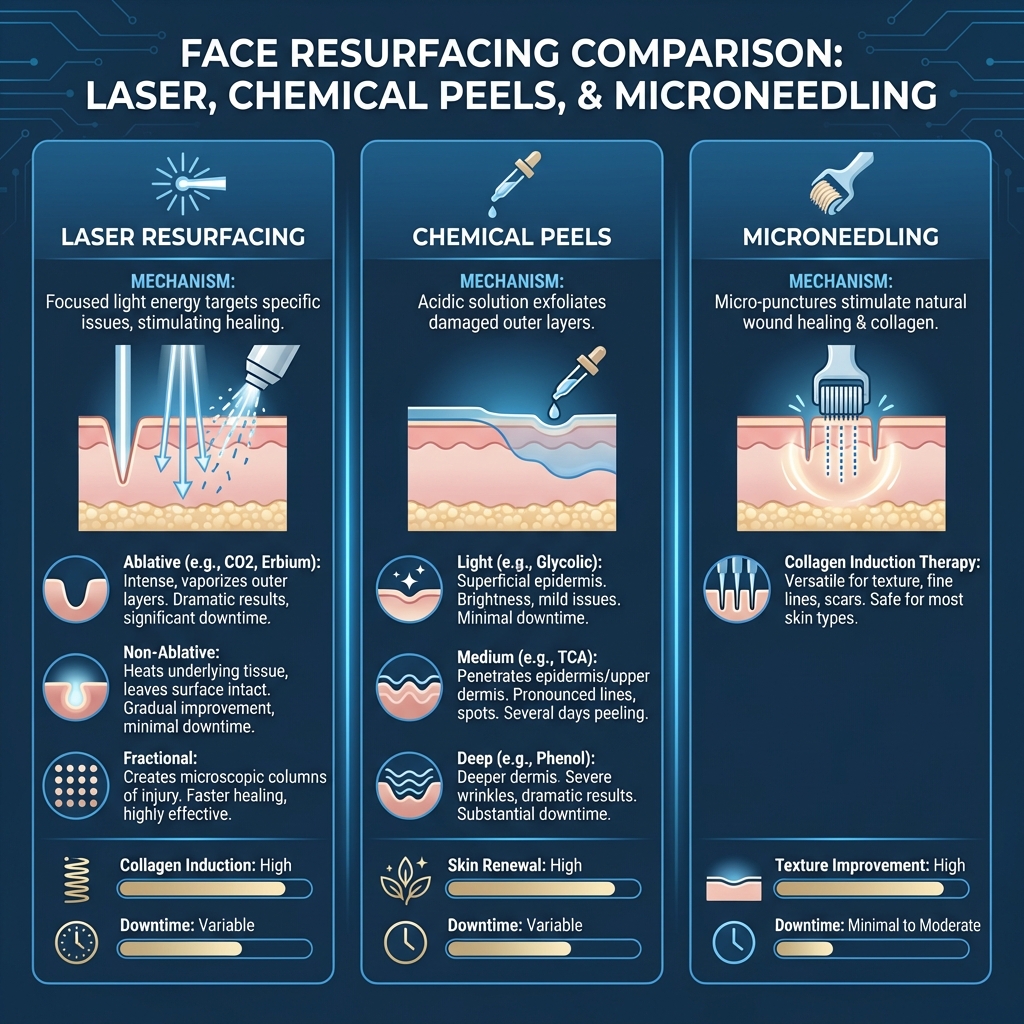
Laser technology represents a cornerstone of modern skin resurfacing. These treatments use focused light energy to target specific skin issues, stimulating the body’s natural healing processes.
- Ablative Lasers (e.g., CO2 and Erbium Lasers): These are the most intensive laser treatments. They work by precisely vaporizing the outermost layers of damaged skin, creating a controlled wound. This process triggers a robust healing response, leading to significant collagen production and dramatic improvements in texture, wrinkles, and scars. CO2 lasers are renowned for their effectiveness in treating deep wrinkles and severe sun damage, while Erbium lasers offer a slightly gentler approach with less downtime, making them suitable for finer lines and more superficial concerns.
- Non-Ablative Lasers: In contrast, non-ablative lasers heat the underlying skin tissue without removing the surface layer. This gentler approach stimulates collagen growth over time, leading to gradual improvements with minimal downtime. They are ideal for addressing fine lines, mild sun damage, and improving overall skin tone and texture.
- Fractional Technology: A significant advancement in both ablative and non-ablative laser systems is fractional technology. Instead of treating the entire skin surface, fractional lasers create microscopic columns of thermal injury, leaving surrounding tissue intact. This allows for faster healing, reduced downtime, and a lower risk of side effects while still achieving impressive results. This approach is highly effective for collagen induction, scar revision, and improving skin elasticity.
Chemical Peels
Chemical peels involve applying a carefully formulated acidic solution to the skin, which exfoliates damaged outer layers. The depth of the peel determines the intensity of exfoliation and the extent of skin renewal.
- Light Peels (e.g., Glycolic Acid, Salicylic Acid): These peels use milder acids to remove the outermost layer of the epidermis. They are excellent for improving skin brightness, treating mild acne, and reducing superficial pigmentation. They typically involve minimal to no downtime.
- Medium Peels (e.g., Trichloroacetic Acid – TCA): Medium-depth peels penetrate deeper into the epidermis and upper dermis. They are effective for addressing more pronounced fine lines, sun spots, and moderate acne scars. Recovery typically involves several days of peeling and redness.
- Deep Peels (e.g., Phenol Peels): These are the most aggressive chemical peels, penetrating into the deeper layers of the dermis. They offer dramatic results for severe wrinkles, significant sun damage, and deep scars. However, they require substantial downtime and are performed under strict medical supervision due to potential risks.
Mechanical Resurfacing
Mechanical methods physically remove dead skin cells or layers to promote skin regeneration.
- Microdermabrasion: This gentle exfoliation technique uses a device to spray fine crystals or a diamond tip to buff away the superficial layer of dead skin cells. It’s excellent for improving dullness, minor texture irregularities, and enhancing product absorption, often referred to as a “lunchtime” procedure due to its minimal downtime.
- Dermabrasion: A more aggressive procedure, dermabrasion uses a rapidly rotating brush or wheel to abrade the outer layers of skin. It’s effective for deeper scars, significant textural irregularities, and severe sun damage, but it requires substantial recovery time and is typically performed by a surgeon.
Microneedling
Also known as collagen induction therapy, microneedling involves creating microscopic punctures in the skin using fine needles. These micro-injuries stimulate the body’s natural wound healing process, leading to increased collagen and elastin production. It’s a versatile treatment for fine lines, scars, and overall skin texture improvement, safe for most skin types and tones.
Here’s a comparative overview of these primary resurfacing options:
Safety Protocols in Medical Aesthetics and Wellness
The pursuit of aesthetic enhancement must always be underpinned by rigorous safety protocols. In medical aesthetics and wellness, the expertise of the provider is paramount. Patients should always seek treatments from qualified professionals who possess the necessary certifications and experience in performing skin resurfacing procedures. This includes understanding the nuances of various technologies and their appropriate application.
A comprehensive risk assessment is an essential first step before any treatment. This involves a detailed review of the patient’s medical history, current medications, and any pre-existing skin conditions. Identifying contraindications, such as active infections, recent isotretinoin use, or certain autoimmune diseases, is critical to prevent adverse outcomes. For instance, specific laser treatments may be contraindicated for individuals with a history of keloid scarring or those who have undergone radiation therapy to the face.
Moreover, infection control is a non-negotiable aspect of any medical aesthetic procedure. Strict sterilization practices for equipment, adherence to aseptic techniques, and proper post-procedure care instructions are vital to minimize the risk of infection.
Understanding skin types is also crucial for safe and effective treatment. The Fitzpatrick scale classifies skin based on its reaction to sun exposure, guiding practitioners in selecting appropriate laser settings or chemical peel strengths to minimize risks like hyperpigmentation or hypopigmentation, especially in individuals with darker skin tones. Similarly, the Glogau classification helps assess the degree of photoaging, informing treatment intensity and expected outcomes. The responsible application of these technologies, including lasers and intense pulsed light, is a complex field that requires specialized knowledge, as detailed in research exploring The role of lasers and intense pulsed light technology in dermatology. This emphasis on safety, meticulous assessment, and expert execution ensures that patients receive the most effective and secure care possible.
Clinical Indications and Patient Candidacy
Determining the “best” face resurfacing treatment is highly individualized, depending on the specific skin concerns, desired outcomes, and patient suitability. Modern aesthetic medicine offers a spectrum of solutions tailored to address a wide array of dermatological issues.

For individuals struggling with acne scars, treatments like fractional laser resurfacing (both ablative and non-ablative) and microneedling are often highly effective. These methods stimulate collagen remodeling, helping to smooth out pitted or uneven scar tissue. Chemical peels, particularly medium-depth TCA peels, can also significantly improve the appearance of superficial acne scars.
Rhytides, or wrinkles, are another primary concern. Deeper wrinkles and pronounced lines often respond best to ablative laser resurfacing (CO2 or Erbium), which can provide dramatic tightening and smoothing. Non-ablative lasers and medium chemical peels are excellent choices for fine lines and early signs of aging, encouraging collagen production with less downtime.
Photoaging, characterized by sun spots, uneven texture, and fine lines resulting from chronic sun exposure, can be effectively treated with a variety of methods. IPL (Intense Pulsed Light) is particularly adept at targeting pigmentation and redness, while fractional lasers and chemical peels improve overall texture and tone.
Hyperpigmentation, including conditions like melasma and age spots, often benefits from chemical peels (especially those containing ingredients like glycolic acid or TCA) and certain non-ablative lasers or IPL treatments that target melanin. It’s crucial for patients with darker skin tones to choose practitioners experienced in treating their specific skin type to minimize the risk of post-inflammatory hyperpigmentation.
Actinic keratosis, which are rough, scaly patches caused by sun exposure and can be pre-cancerous, can be addressed with deeper chemical peels or ablative laser resurfacing. These treatments remove the damaged cells, allowing healthier skin to emerge.
For concerns related to overall skin laxity, while surgical options offer the most significant lift, non-ablative lasers and microneedling with radiofrequency can provide noticeable tightening by stimulating collagen and elastin production. Research continues to assess the comprehensive effects of laser technology on skin rejuvenation, with studies like Assessment of Laser Effects on Skin Rejuvenation providing valuable insights into their efficacy.
Beyond specific concerns, patient goals and lifestyle factors play a critical role in treatment selection. A patient seeking rapid, dramatic results with a willingness to endure longer downtime might opt for an ablative laser, while someone prioritizing minimal interruption to their daily life might prefer non-ablative options or light chemical peels. Factors such as sun exposure habits, smoking status, and overall health also influence candidacy and treatment planning. A thorough consultation with a qualified provider is indispensable to align expectations with realistic outcomes and to select the most appropriate and safest treatment plan.
Navigating Recovery and Procedural Expectations
Understanding the recovery process is as crucial as selecting the right treatment. Each face resurfacing method comes with its own set of expectations regarding downtime, post-procedure care, and potential side effects. Preparing adequately can significantly enhance comfort and optimize healing.
For more intensive treatments like ablative laser resurfacing or deep chemical peels, patients can expect a more significant recovery period. Immediately after the procedure, the treated area will likely be red, swollen, and may experience oozing or crusting. The skin will undergo re-epithelialization, where new skin cells migrate to cover the treated surface. This phase typically lasts 7 to 10 days for ablative lasers, with full recovery from redness and sensitivity extending for weeks to months. During this time, strict adherence to post-procedure care, including gentle cleansing, application of prescribed post-procedure emollients (like petroleum jelly or specialized creams), and diligent sun avoidance, is critical. Patients with a history of herpes simplex virus may be prescribed antiviral prophylaxis to prevent outbreaks.
Medium chemical peels also involve noticeable downtime, with several days of redness and desquamation (peeling) as the superficial layers of skin shed. This process can be uncomfortable, but proper moisturizing and sun protection help manage symptoms.
In contrast, treatments like non-ablative lasers, light chemical peels, and microneedling typically have much shorter recovery times. Patients might experience mild redness and swelling for a day or two. For microneedling, often referred to as collagen induction therapy, the tiny micro-injuries heal quickly, and patients can usually resume normal activities within 24-48 hours. The advancements in microneedling techniques and its widening applications are continually being explored, as detailed in studies like Microneedling: Advances and widening horizons. While the immediate downtime is minimal, it’s still essential to protect the skin from sun exposure and use gentle, hydrating products.
Regardless of the treatment intensity, consistent sun avoidance is a universal recommendation during the healing phase and beyond. UV exposure can not only impede healing but also lead to post-inflammatory hyperpigmentation, especially in vulnerable, newly resurfaced skin. Avoiding topical retinoids and other active skincare ingredients for a period recommended by your provider is also important to prevent irritation. Understanding these procedural expectations and committing to the aftercare regimen is key to achieving the desired long-term results and ensuring a smooth, successful recovery.
Long-Term Results in Medical Aesthetics and Wellness
The journey of skin resurfacing extends far beyond the immediate recovery period. Achieving and maintaining long-term results in medical aesthetics and wellness requires a strategic approach that integrates consistent maintenance routines, an understanding of ongoing collagen remodeling, and a commitment to overall skin health.
While the initial improvements from resurfacing treatments can be dramatic, the natural aging process and environmental factors continue to exert their influence. Therefore, results are not permanent, but they can be significantly prolonged and enhanced through diligent care. This often involves periodic follow-up treatments, which may be less intensive than the initial procedure but are crucial for sustaining the benefits. For instance, after an ablative laser treatment, a patient might opt for lighter chemical peels or non-ablative laser sessions to maintain skin quality.
The true magic of many resurfacing treatments lies in their ability to stimulate the body’s natural production of collagen and elastin. This collagen remodeling process continues for months after the initial treatment, leading to cumulative benefits that gradually improve skin texture, firmness, and elasticity. To support this ongoing regeneration, a robust daily skincare regimen is essential. This typically includes medical-grade antioxidants, hydrating serums, and, most importantly, broad-spectrum sun protection. Daily application of sunscreen with an SPF of 30 or higher is non-negotiable for preserving results and preventing new sun damage.
The synergy between in-clinic treatments and at-home skincare synergy is vital. Products containing ingredients like retinoids (once cleared by your provider post-recovery), peptides, and growth factors can further support collagen production and cellular turnover. Patient satisfaction is closely tied to realistic expectations and a clear understanding that resurfacing is a continuous process. With proper care and consistent effort, the treatment longevity can be significantly extended, allowing individuals to enjoy healthier, more youthful-looking skin for years to come.
Frequently Asked Questions
Navigating facial skin resurfacing can bring up many questions. Here, we address some of the most common inquiries to help you make informed decisions.
How do the costs of different facial skin resurfacing treatments compare?
The cost of facial skin resurfacing treatments can vary widely, influenced by factors such as the type of treatment, the size of the treated area, the number of sessions required, the practitioner’s expertise, and geographic location.
- Laser Resurfacing: This category often represents a higher investment. Ablative laser treatments (like CO2 or Erbium) can range from $2,000 to $5,000 or more per session, especially for full-face treatments, given their intensity and the specialized equipment involved. Non-ablative and fractional laser treatments are generally less expensive per session, typically ranging from $500 to $1,500, but often require multiple sessions to achieve desired results.
- Chemical Peels: These tend to be more affordable per session. Light peels can cost anywhere from $100 to $300. Medium peels might range from $300 to $700. Deep phenol peels, due to their complexity and associated medical supervision, can be comparable to ablative laser costs, often exceeding $1,500.
- Microneedling: Microneedling sessions typically fall in the range of $200 to $700 per session. A series of 3-6 sessions is usually recommended for optimal results, bringing the total cost into consideration.
- Microdermabrasion: As a less intensive treatment, microdermabrasion is usually the most budget-friendly option, with sessions often costing between $100 and $250.
When considering price variables, it’s important to look beyond the per-session cost and evaluate the long-term value and the total investment required for a complete treatment plan. Some clinics offer package deals for multiple sessions, which can reduce the overall expense. Always inquire about all associated costs during your consultation.
What is the typical downtime and recovery process for each treatment?
The typical downtime and recovery process vary significantly among different resurfacing treatments, impacting social activities and work schedules.
- Ablative Laser Resurfacing (CO2, Erbium): This has the longest downtime. Patients can expect 1-2 weeks of intense redness, swelling, and crusting as the skin heals. Full recovery, where redness completely subsides, can take 1-3 months. During this time, meticulous post-care is essential, and activity restrictions are significant. Social downtime is considerable.
- Non-Ablative and Fractional Laser Resurfacing: These treatments offer a much faster non-ablative speed. Downtime is typically 1-5 days, characterized by redness, mild swelling, and possibly some flaking or bronzing of the skin. Patients can usually return to normal activities fairly quickly, with makeup often able to camouflage residual redness.
- Medium Chemical Peels (TCA): Expect 5-7 days of downtime. The skin will turn red, then brown, and begin to peel significantly. This healing phase involves noticeable desquamation, and social activities might be limited.
- Light Chemical Peels: Minimal to no downtime. There might be slight redness and mild flaking for 1-3 days, easily covered with makeup.
- Microneedling: Very short downtime of 1-3 days. The skin will appear red, similar to a sunburn, and may feel tight. There is usually no significant peeling.
- Microdermabrasion: Virtually no downtime. Some temporary pinkness might occur, but patients can immediately resume normal activities.
Regardless of the treatment, strict sun protection is crucial during all recovery processes to prevent complications and ensure optimal results.
Who is a good candidate for each type of facial skin resurfacing treatment?
Matching the right treatment to the right individual is fundamental for successful and safe outcomes.
- Ablative Laser Resurfacing (CO2, Erbium): Ideal candidates are typically individuals with significant sun damage, deep wrinkles, severe acne scars, or pre-cancerous lesions. They should have lighter skin types (Fitzpatrick I-III) to minimize pigmentation risks and be prepared for substantial downtime. They must also have realistic expectations and be committed to strict post-care.
- Non-Ablative and Fractional Laser Resurfacing: Good candidates include those with fine lines, mild to moderate sun damage, uneven skin tone, and superficial scars. These treatments are generally safer for a broader range of skin tones (Fitzpatrick I-IV) and appeal to individuals seeking gradual improvement with minimal downtime.
- Chemical Peels (Light to Medium): Excellent for individuals with mild to moderate sun damage, fine lines, uneven pigmentation (including melasma), and mild acne. Light peels are suitable for almost all skin types, while medium peels require careful assessment for darker tones.
- Deep Chemical Peels (Phenol): Reserved for patients with severe wrinkles, deep scars, and significant sun damage, typically with fair skin. This is a serious procedure requiring extensive medical evaluation due to potential systemic risks.
- Microneedling: A versatile option for almost all skin types and colors (Fitzpatrick I-VI) seeking improvement in fine lines, texture, mild scarring, and enlarged pores. It’s particularly favored by those concerned about hyperpigmentation risks with lasers.
- Microdermabrasion: Best for individuals with minor skin imperfections like dullness, superficial texture issues, and very fine lines. It’s a great introductory treatment for those new to resurfacing and is safe for all skin types.
Across all treatments, a candidate’s medical history (e.g., history of cold sores, propensity for keloids), overall health, and commitment to sun protection are vital considerations. A thorough consultation will assess these factors to determine the most appropriate and safest approach for your targeted concerns.
Conclusion
The integration of technology in modern aesthetic medicine has revolutionized how we approach skin health and rejuvenation. From the precise energy delivery of lasers to the controlled exfoliation of chemical peels and the collagen-inducing micro-injuries of microneedling, a diverse array of advanced face resurfacing treatments is available to address a multitude of skin concerns.
This guide has provided a comprehensive summary of these options, highlighting their unique mechanisms, benefits, and considerations for candidacy and recovery. We’ve seen how treatments stimulate vital processes like neocollagenesis and neoelastinogenesis, leading to healthier, more youthful skin from within.
The future outlook for aesthetic medicine is bright, with ongoing innovations promising even more effective, safer, and less invasive options. However, the cornerstone of successful outcomes remains personalized care. The “best” treatment is never a one-size-fits-all solution but rather a carefully selected plan tailored to an individual’s specific skin type, concerns, goals, and lifestyle.
By understanding the principles of technological synergy and prioritizing consultation with qualified, experienced providers, individuals can confidently navigate their options. This ensures that their journey towards aesthetic excellence is not only effective but also safe and aligned with their overall health and wellness objectives.

The Editorial Team at Healthcare Business Today is made up of experienced healthcare writers and editors, led by managing editor Daniel Casciato, who has over 25 years of experience in healthcare journalism. Since 1998, our team has delivered trusted, high-quality health and wellness content across numerous platforms.
Disclaimer: The content on this site is for general informational purposes only and is not intended as medical, legal, or financial advice. No content published here should be construed as a substitute for professional advice, diagnosis, or treatment. Always consult with a qualified healthcare or legal professional regarding your specific needs.
See our full disclaimer for more details.