Global Market Dynamics and Cosmetic Surgery Trends

The world of aesthetic enhancement is undergoing a remarkable transformation. What was once seen as purely cosmetic is now evolving into a holistic approach to aesthetic health. We are witnessing a surge in patient-centric care, driven by innovation and changing desires.
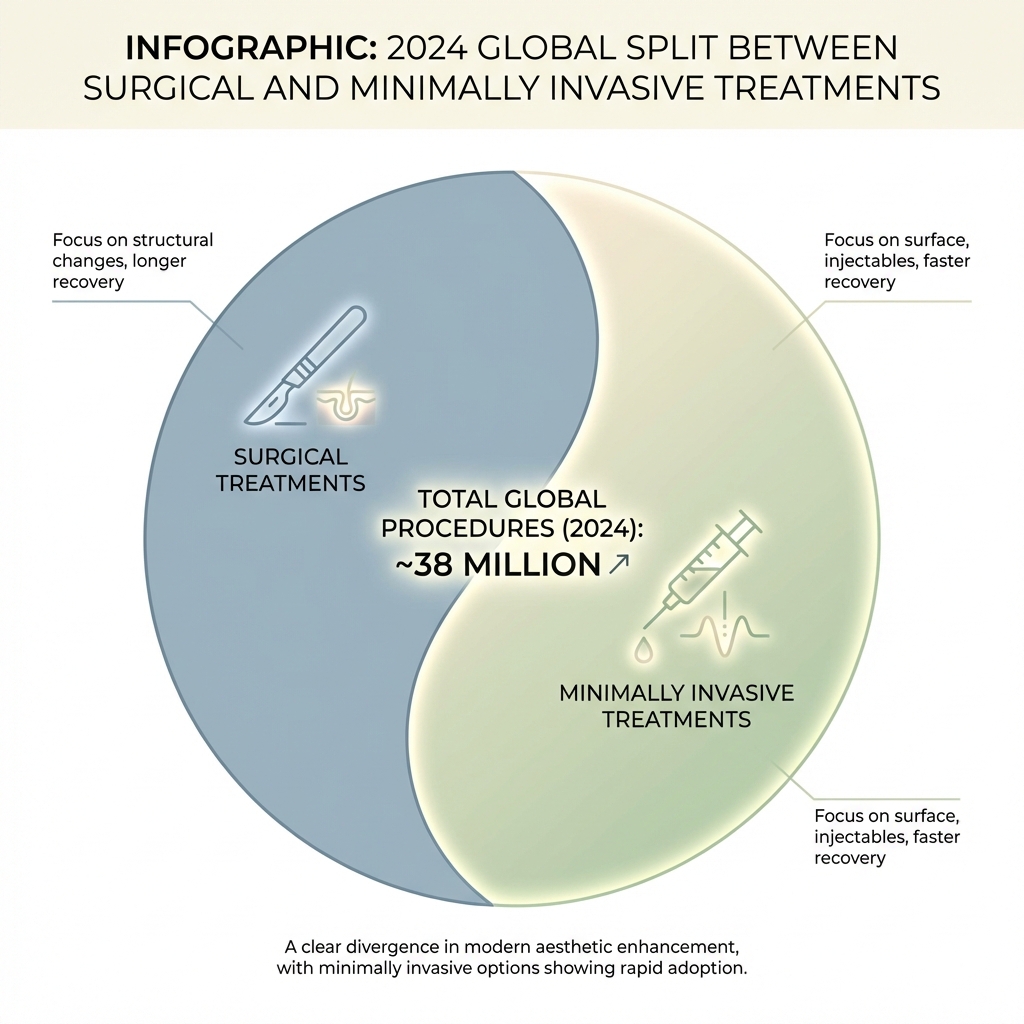
Globally, an estimated 38 million cosmetic procedures were performed in 2024. This marks an impressive 40% increase since 2020. This growth reflects a broader acceptance and accessibility of treatments. These procedures show a clear split between surgical and minimally invasive options.
We will explore the key trends shaping modern cosmetic surgery. We’ll delve into technological advancements. We will also look at evolving patient preferences. Join us as we uncover the dynamic landscape of aesthetic medicine today.
The aesthetic industry is experiencing unprecedented growth, driven by technological advancements, increasing social acceptance, and a broader demographic appeal. The global aesthetic surgery market was valued at over $59 billion in 2024 and is projected to reach $81 billion by 2032. This robust expansion is not solely confined to surgical interventions; the non-invasive treatment market alone was valued at USD 61.2 billion in 2022 and is expected to soar to $190.5 billion by 2030, demonstrating a remarkable Compound Annual Growth Rate (CAGR) of 15.4%.
This surge underscores a fundamental shift in how individuals approach beauty and self-care. Patients are increasingly prioritizing aesthetic health, viewing cosmetic procedures as integral to their overall well-being. This perspective has contributed to the market’s resilience, even amidst economic uncertainties. The evolution in procedure volumes and preferences from 2020 to 2024 highlights a dynamic landscape where innovation and patient demand continually reshape the industry.
While exact regional statistics can fluctuate, countries like the US and Brazil consistently lead in the volume of cosmetic procedures. In 2023, the US alone recorded 347,000 liposuctions and 304,000 breast augmentations, alongside millions of minimally invasive treatments. These figures not only reflect high demand but also the diverse range of available options. For those seeking comprehensive information on various body sculpting options and how they fit into these global trends, exploring resources on leading cosmetic body sculpting can provide valuable insights.
Regional Shifts in Aesthetic Demand
Distinct regional preferences and growth patterns characterize the global landscape of aesthetic demand. North America, particularly the United States, remains a dominant force, consistently performing a high volume of both surgical and non-surgical procedures. This is supported by a mature market, advanced medical infrastructure, and a culture that increasingly embraces aesthetic enhancements.
Latin American countries, especially Brazil, are also significant players, often known for their expertise in body contouring and surgical procedures. In Asia, markets such as South Korea and China are experiencing rapid expansion, driven by rising disposable incomes, evolving beauty standards, and a growing middle class. This regional diversification also contributes to medical tourism, where patients travel across borders to access specialized treatments or more affordable options, thereby further influencing global statistics and trends. However, patients must prioritize safety and regulatory standards, regardless of where they choose to undergo a procedure.
The Economic Resilience of the Beauty Industry
Despite fluctuations in the broader economy, the aesthetic industry has demonstrated remarkable resilience. This stability can be attributed to several factors. Firstly, cosmetic procedures are increasingly viewed as a form of self-care and an investment in personal well-being, leading many individuals to prioritize these expenditures. Millennials, in particular, are driving a significant portion of this growth, integrating aesthetic treatments into their routine self-care practices.
Secondly, innovations in financing, such as medical credit cards and payment plans, have made procedures more accessible to a broader demographic. This financial flexibility allows patients to manage costs, even for more extensive treatments. The industry’s ability to adapt to consumer needs, offer a range of price points, and continually introduce new, effective therapies has positioned it as a stable and growing sector, capable of thriving even amid economic headwinds.
The Dominance of Minimally Invasive and Regenerative Aesthetics
The aesthetic landscape has been significantly reshaped by the rise of minimally invasive procedures, which now constitute the vast majority of all treatments. In 2024, over 20.5 million non-invasive procedures were recorded worldwide, making up roughly 80% of all aesthetic treatments. This dominance stems from their effectiveness, minimal downtime, and often more subtle, natural-looking results, appealing to a broad spectrum of patients.

Leading this charge are neuromodulators like Botox, with over 9 million injections globally in 2023, and soft tissue fillers, including 5 million hyaluronic acid fillers. These treatments effectively address wrinkles, restore volume, and enhance facial contours without the need for surgery. Skin resurfacing treatments, chemical peels, and various laser therapies also remain highly popular for improving skin texture and tone.
Beyond these established procedures, we are seeing a significant surge in biostimulators and regenerative aesthetics. These advanced treatments, such as exosomes and platelet-rich plasma (PRP), leverage the body’s natural healing and regenerative capabilities to improve skin quality, stimulate collagen production, and offer more sustainable, natural outcomes. This focus on “prejuvenation” – proactive, subtle interventions to prevent signs of aging – is particularly popular among younger demographics.
Here’s a comparison of some top non-surgical procedures:
| Procedure | Primary Benefit | Typical Recovery Time | Longevity |
|---|---|---|---|
| Botox (Neuromodulators) | Reduces dynamic wrinkles | Minimal (hours) | 3–4 months |
| Hyaluronic Acid Fillers | Adds volume, fills static wrinkles | Minimal (1–2 days) | 6–18 months |
| Skin Resurfacing (Laser) | Improves texture, reduces spots | 3–7 days (depending) | 1–3 years (with upkeep) |
| Chemical Peels | Exfoliates, improves tone | 2–7 days (depending) | 6–12 months |
| PRP / Exosomes | Stimulates collagen, rejuvenates skin | Minimal (1–2 days) | 1–2 years (series recommended) |
The world of injectables is constantly evolving, offering patients more refined and longer-lasting options. Newer neuromodulators like Daxxify provide extended wrinkle reduction, reducing the frequency of treatments. Soft tissue fillers are also advancing, with formulations designed for specific areas of the face that offer more natural movement and integration with facial tissues. Beyond simple volume replacement, there’s a growing emphasis on collagen stimulation, with biostimulatory fillers encouraging the body to produce its own collagen for gradual, natural-looking improvements. Techniques such as micro-coring and various needle-free enhancements are also emerging, promising less invasive ways to achieve aesthetic goals with reduced discomfort and downtime.
Regenerative Medicine and Natural Outcomes
Regenerative medicine is a frontier in aesthetics, shifting the focus from simply altering appearance to enhancing the body’s inherent healing and rejuvenation processes. Procedures utilizing stem cells, platelet-rich plasma (PRP), and exosomes are becoming increasingly common. These treatments harness growth factors and cellular components to promote tissue repair, stimulate collagen and elastin production, and improve overall skin health from within.
Bio-stimulating fillers, for instance, don’t just fill space; they actively encourage the skin to rebuild its own structural support. This approach leads to more natural, sustainable results, often described as “structural improvements” rather than temporary fixes. Patients are increasingly seeking these methods for their ability to deliver subtle, yet profound, enhancements that align with a desire for sustainable beauty and graceful aging.
Technological Innovations Shaping the Future of Aesthetics
The future of cosmetic surgery is inextricably linked to cutting-edge technology. Innovations are not only making procedures safer and more effective but also revolutionizing the patient experience from consultation to recovery. Artificial Intelligence (AI) and machine learning are at the forefront, transforming how aesthetic treatments are planned and executed. AI systems can analyze vast amounts of patient data, including facial structure, skin quality, and desired outcomes, to predict results and optimize surgical plans with unprecedented precision.
This analytical power extends to 3D imaging and simulation, allowing patients to visualize their potential post-procedure appearance with remarkable accuracy. This technology empowers patients to make informed decisions and helps surgeons set realistic expectations. Beyond planning, robotic-assisted surgery is emerging, promising enhanced precision in delicate procedures like fat transfer and suturing, potentially leading to more consistent results and reduced human error. For those interested in how technology is making procedures more accessible and less invasive, exploring resources on Awake cosmetic surgery trends can offer valuable insights into the latest advancements that prioritize patient comfort and faster recovery.
Furthermore, virtual reality (VR) consultations are becoming a reality, offering immersive experiences in which patients can explore aesthetic options and understand the procedural journey in a simulated environment. These technological leaps are not just about efficiency; they are about personalization, safety, and ultimately, delivering superior aesthetic outcomes.
AI and 3D Imaging in Patient Consultations
The integration of AI and 3D imaging into patient consultations is revolutionizing the pre-procedure experience. AI-powered facial analysis tools can objectively assess facial proportions, identify areas of concern, and even suggest personalized treatment plans based on a patient’s unique anatomy and aesthetic goals. This data-driven approach moves beyond subjective evaluations, offering a more scientific basis for recommendations.
Complementing AI, 3D imaging allows for volumetric mapping of the face and body. Patients can view a digital “before-and-after” simulation that provides a realistic preview of potential results. This visual clarity is invaluable for setting accurate expectations, fostering trust between patient and surgeon, and ensuring that the proposed treatment aligns perfectly with the patient’s vision. It transforms the consultation from a descriptive discussion into an interactive, visual journey.
Robotics and Advanced Surgical Tools
Robotics and advanced surgical tools are ushering in an era of enhanced precision and minimally invasive techniques. Robotic systems can assist surgeons in procedures requiring extreme accuracy, such as delicate fat transfer for facial or body contouring, or automated suturing, which can lead to more consistent, aesthetically pleasing scars.
Beyond robotics, other advanced tools, such as radiofrequency (RF) technology and ultrasound-assisted liposuction, are improving outcomes by enabling more controlled tissue manipulation, better skin tightening, and smoother contours. Laser-guided contouring further refines these techniques, allowing for highly targeted fat reduction and body shaping. These technologies collectively aim to reduce invasiveness, minimize trauma to surrounding tissues, shorten recovery times, and ultimately deliver superior, more predictable results for patients.
The “Ozempic Effect” and Shifting Body Ideals
A significant new trend in cosmetic surgery is the rise of GLP-1 weight-loss medications such as Ozempic, Wegovy, and Mounjaro. While these drugs offer life-changing weight loss for many, they often come with an unintended side effect: rapid volume loss that can lead to increased skin laxity, particularly in the face and body. This phenomenon has been dubbed the “Ozempic face” or “Ozempic body,” characterized by a gaunt appearance, sagging jowls, or excess skin folds.
Consequently, we are seeing a surge in demand for procedures that address these specific concerns. An estimated 20% of patients on GLP-1 weight-loss drugs seek body contouring procedures. These include tummy tucks, liposuction (for residual stubborn fat), and various lifts to remove excess skin. This trend highlights a broader shift in aesthetic ideals, moving from the “curvy” aesthetic that dominated the past decade towards a leaner, more streamlined physique.
For patients experiencing massive weight loss, whether from GLP-1 drugs or bariatric surgery, the need for body contouring is profound. Here’s a list of standard procedures to address significant skin laxity:
- Tummy Tuck (Abdominoplasty): Removes excess skin and fat from the abdomen and tightens underlying muscles.
- Lower Body Lift: Addresses sagging skin in the abdomen, hips, outer thighs, and buttocks.
- Brachioplasty (Arm Lift): Removes excess skin and fat from the upper arms, often referred to as “bat wings.”
- Thigh Lift: Reshapes the thighs by reducing excess skin and fat.
- Breast Mastopexy (Breast Lift): Lifts and reshapes sagging breasts, often combined with augmentation or reduction.
- Facelift/Neck Lift: Addresses facial and neck skin laxity, often exacerbated by rapid weight loss.
This “Ballet Body” aesthetic, emphasizing a natural, athletic, and proportionate physique, is becoming increasingly desirable. It signifies a departure from exaggerated enhancements, favoring instead a sculpted, graceful silhouette that often requires a combination of surgical and non-surgical approaches.
Addressing Volume Loss and Skin Laxity
The rapid weight loss induced by GLP-1 medications often results in significant volume depletion, particularly in the face, and widespread skin laxity. To counteract the “Ozempic face,” patients are increasingly opting for facial fat grafting, where fat harvested from other areas of the body is meticulously injected into the face to restore youthful contours and fullness. More traditional procedures, such as deep-plane facelifts and neck lifts, are also seeing renewed interest, as they provide the most effective solution for severe skin sagging.
For the body, the excess skin left after substantial weight loss necessitates comprehensive contouring. Lower body lifts are crucial for addressing sagging in the abdomen, hips, thighs, and buttocks. Brachioplasty (arm lifts) and thigh lifts target specific areas where skin elasticity has been compromised. For the breasts, a breast mastopexy (lift) is often performed, sometimes with a small implant or fat transfer, to restore a more youthful position and shape. These procedures are essential for patients to achieve a body that matches their new, healthier weight.
The Resurgence of the Lean Aesthetic
The aesthetic pendulum has swung, and the “thin is in” mantra is making a powerful comeback, primarily influenced by the widespread use of GLP-1 weight-loss drugs and social media trends. This shift favors streamlined silhouettes and athletic proportions over the previously popular exaggerated curves. Consequently, we are observing a trend towards the removal of oversized implants, with many patients opting for more minor, more natural-looking breast augmentations or even breast reductions to achieve a more proportionate figure.
The “Skinny BBL” (Brazilian Butt Lift) is another manifestation of this trend, where less fat is transferred to create a subtle, refined enhancement rather than a dramatic increase in size. Even procedures like buccal fat removal, which creates a more defined, sculpted cheek area, have seen fluctuating interest, sometimes aligning with this leaner aesthetic. This resurgence emphasizes a desire for a toned, fit appearance, often requiring precise body contouring to achieve.
Demographic Shifts and Evolving Consumer Preferences
The demographic profile of individuals seeking cosmetic procedures is broadening significantly, reflecting a more inclusive and diverse aesthetic landscape. While women continue to be the primary recipients of treatments, male participation has grown by 45% from 2000 to 2024, now representing nearly 15% of total treatments. This increasing male interest signals a greater acceptance of aesthetic enhancements across genders.
Furthermore, different age groups are approaching aesthetics with distinct motivations. Gen Z is driving a trend towards preventative and subtle enhancements, often influenced by social media. Millennials view procedures as part of holistic self-care, while Gen X and Baby Boomers focus on rejuvenation and maintenance. The influence of social media, particularly platforms like Instagram, cannot be overstated. Since its rise in popularity around 2012, Instagram has significantly increased interest in aesthetic procedures, leading to a notable increase in Google search volume for treatments such as Botox, lip augmentation, and rhinoplasty. This digital transparency has normalized cosmetic surgery, making it a more open topic of discussion and aspiration.
Rising Male Participation in Aesthetic Medicine
The aesthetic industry is no longer solely a female domain. Men are increasingly seeking cosmetic procedures to enhance their appearance, driven by a desire for a competitive edge in both professional and personal spheres. This rising male participation is evident across a range of treatments. “Brotox” (Botox for men) is popular for smoothing wrinkles and maintaining a refreshed appearance without looking “done.” Gynecomastia surgery (male breast reduction) remains a top surgical procedure, addressing enlarged male breast tissue.
Beyond these, male body sculpting, including liposuction to achieve a more athletic physique and jawline contouring for a stronger, more defined facial profile, is gaining traction. Hair restoration procedures are mainly in high demand. This pursuit of an “executive edge” or simply a more confident self-image underscores a growing acceptance among men that aesthetic medicine can play a valuable role in their lives.
Generational Approaches to Aging
Each generation approaches aesthetic care with unique perspectives and priorities, shaping distinct market trends.
- Gen Z (under 25): This demographic is highly influenced by social media and often seeks “prejuvenation” – starting with subtle, preventative treatments like low-dose neuromodulators, micro fillers, and light devices in their late teens or early twenties. Their goal is to maintain youthfulness and prevent signs of aging before they become prominent, often preferring natural and undetectable results.
- Millennials (25-40): Viewing aesthetic procedures as part of a holistic self-care routine, Millennials often combine surgical and non-surgical treatments with wellness practices. They are proactive in addressing early signs of aging, seeking procedures such as lip augmentation, early injectables, and body contouring to refine their appearance and boost confidence, often influenced by social media’s transparency.
- Gen X (40-55): This generation typically focuses on more significant rejuvenation to combat visible signs of aging. They are strong candidates for procedures like facelifts, neck lifts, eyelid surgery, and more extensive body contouring after childbirth or weight fluctuations. They seek to restore a youthful appearance and maintain a vibrant image.
- Baby Boomers (55+): While still interested in rejuvenation, they often prioritize maintenance and functional concerns alongside aesthetics. They frequently opt for facelifts, eyelid surgery, and skin resurfacing to achieve a refreshed look, usually emphasizing graceful aging and improving quality of life.
These generational differences highlight the dynamic, evolving nature of consumer preferences in the aesthetic industry.
Frequently Asked Questions about Cosmetic Surgery Trends
What are the most popular cosmetic surgery trends for men in 2024?
Male participation in cosmetic procedures has grown by 45% from 2000 to 2024, now representing nearly 15% of the total aesthetic market. In 2024, popular trends for men include gynecomastia reduction, liposuction for body sculpting, and the continued rise of neuromodulators (Brotox) to smooth facial lines. Additionally, jawline enhancement and hair restoration procedures are increasingly sought to achieve a more defined, youthful “executive edge.”
How do GLP-1 weight loss medications influence current cosmetic surgery trends?
GLP-1 weight-loss medications have created a new patient demographic seeking cosmetic procedures. Approximately 20% of GLP-1 users are estimated to seek body contouring procedures to address the excess skin and volume loss that often accompany rapid weight reduction. This includes increased demand for tummy tucks, arm lifts, thigh lifts, and breast lifts. In fact, the “Ozempic face” phenomenon (characterized by gauntness and sagging) has driven demand for facial fat grafting and deep-plane facelifts to restore volume and tighten skin. These medications are driving a more holistic approach to weight management, combining medical weight loss with surgical refinement.
Why is board certification essential when choosing a surgeon?
Choosing a board-certified plastic surgeon is paramount for ensuring patient safety and achieving optimal results. Board certification signifies that a surgeon has undergone rigorous training, passed comprehensive examinations, and adheres to the highest standards of medical ethics and patient care. This includes specialized training in anatomy, surgical techniques, and the management of complications. A board-certified surgeon operates in accredited facilities, adheres to strict safety protocols, and remains committed to continuous education. This expertise is crucial for minimizing risks, providing personalized treatment plans, and delivering verifiable, high-quality outcomes, giving patients peace of mind and confidence in their aesthetic journey.
Conclusion
The world of cosmetic surgery is in constant evolution, marked by unprecedented growth, technological innovation, and shifting aesthetic ideals. We have seen how minimally invasive procedures now dominate the market, offering practical solutions with less downtime, while regenerative aesthetics promise natural, sustainable results. Technological advancements, from AI-powered planning to robotic precision, are making procedures safer, more predictable, and highly personalized.
The “Ozempic Effect” has introduced new challenges and opportunities, driving demand for body contouring and facial volume restoration, and reinforcing a lean aesthetic. Simultaneously, demographic shifts, particularly the significant increase in male participation and distinct generational approaches to aging, underscore a broader societal acceptance of aesthetic health.
As we look towards 2030-2034, the future of cosmetic surgery appears bright, characterized by continued innovation, a focus on natural refinement, and increasingly informed patient decision-making. The emphasis remains on a safety-first approach and choosing highly qualified, board-certified professionals to navigate this exciting and dynamic field.

The Editorial Team at Healthcare Business Today is made up of experienced healthcare writers and editors, led by managing editor Daniel Casciato, who has over 25 years of experience in healthcare journalism. Since 1998, our team has delivered trusted, high-quality health and wellness content across numerous platforms.
Disclaimer: The content on this site is for general informational purposes only and is not intended as medical, legal, or financial advice. No content published here should be construed as a substitute for professional advice, diagnosis, or treatment. Always consult with a qualified healthcare or legal professional regarding your specific needs.
See our full disclaimer for more details.