Key Takeaways
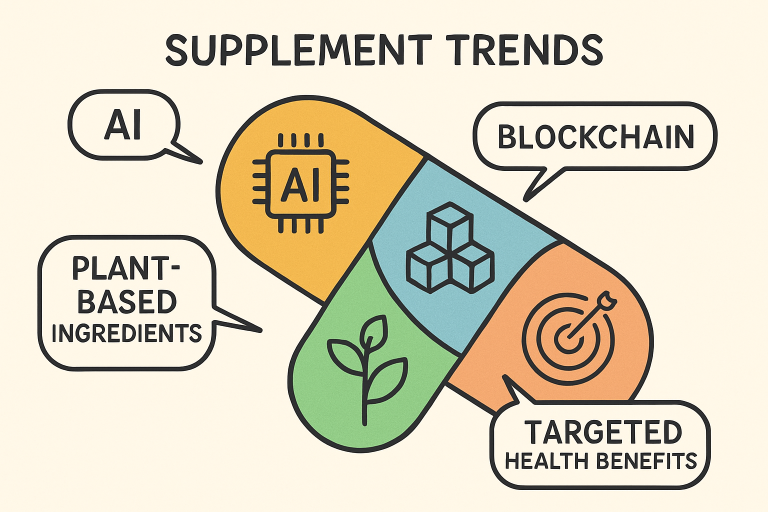
- Personalized nutrition is expanding, driven by AI and genetic testing for custom supplement formulations, offering unique benefits tailored to each consumer’s physiology.
- Demand is surging for plant-based and clean-label products, reflecting a strong consumer desire for natural, traceable ingredients that align with broader sustainability goals.
- Innovations such as blockchain and artificial intelligence are streamlining supplement manufacturing and boosting product transparency, ultimately fostering greater consumer trust.
- There is an increased focus on developing supplements for specific health needs, such as cognitive support and stress reduction, to address consumer priorities in holistic wellness.
- Market projections show significant industry growth through 2035, propelled by heightened health awareness and preventive care trends across demographic groups.
As the nutritional supplement industry continues to evolve, 2026 is shaping up to be a year of innovation and adaptation. Manufacturers are responding to shifting consumer demands for cleaner labels, personalized nutrition, and sustainable sourcing. Advances in biotechnology and formulation science are enabling brands to deliver more targeted, efficacious products while meeting heightened regulatory and quality expectations. At the same time, digital transformation is reshaping how products are developed, tested, and brought to market.
Amid these shifts, collaborations between ingredient suppliers, contract manufacturers, and research partners are becoming increasingly common. Companies are investing in scalable processes that support transparency and traceability across the supply chain, from raw materials to finished goods. A range of service providers, including https://www.makersnutrition.com/, are adapting to support this dynamic landscape, helping brands navigate complex manufacturing requirements. As the industry moves forward, the emphasis on innovation, quality, and responsiveness will continue to define success.
Personalized Nutrition Through AI and Genetic Testing
The nutritional supplement sector is undergoing a personalization revolution, enabled by advancements in artificial intelligence and consumer genomic testing. No longer do consumers settle for generic formulations; today, individuals expect more than one-size-fits-all multivitamins. Instead, consumers are turning toward customized solutions based on their genetic markers, health history, and lifestyle data. This level of detail allows for recommendations tailored to a person’s unique biology, including vitamin levels, micronutrient needs, and tendencies toward certain health conditions. AI-driven platforms streamline the analysis of this personalized data, accelerating the development of targeted supplement formulas. These technology-driven systems can process vast amounts of information and generate recommendations in real time, enabling continuous updates as users’ needs change. This move toward highly individualized nutrition fosters greater consumer loyalty and delivers better outcomes, paving the way for more innovative product lines. According to a report by DataM Intelligence, the AI in the nutraceuticals market is projected to grow from USD 1.32 billion in 2024 to USD 2.48 billion by 2032, reflecting a robust CAGR of 8.19% during 2025–2032. This surge in demand for preventive healthcare and precision nutrition is a primary catalyst shaping the supplement market’s exponential growth, attracting both startups and health giants to invest heavily in personalized wellness solutions.
Rise of Plant-Based and Clean-Label Products
Consumer demand for transparency and naturally derived ingredients continues to increase, with more people seeking products that align with their health-conscious values. Shoppers are seeking supplements made from organic, sustainably sourced, plant-based ingredients, prioritizing products free of artificial preservatives, synthetic colors, and unnecessary fillers. The popularity of vegan, non-GMO, and allergen-free supplements underscores a broader movement toward wellness products that are safe, ethically sourced, and compatible with a wider array of dietary restrictions. This clean-label trend goes hand in hand with heightened environmental awareness, compelling supplement brands to be more transparent about their ingredient sourcing and manufacturing processes. Greater scrutiny around environmental impact is not just a passing preference but an expectation, with leading brands winning trust by validating their eco-friendly claims and certifications. Today’s consumers routinely research brands and demand proof, so transparency can directly influence buying decisions.
Technological Innovations Enhancing Manufacturing
Technology is revolutionizing supplement manufacturing at every stage, from sourcing materials to packaging. Modern facilities employ advanced techniques and leverage big data analytics to enhance quality control and efficiency. Blockchain technology is increasingly used for secure, transparent tracking, lowering contamination risks and verifying product authenticity. It enables all stakeholders to trace a supplement’s journey, helping to prevent fraud and contamination. AI supports product development and testing by quickly analyzing scientific literature, consumer feedback, and predicting how formulations will perform. These technological advancements improve production processes, reduce costs, and ensure greater consistency. As Harvard’s School of Public Health emphasizes, continuous technological progress is essential for maintaining safety and quality, ultimately fostering greater consumer trust amid a competitive marketplace.
Targeted Health Solutions
The modern supplement market is witnessing a surge in interest for formulations targeting specific health issues. Consumers are seeking specific benefits, such as improved cognitive performance, better stress management, digestive support, and enhanced immune function. These targeted products often combine traditional herbal remedies with cutting-edge nutrients and delivery systems, offering a convenient way to address personal wellness goals. This has given rise to specialized categories, with adaptogens (herbs that help the body adapt to stress), probiotics, and brain health blends gaining traction. Companies are increasingly highlighting the clinical research supporting these ingredients and tailoring their messaging to resonate with consumer priorities across life stages and lifestyles. The attention to science-backed formulations and specificity in benefits is redefining what consumers expect from supplements, giving rise to a new era of functionally focused wellness products.
Market Growth and Projections
The global dietary supplement market is on a steep upward trajectory. From a market valuation of USD 203.42 billion in 2025, projections anticipate a leap to USD 430.39 billion by 2034, representing a compelling CAGR of 7.78 percent. Much of this growth is expected to come from regions such as Asia-Pacific and North America, where disposable income and health awareness are rising. Factors fueling this robust growth include rising health awareness, a commitment to preventive healthcare, and an aging population seeking to maintain optimal wellness throughout life. Increasing accessibility to supplements via e-commerce and global distribution networks is making it easier for consumers to obtain personalized health solutions. This dynamic marketplace is likely to continue innovating and expanding, presenting ample opportunities for both established and emerging brands to capitalize on these trends. Strategic partnerships and investments in research and development will become increasingly important for businesses hoping to differentiate themselves in the evolving landscape.
Conclusion
The nutritional supplement landscape is poised for significant transformation by 2026, shaped by key themes of personalization, transparency, sustainability, and technological innovation. The adoption of fast-evolving manufacturing technologies, deeper consumer research, and agile product development is likely to dictate market leaders over the next decade. Brands that swiftly adapt and invest in these trends will be best positioned to succeed in an increasingly competitive market. As consumers become more discerning and proactive about their health, the future of supplements will be defined by quality, customization, and a steadfast commitment to advancing wellness worldwide. Engaging directly with consumers, prioritizing science-backed innovation, and maintaining uncompromising standards for transparency will be the hallmarks of industry success in the years to come.

The Editorial Team at Healthcare Business Today is made up of experienced healthcare writers and editors, led by managing editor Daniel Casciato, who has over 25 years of experience in healthcare journalism. Since 1998, our team has delivered trusted, high-quality health and wellness content across numerous platforms.
Disclaimer: The content on this site is for general informational purposes only and is not intended as medical, legal, or financial advice. No content published here should be construed as a substitute for professional advice, diagnosis, or treatment. Always consult with a qualified healthcare or legal professional regarding your specific needs.
See our full disclaimer for more details.