
Key Takeaways
- Mindfulness practices can effectively reduce daily anxiety.
- Simple habits like mindful breathing and eating can be easily integrated into daily life.
- Consistent practice leads to long-term benefits in mental health.
Table of Contents
In today’s world, the rapid pace and constant stimuli can easily leave us feeling overwhelmed. Many people find that anxiety creeps into their daily lives, affecting their mood, concentration, and overall quality of life. Fortunately, practicing mindfulness can serve as an anchor, helping you reduce the impact of anxiety and foster a greater sense of peace. For anyone seeking additional support, options such as anxiety counselling Vancouver can complement your mindfulness journey and provide tailored guidance.
Mindfulness invites you to be present and attentive in each moment. When you focus on your breath, your body, or even your meal, you can disrupt cycles of anxious thoughts and redirect your attention to the here and now. This simple shift in perspective can have profound, lasting effects on your mental well-being.
There is mounting evidence supporting the use of mindfulness techniques in alleviating anxiety, lowering daily stress, and even improving sleep. These results are not only noted in clinical settings but also supported by research published by major authorities such as the American Psychological Association. Bringing mindfulness into your life can help you reconnect with the simple joys that are often overlooked in the rush of daily responsibilities.
Understanding Mindfulness
At its core, mindfulness is about paying undivided attention to the present moment, free from judgment or distraction. Whether you are eating, walking, or simply sitting quietly, being mindful means noticing your sensations, thoughts, and emotions with openness. For those seeking additional guidance, working with an anxiety therapist Vancouver can help integrate mindfulness into a structured treatment plan tailored to individual needs. There is robust scientific support for these practices, showing that even brief daily mindfulness can help reduce anxiety and promote emotional equilibrium. Recent studies, such as one discussed in The New York Times, show that just 10 minutes of daily mindfulness can boost well-being and resilience against stress.
Mindful Breathing
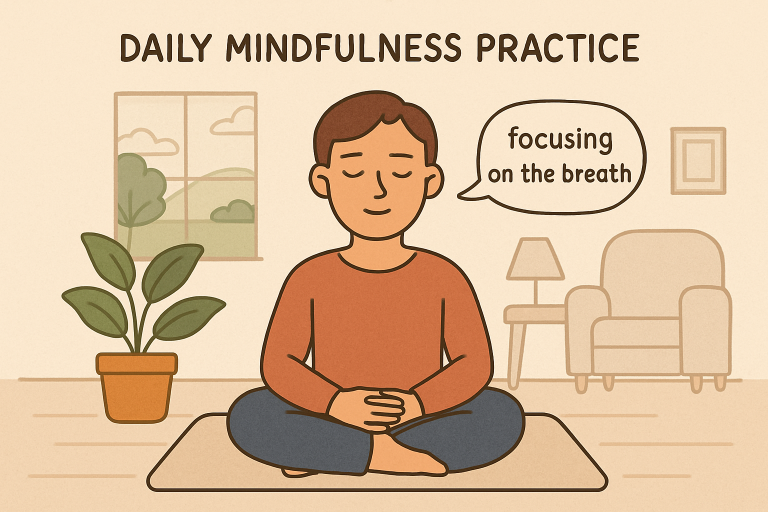
Mindful breathing is one of the most accessible forms of mindfulness, requiring no equipment and little time. Here’s a simple approach to get started:
- Find a quiet place to sit comfortably with your back straight.
- Close your eyes or lower your gaze and take a deep breath in through your nose.
- Release the breath slowly through your mouth, paying close attention to the feeling of the air moving in and out of your lungs.
- With each inhale and exhale, gently bring your attention back to your breathing whenever it wanders.
Practicing mindful breathing daily, even for five minutes, can help ground you, especially during anxious moments or times of stress. Regular practice builds a sense of calm and strengthens your ability to stay present in difficult situations.
Mindful Eating
The practice of mindful eating turns a routine daily activity into an opportunity for present-moment awareness. By eating slowly and engaging all your senses, you can build a stronger connection to your food and your body’s needs. Here are some steps to help make your meals more mindful:
- Before eating, take a moment to notice the colors, aromas, and textures of your meal.
- Chew deliberately and savor each bite, focusing on the flavors and the act of eating itself.
- Minimize distractions by keeping screens off and tuning in to your meal.
Research published in Harvard Health shows that mindful eating improves digestion, reduces overeating, and increases enjoyment of food.
Body Scan Meditation
Body scan meditation is an excellent method for increasing awareness of physical sensations and releasing tension you may not realize you’re holding. Try this sequence:
- Lie down or sit comfortably with your feet flat on the floor.
- Close your eyes and start by focusing on your toes, noticing any sensations, pressure, or warmth.
- Slowly guide your attention upward, section by section, to your feet, legs, back, chest, arms, hands, neck, and head.
- If you notice tension or discomfort, breathe into that area and visualize the tension melting away as you exhale.
Even a short daily body scan can increase body awareness and promote deep relaxation, helping you manage stress before it builds.
Mindful Walking
Walking mindfully provides an opportunity to blend movement with mental focus. Rather than hurrying, slow down and pay close attention to what it feels like as your foot touches the ground, as your muscles move, and as your arms swing. Notice your surroundings, the feel of the wind or sun, and your breathing. This simple act can refresh your mind, offering clarity and calm, especially after long periods of sitting or screen use.
Gratitude Practice
Regularly focusing on what you appreciate helps shift your mindset away from anxiety-provoking thoughts to those of abundance. Simple practices can include:
- Writing down three things you’re grateful for each day, no matter how small.
- Take a quiet moment before bed to recall positive moments from your day.
Cultivating gratitude reorients your attention toward life’s positives, helping reduce stress and support a more optimistic outlook over time.
Incorporating Mindfulness into Daily Life
You do not need large blocks of free time to benefit from mindfulness. Small shifts such as pausing for mindful breaths between tasks, practicing gratitude while brushing your teeth, or enjoying a distraction-free meal can help embed these skills into your daily rhythm. What matters most is consistency. Building mindfulness into your daily habits makes its benefits more accessible and lasting, supporting a steady foundation for mental resilience.
Final Thoughts
Incorporating mindfulness into your daily routine can be transformative for reducing anxiety and boosting your sense of well-being. Whether you find calm through mindful breathing, eating, walking, or practicing gratitude, each step helps anchor you in the present moment. In time, these habits create a mental environment where anxiety has less room to thrive, leaving you with greater focus, calm, and resilience. Should you wish for tailored support, reaching out to specialists or exploring therapy can provide additional tools for your journey. Remember, even just a few minutes a day can lay the groundwork for long-term peace of mind.

The Editorial Team at Healthcare Business Today is made up of experienced healthcare writers and editors, led by managing editor Daniel Casciato, who has over 25 years of experience in healthcare journalism. Since 1998, our team has delivered trusted, high-quality health and wellness content across numerous platforms.
Disclaimer: The content on this site is for general informational purposes only and is not intended as medical, legal, or financial advice. No content published here should be construed as a substitute for professional advice, diagnosis, or treatment. Always consult with a qualified healthcare or legal professional regarding your specific needs.
See our full disclaimer for more details.


