For decades, burn surgeons in the United States have followed largely the same playbook. While critical care, antibiotics, and wound dressings have advanced, the surgical approach to closing severe burn wounds has remained fundamentally unchanged since the late twentieth century. That reality is precisely what made Dr. Kevin Foster pause when he first encountered an autologous skin cell suspension (ASCS) known as Spray-On Skin™ Cells.
“As a burn surgeon, I was struck by how different it was from anything we had been using,” says Dr. Foster, Medical Director of the Valleywise Health Arizona Burn Center. “Burn surgery in the U.S. had not changed much in decades, so a technique that offered a new way to help these patients immediately caught my attention.”
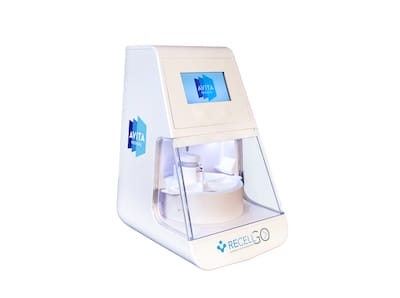
Today, Dr. Foster is recognized as one of the earliest adopters of Spray-On Skin Cells in the United States. This innovative acute wound therapy is created using a device known as RECELL®, which enables surgeons to prepare an ASCS suspension from a small sample of a patient’s own skin to promote rapid wound closure. His pioneering work, beginning years before the technology received FDA approval, has helped establish a new standard of care for patients with severe burns and complex wounds, offering a faster path to healing and recovery.
A Breakthrough at the Point of Care
Spray-On Skin Cells represent a departure from traditional graft-based burn treatment. Instead of relying solely on large sheets of harvested skin, the technology enables clinicians to create a suspension of living skin cells from a very small biopsy, prepared at the patient’s bedside and applied directly to the wound.
“The technology had already been used in Europe and in parts of Asia, but it was new to us,” Dr. Foster says. “When our center became involved in the RECELL FDA study, we immediately saw greater potential for treatment other than superficial or superficial partial-thickness burns, as the study was structured.”
Dr. Foster and his team began applying Spray-On Skin Cells over widely meshed autografts for patients with large, deep wounds—cases traditionally associated with prolonged healing times and repeated surgeries.
“Watching the wounds heal faster and without the need for additional surgeries made us realize this could change how we approach patients with severely traumatic burn injuries,” he says.

Compassionate Use Before Approval
One of the defining moments in Dr. Foster’s journey with RECELL came in 2014, years before FDA approval, when a catastrophic house explosion brought two critically injured patients to the Valleywise Health burn center.
“A young couple’s home had unknowingly filled with natural gas,” Dr. Foster recalls. “When they lit a candle, the house exploded.”
Both patients arrived with burns covering more than 50 percent of their total body surface area. Injuries of this magnitude historically carry a high risk of complications, prolonged hospitalization, and multiple reconstructive surgeries. As the surgical team prepared, a question arose: could Spray-On Skin Cells help?
“None of us knew if it would work,” Dr. Foster says. “But we knew without a doubt that it was worth a try.”
The team contacted AVITA Medical and learned that compassionate-use approval from the FDA was required. They submit the request late on a Thursday. Approval was granted the following Tuesday.
“The FDA understood the urgency and moved quickly,” he adds. “We were in the OR that same day.”
Both patients received Spray-On Skin Cells applied over widely meshed grafts and donor sites. The results exceed the team’s expectations.
“Their grafts healed faster than we expected, and their donor sites closed beautifully—they were nearly undetectable,” Dr. Foster says. “That success became a pivotal moment for our clinic.”
The Science Behind Faster Healing
Traditional skin grafting relies on large areas of donor skin harvested from one part of the body to close wounds elsewhere. This approach creates additional painful wounds and often requires multiple procedures. Spray-On Skin Cells change that dynamic.
“They allow us to use a very small piece of healthy skin to help close a much larger wound,” Dr. Foster explains. “When we spray those cells over a widely meshed autograft, they move into the open spaces between the mesh rather than leaving those areas to heal slowly from the edges.”
The same principle applies to donor sites, which are often among the most painful aspects of burn recovery.
“On average, a donor site heals in seven to ten days,” he says. “With Spray-On Skin Cells, the time is shortened by a couple of days.”
Those gains compound. Faster wound closure means fewer trips to the operating room, less risk of infection, and shorter hospital stays. Real-world data show that adults with deep partial-thickness burns treated with RECELL experience hospital stays that are approximately 36 percent shorter, about six fewer days, compared with standard grafting.
Healing Beyond the Physical
While the clinical outcomes are compelling, Dr. Foster emphasizes that the emotional and psychological benefits are just as significant.
“A burn injury is uniquely traumatic,” he says. “Most patients have acute stress reactions, and many develop symptoms of PTSD.”
Major burns often require weeks or months in the hospital, including extended ICU stays and repeated surgeries. By accelerating wound closure, Spray-On Skin Cells help shorten that experience.
“Anything that shortens the hospital stay, reduces the number of surgeries, or gets people into physical and occupational therapy sooner can have a significant impact,” Dr. Foster says. “Getting home sooner, returning to routines, and reconnecting with family all help reduce the severity of those symptoms.”
Although the psychological impact has not been formally studied, he says the clinical connection is undeniable.
Minimizing Donor Site Trauma
Reducing donor site injury is another major advantage of the technology. Patients with acute wounds often do not have enough healthy donor skin available for traditional grafting. One of RECELL’s many advantages is that a small sample, only about the size of a postage stamp, is required.
“Donor sites can be one of the most painful parts of burn surgery because you are creating a new, painful wound to treat the original one,” Dr. Foster says. “When donor sites are smaller and heal faster, patients experience less pain, a lower risk of infection, and require fewer additional skin harvests.”
That reduction directly influences a patient’s ability to move, participate in therapy, and regain independence. All are critical factors in long-term recovery.
A Patient’s Path Back to Normalcy
One patient case remains especially meaningful to Dr. Foster. A middle-aged woman from Phoenix arrived with burns covering 45 percent of her body. Her daughter is also injured, making it essential that she recover quickly enough to return home and care for her family.
“For someone with a burn of that size, we would generally expect a hospital stay of 45 to 90 days,” he says.
Instead, the team took a deliberate, coordinated approach: early resuscitation, prompt excision, and application of Spray-On Skin Cells over widely meshed grafts and donor sites.
“Our goal was to get her home as soon as we safely could,” Dr. Foster says.
She was discharged in just 30 days.
“That monumental outcome showed us what was possible when we combined disciplined burn management with this technology,” he says.
Looking Ahead
Today, Spray-On Skin Cells are a standard part of care at Valleywise Health Arizona Burn Center. Dr. Foster sees enormous potential for the technology beyond acute burn treatment.
“There is real potential for traumatic wounds, chronic wounds, and outpatient use,” he says. “Expanding access and indications would allow us to help more patients.”
For clinicians considering adoption, Dr. Foster acknowledges an initial learning curve, but encourages taking the leap.
“RECELL can look intimidating the first time you see it,” he says. “But the process is straightforward and relatively simple. After using it once or twice and seeing the results, surgeons get excited.”
A New Chapter in Burn Surgery
Reflecting on the arc of his career, Dr. Foster sees Spray-On Skin Cells as one of the most meaningful advances he has witnessed.
“Spray-On Skin Cells is the first innovation I have seen in a long time that meaningfully changes how we close wounds and how quickly patients can move into recovery,” he says. “For many patients, this offers a better way forward.”
For patients facing life-altering injuries, that change translates into fewer surgeries, shorter hospital stays, improved cosmetic outcomes, and a faster return to life beyond the burn unit.
For more information, visit avitamedical.com or valleywisehealth.org/burn.

Daniel Casciato is a seasoned healthcare writer, publisher, and product reviewer with two decades of experience. He founded Healthcare Business Today to deliver timely insights on healthcare trends, technology, and innovation. His bylines have appeared in outlets such as Cleveland Clinic’s Health Essentials, MedEsthetics Magazine, EMS World, Pittsburgh Business Times, Post-Gazette, Providence Journal, Western PA Healthcare News, and he has written for clients like the American Heart Association, Google Earth, and Southwest Airlines. Through Healthcare Business Today, Daniel continues to inform and inspire professionals across the healthcare landscape.