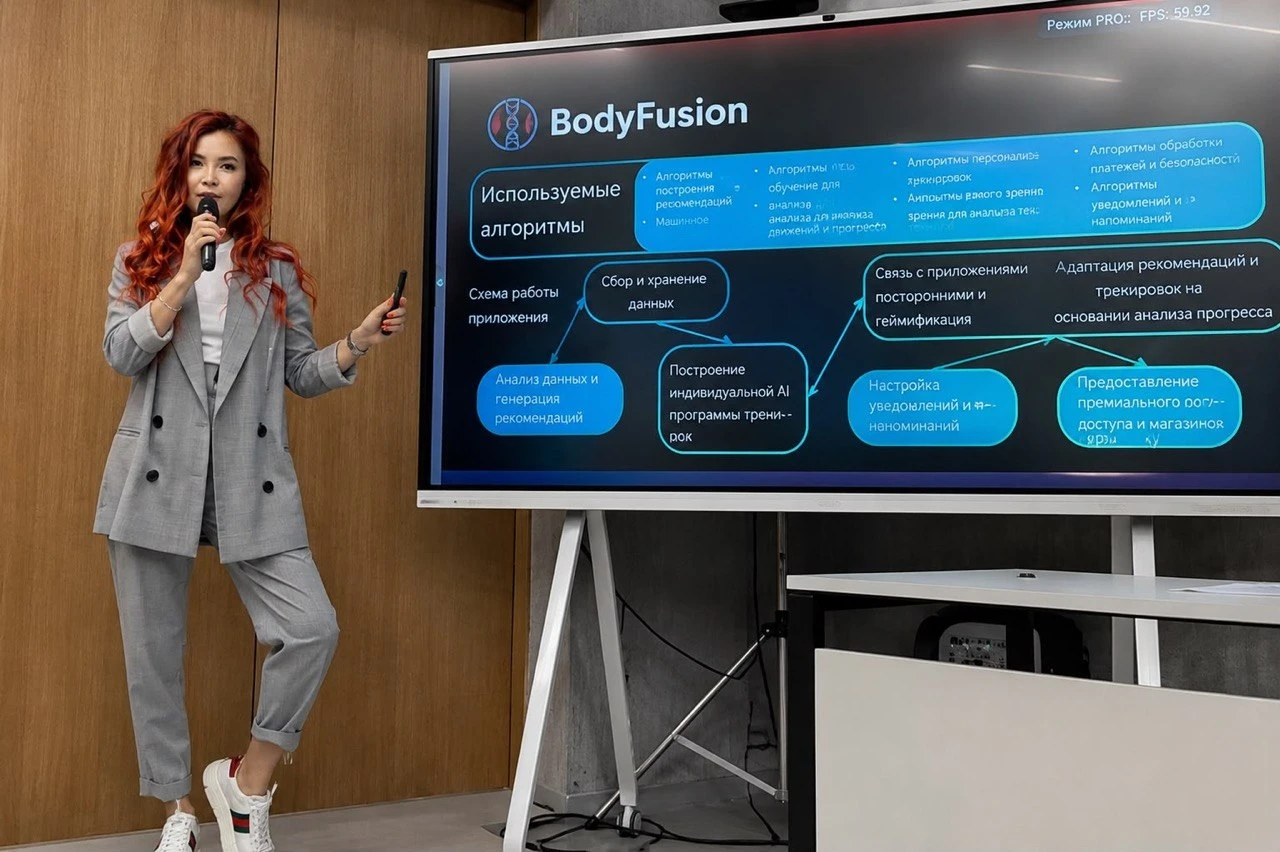
You will find that the conversation on professional AI platforms is broadening. It is no longer just about algorithms and automation; there is more talk of applied matters, in particular how technology can be put to work to help people make decisions, learn, move and come to a better understanding of their own bodies. A good example of this was on display at NextWave Awards, an international program that has been putting forward one such approach. The program is all about practical cases and the kind of interdisciplinary solutions you get when specialists from various countries put down their experience for others to share. They have strict rules for the event: master classes are run in a non-commercial vein with no room for direct advertising of products. Instead, the focus is on what is real and tangible – case studies, Q&A, actual projects and the conclusions you can draw from them.
We have put a good deal of emphasis on projects that sit at the crossroads of AI, education and wellness, not to mention body-oriented practices. You will find these kinds of subjects covered under multiple headings in the NextWave Awards rules – Science, Art, Education as well as Healthy Lifestyle & Sport. The scope is broad enough to encompass EdTech and digital learning, sports psychology, somatic work or even the use of AI in the creative sector. Then there is BodyFusion, which is right in line with what we are looking for. It is an educational and wellness platform built around movement analysis, dance and giving personalized feedback. At its heart is an idea that poses a question of growing importance to the likes of digital health and EdTech: can you really harness artificial intelligence to make movement something more conscious and accessible to the masses?
BodyFusion approaches movement as an educational process in its own right, not merely a form of physical exertion. It is more than the user simply going through the motions of an exercise or dance routine on a video; they are able to scrutinize what they are doing and see where they need to make changes, all while keeping tabs on their progress. You could say this is vital for online learning given the lack of a coach or teacher to offer instant feedback.
To that end, the project makes use of the AI Dance Motion Scanner, LED tech and intelligent motion analytics. These are the kinds of tools that allow you to put movement under the microscope, provide visual cues and tailor the training to the individual. In her speech materials, Rebecca Surtay puts it plainly: she has been developing a mobile app with these very technologies at her disposal. For the wellness and healthcare sector, projects like this have appeal, though not as a substitute for medical staff so much as one piece of a larger preventive infrastructure. You will find plenty of digital health solutions out there trying to solve the same conundrum of how to get people to stay active. There are your apps, videos and courses, but the hard part for the user is often knowing if they are really making headway or even moving with the right form.
You could argue that this is the sort of thing movement analytics is for. When a system is able to spot and correct errors, give you a hint or two and adjust to the level of difficulty, it makes what would be a routine dance lesson or workout far more engaging. And there is no reason to limit this kind of interactivity to dance; the same approach has its place in wellness programs, school activities, educational initiatives and even for adult users – anywhere you need to work on posture, rhythm and body awareness.
There is a wider trend at play behind the appeal of these solutions. Digital health is slowly making inroads into areas outside of clinical medicine, with a greater focus on the things that matter in day-to-day life: your habits, motivation, emotional state and so on. Take BodyFusion for instance. It is a project that marries technology with human-centered design, employing artificial intelligence not as a substitute for the human element but to give people a better grasp of how they move.
What you will find with projects like this is interdisciplinary that puts them at the crossroads of AI, the creative industries, behavioral health, education and wellness. It is a format that fits right in with the NextWave Awards, where master classes are put together from practical cases and cross-industry thinking, offering solutions that can be made to work in any market.
You could say Rebecca Surtay’s role in the NextWave Awards program is a case in point for how the professional conversation on artificial intelligence is no longer confined to a strictly technical agenda. Take her master class, for instance: billed as an examination of the human side of AI in B2B projects, it drew in a crowd from 20 nations – we had people from the USA and China, but also Great Britain, South Korea, Singapore, Canada, Turkey and India. The room was full of corporate executives and university types alongside B2B project heads and AI integration specialists.
While the workshop was meant to be about forecasting and the like, what transpired was a wider point being made: that any technology is only as good as its ability to accommodate human behaviour. That is the very premise of BodyFusion. You can have all the algorithm you want, but without motion analysis, feedback and the right kind of user engagement, it means little.
For the healthcare market these are interesting ventures because they fit into a prevention ecosystem for the future. They are not putting themselves forward as medical treatments per se, yet they encourage an active way of life and better coordination. In a climate where the system is turning its attention to curbing behavioral risks, there is room for them to sit somewhere between digital fitness, EdTech and wellness.
Although BodyFusion is positioned outside clinical treatment, it reflects a broader preventive-health direction in which AI is used to support daily movement, coordination and body awareness. How do you use AI to put some personalization into movement or make a wellness program more open to everyone? Projects like this are proof that the future of AI in health has to do with a person’s day to day experience of learning and moving, not just data and projections.

Meet Abby, a passionate health product reviewer with years of experience in the field. Abby's love for health and wellness started at a young age, and she has made it her life mission to find the best products to help people achieve optimal health. She has a Bachelor's degree in Nutrition and Dietetics and has worked in various health institutions as a Nutritionist.
Her expertise in the field has made her a trusted voice in the health community. She regularly writes product reviews and provides nutrition tips, and advice that helps her followers make informed decisions about their health. In her free time, Abby enjoys exploring new hiking trails and trying new recipes in her kitchen to support her healthy lifestyle.
Please note: This article is for informational purposes only and does not constitute medical, legal, or financial advice. Always consult a qualified professional before making any decisions based on this content. See our full disclaimer for more information.