
Healthcare burnout has become one of the defining crises of our time. According to the American Medical Association’s 2025 report on physician burnout, 43.2% of U.S. physicians reported at least one symptom of burnout in 2024. The cost to the U.S. health system? An estimated $4.6 billion annually. But here’s something that might surprise you: the solution emerging from this crisis isn’t just about reducing workload or increasing pay. It’s about recognition, coordination, and ensuring no one carries the burden of care alone. And one young founder is leading the charge with AI.
The Personal Story Behind the Mission
Johar Singh didn’t stumble into healthcare technology by accident. He grew up watching his mother, a frontline ICU physician, endure demanding overnight shifts while caring for patients in life-or-death moments. When the pandemic hit, he saw firsthand what burnout really looks like.
“Growing up, hearing what she had to say, especially during the pandemic, you know, hearing the amount of burnout, stress, turnover that both her and all of her staff faced was something that has always stuck with me,” Singh explains.
That experience planted a seed. What Singh discovered through hundreds of conversations with healthcare workers wasn’t what you might expect. The thing that kept them going wasn’t parties, awards from management, or even pay increases. It was something far more fundamental: knowing they were making a real impact on patients’ lives. The problem? There was no efficient way for frontline staff to actually see that impact.
Singh wasn’t alone in this realization. During his freshman year at Boston University, he met Josh Bruehwiler, Taha Moukara, and, later, Richard Buehling in a healthcare class that exposed them to the burnout crisis. All were drawn together by deeply personal connections to healthcare and a shared drive to innovate and make a lasting change.
“We all shared our own stories, which had such personal ties to the industry, that we sat at our school’s dining hall for hours sharing them,” the team later recalled.
From Startup Success to Leading HomeTeams
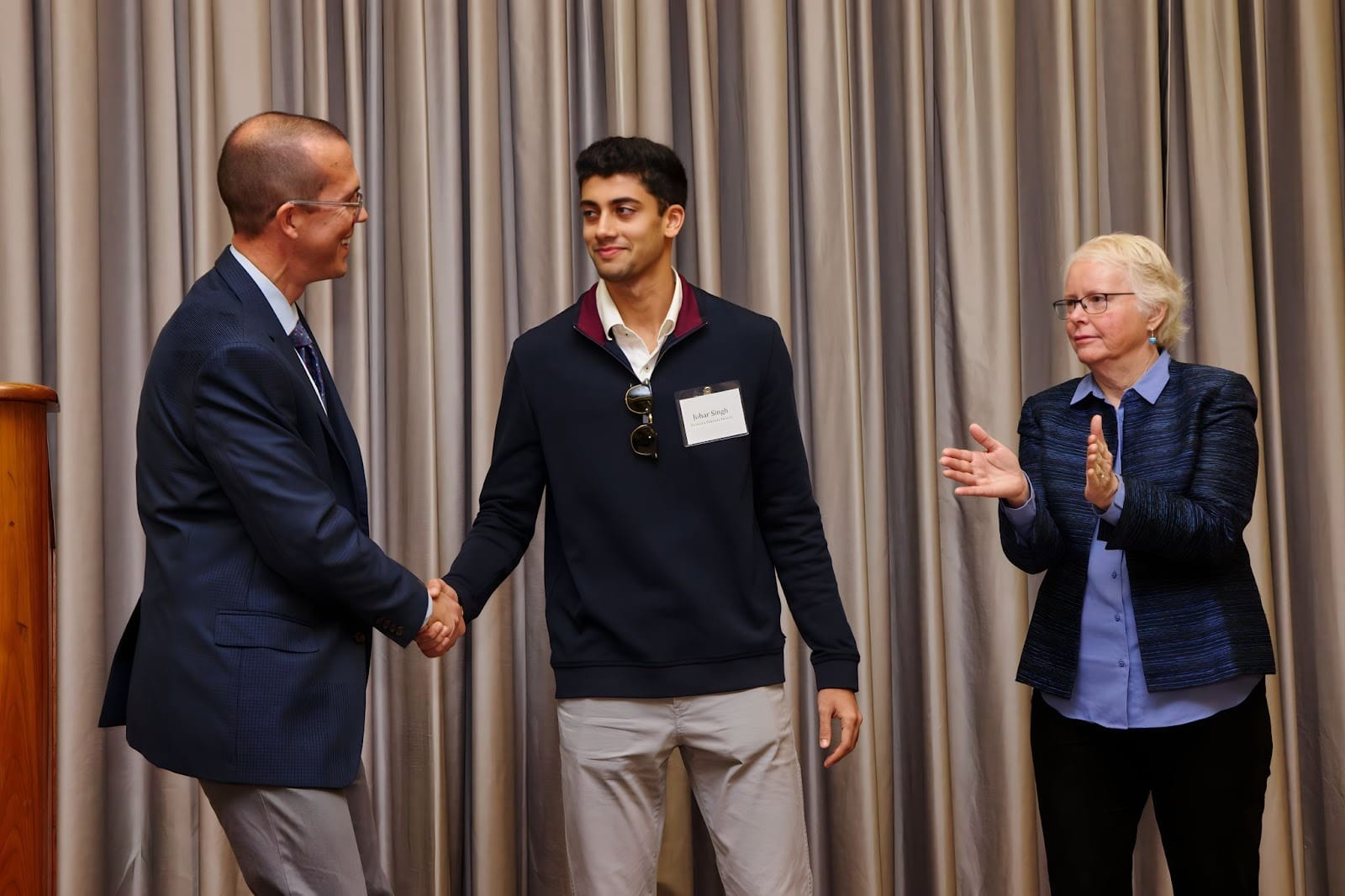
Singh, now recognized on Boston Business Journal’s 25 Under 25 list and a top graduate from Boston University’s Questrom School of Business, temporarily dropped out of college to build Astra Wellbeing, an AI-powered recognition platform backed by the MA Health & Hospital Association. He and his co-founders spent their hours before and after classes conducting comprehensive independent research, taking the MBTA to Boston hospitals, and traveling to healthcare employee experience conferences around the nation on weekends. They conducted over 150 employee interviews and developed prototypes that launched at Boston-area hospitals.
The results validated their approach. In a case study at two hospitals, patients, families, and peers exchanged over 3,000 messages of recognition within 90 days. Eighty percent of respondents reported feeling meaningfully recognized, and the hospitals saw an estimated 5% decrease in employees’ intent to leave, double the industry goal for 2024.
The company went on to win more than five startup competitions nationwide, securing over six figures in non-dilutive prize funding. Astra Wellbeing was named a Top 20 team worldwide in the 2024 Microsoft Imagine Cup, a global competition recognizing AI-powered startups with the potential to transform industries. Poets & Quants named it among the 2023 Most Disruptive Business School Startups. The team completed accelerator programs at MassChallenge and Microsoft for Startups Founders Hub.
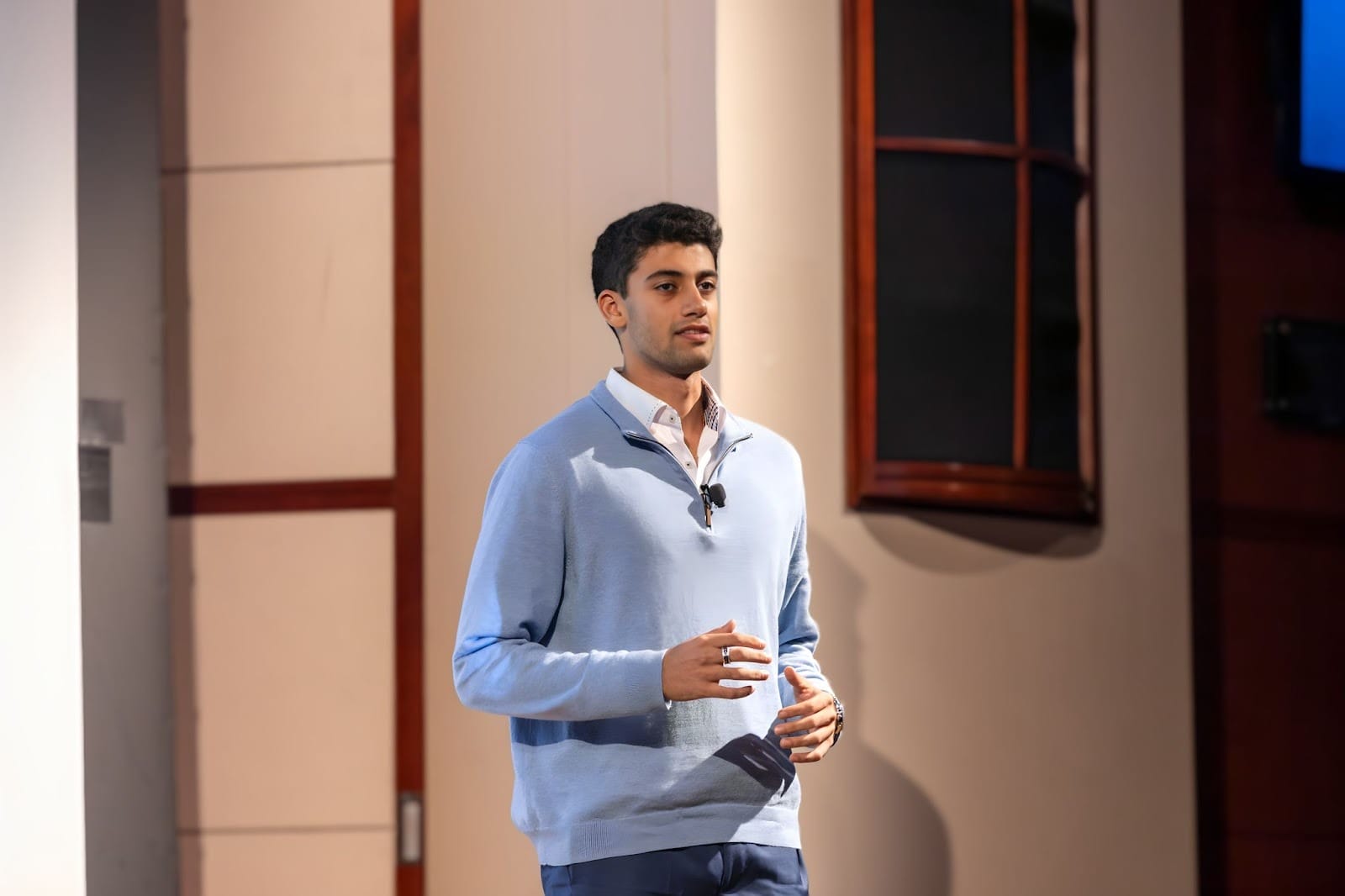
Singh represented Astra Wellbeing at the Global Student Entrepreneur Awards, finishing second in Massachusetts, and served as an opening speaker at Boston University’s annual IdeaCon, addressing 2,000 attendees. All three co-founders landed on Boston Business Journal’s 25 Under 25 list.
As his co-founders pursued highly esteemed roles across finance and technology, Singh remained full-time, continuing to build Astra Wellbeing through its earliest stages. That focus led to a milestone that turned heads across the industry: the Massachusetts Health and Hospital Association’s first-ever investment in a private company. Over the following two years, Astra continued to build momentum, securing major partnerships with industry leaders and establishing itself as a credible force in healthcare innovation.
Getting a startup into hospital systems typically takes five years or more. Singh did it while still finishing his degree.
That success caught the attention of HomeTeams, a revolutionary team-based care coordination platform developed by Brae Applications. In Q1 2026, HomeTeams acquired Astra Wellbeing in a seven-figure transaction, and Singh came on board as President, bringing his healthcare technology expertise, hospital relationships, and AI development experience to an even larger mission.
What Makes HomeTeams Different
HomeTeams addresses a fundamental truth that Singh’s research confirmed: no one should carry the burden of care alone. The platform transforms how families, friends, and health professionals coordinate care together through a single, unified application.
The problems HomeTeams solves are ones most caregivers know intimately. Updates are scattered across group texts, where someone always misses something. Schedules are living in different places, so appointments slip through the cracks. People who want to help but don’t know how, when, or what to do.
HomeTeams brings everything into one place. Users can invite unlimited teammates for free, whether that’s family members, friends, neighbors, or healthcare professionals. The platform allows teams to assign actions, share resources like therapy videos and care instructions, and communicate through a centralized team chat. For families coordinating care for aging parents, managing surgery recovery, or supporting loved ones through illness, it transforms chaos into clarity.
Singh’s Role in Shaping the Platform
As President, Singh’s first major task was product development, and he approached it with the same philosophy that drove Astra Wellbeing’s success.
“One of the biggest things coming on right away was trying to navigate all these different types of modern tools and different ideas we had and saying, how can we actually streamline this into one application,” Singh explains. “Really shaping how technology and modern AI can make the case for helping coordinate and save lives.”
Singh’s background makes him uniquely qualified for this work. He conducted comprehensive research on AI development to mitigate healthcare administrative burdens with Microsoft Healthcare. He held product management roles at UnitedHealth Group, where he contributed to the Rewards Marketplace App, and at Stryker, where he applied financial analysis to improve patient and hospital outcomes. He co-authored two internationally published research manuscripts on patient health outcomes with his mother, who now leads research initiatives at UW Health.
Singh maintains relationships with leaders like Dr. David Rhew, Microsoft’s Global Chief Medical Officer, bringing enterprise-level healthcare technology insights to HomeTeams’ development.
The results of this focused product development will launch in early 2025, with a unified application that Singh says the entire team is excited about.
Why Care Coordination Matters for Burnout
The connection between platforms like HomeTeams and healthcare worker burnout might not be immediately obvious, but it’s profound. A KLAS Arch Collaborative report found that 56% of physicians and 65% of nurses cite staffing shortages as a top burnout contributor. When professional caregivers are stretched thin, family and community support networks become essential.
HomeTeams enables what the platform calls “team-based care,” allowing professional healthcare workers to extend their impact by empowering the patient’s broader support network. When a physical therapist can upload exercise videos to a patient’s HomeTeams resource library and family members can ensure those exercises are done correctly between appointments, outcomes improve, and professional caregivers aren’t carrying everything alone.
What Healthcare Leaders Can Take Away
For healthcare administrators grappling with burnout, Singh’s journey from Astra Wellbeing to HomeTeams offers a different lens. Yes, staffing and workload matter. But so does meaning. So does coordination. So does ensuring that care extends beyond the clinical setting in organized, effective ways.
Singh puts it simply: coming from a family of physicians, he has grown up witnessing the impact that technology can have in the healthcare field. His aspiration is to spend his career leveraging emerging technologies to help solve the most significant healthcare challenges of today’s world.
That challenge, right now, is keeping our healthcare workers healthy enough to keep the rest of us healthy. And platforms like HomeTeams, with leadership like Singh’s, might just be part of the answer.To learn more about HomeTeams, download the app and visit their website.

Meet Abby, a passionate health product reviewer with years of experience in the field. Abby's love for health and wellness started at a young age, and she has made it her life mission to find the best products to help people achieve optimal health. She has a Bachelor's degree in Nutrition and Dietetics and has worked in various health institutions as a Nutritionist.
Her expertise in the field has made her a trusted voice in the health community. She regularly writes product reviews and provides nutrition tips, and advice that helps her followers make informed decisions about their health. In her free time, Abby enjoys exploring new hiking trails and trying new recipes in her kitchen to support her healthy lifestyle.
Please note: This article is for informational purposes only and does not constitute medical, legal, or financial advice. Always consult a qualified professional before making any decisions based on this content. See our full disclaimer for more information.