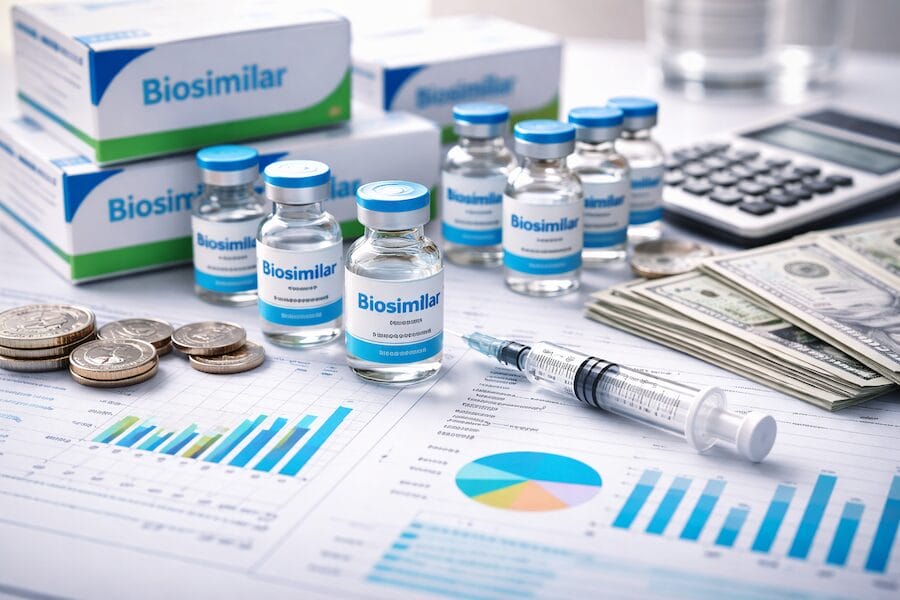
Biosimilars are more often viewed as next major lever for reducing healthcare costs and expanding patient access to life-savings therapies. As biologics keep on dictating the pharmaceutical expenditure in the world, stakeholders have sought to explore more on biosimilars as an alternative to dealing with the long-term affordability challenges. Nevertheless, in spite of the solid scientific backgrounds and regulatory backing, the business success of biosimilars is not uniform – not due to sole reliance on science, but due to the financial issues that come with them.
The Growing Market Opportunity
The market for biosimilars has been growing fast in last decade. Global biosimilars market revenues are projected at approximately USD 39.6 billion in 2025 and is expected to exceed USD 150 billion in 2033, which reflects approximately 18% yearly growth rates in most regions.
Other analysts paint a similar picture of acceleration: reports indicate that the market may grow to almost triple its size today of billions in just the next decade, possibly to well over USD 110-210 billion, as more patents expire, more people contract chronic diseases, and broader payer support.
In the United States alone, the biosimilars segment is expected to grow from around USD 22.6 billion in 2025 to more than USD 93 billion by 2034, underscoring the scale of adoption in the highest-spending healthcare market in the world.
These figures reflect not only the economic footprint of biosimilars, but also the investment in production capabilities, clinical development, and market access efforts required to sustain long-run growth. The scale of this market demonstrates why biosimilars are rapidly becoming central to healthcare cost containment strategies — and why financial planning is essential to realize that potential.
Why Biosimilars Are Financially Different
Biosimilars are costly to invest in compared to small-molecule generics because they need a significant amount of investment even before revenue can be generated. The cost of development of biosimilars can easily reach tens to hundreds of millions of dollars per asset, based on complexity and market pathway. Even well-established biosimilar firms have raised billions in capital to expand their manufacturing, clinical comparability study, and regulatory filings.
Time horizon makes the difficulty more complicated. A biosimilar program may take many years to go through initial development, approval and market adoption, tying up capital and incurring money in fixed costs like quality systems, facilities, regulatory compliance and medical affairs. All these will result in a very different cash-flow profile compared to traditional small-molecule generics, in which development cycles are shorter and costs are lower.
Pricing Pressure Versus Margin Sustainability
The general belief is that biosimilars can perform well primarily due to aggressive price-cutting. The reality is that pricing does not ensure sustainable returns. Biosimilars typically achieve price reductions of 20–50% off originator biologic costs — lower than small-molecule generics — due to the complexity of manufacturing and regulatory requirements. The finance leaders thus need to find the balance between price competitiveness and margin maintenance, recognizing that too steep a discount can undermine the very goal of long-term sustainability. Strategic pricing, that reflects real production and market access costs is essential for sustained investment and capacity expansion.
Manufacturing Scale and Supply Chain Risk
Manufacturing risks directly affect financial outcomes in biosimilars. Variability in product yield, supply chain disruptions, and regulatory setbacks can materially affect unit costs and working capital. Unlike chemical synthesis, bioprocesses require tight control environments, long lead times for batches, and specialized talent and technology — all of which increase fixed and variable costs.
Financial strategy becomes essential in decisions about capacity build-out, contract manufacturing partnerships, inventory hedging, and geographic diversification. Missteps in any of these areas can quickly erode projected returns, making financial oversight a core competency rather than a back-office function.
Market Access: The Hidden Cost Driver
Biosimilars continue to experience head winds in the areas of physician prescribing habits, payer reimbursement, and patient acceptance even following regulatory approval, which affect both market uptake and sales pace.
Late access or rejection lowers the payback period for investors and sponsors, making multi-scenario financial modelling and risk-adjusted projections critical. Under different uptake scenarios, finance teams will have the ability to stress-test pipelines and develop resilient strategies to absorb the uncertainty in the market instead of it overwhelming them.
The Strategic Role of Finance Leadership
As the biosimilars market expands, the role of finance leaders has evolved from traditional budgeting to strategic decision support. Today’s finance teams influence:
- Program prioritization and capital allocation
- Pricing strategy and payer engagement economics
- Cost modeling under regulatory and competitive uncertainty
- Cross-functional governance between R&D, commercial, and supply organizations
In essence, financial leadership binds scientific innovation with market reality — shaping portfolio decisions that determine whether biosimilars deliver both value and sustainable returns.
Looking Ahead: Discipline Defines the Winners
Biosimilars will remain a cornerstone of global healthcare strategy. Forecasts that show market size doubling or tripling over the next decade reflect both unmet need and enterprise investment appetite. However, as commercial scale increases, disciplined financial strategy will increasingly separate long-term winners from short-lived entrants.
Organizations that recognize the financial subtleties of biosimilars — from development cost recovery to pricing and access economics — will secure sustainable growth. In this landscape, finance leadership is not just a support function; it is a central driver of commercial and strategic success.

Amber Hussain Siddique
Amber Hussain Siddique is a senior finance leader currently serving as Director of Finance at Dr. Reddy’s Laboratories. With over eight years of experience in the pharmaceutical industry, he specializes in financial strategy, cost optimization, supply-chain governance, and value creation across global markets. He has led multi-million-dollar cost transformation and risk-mitigation initiatives supporting affordable access to critical medicines. His thought leadership focuses on the intersection of finance, biosimilars, AI-driven operations, and long-term healthcare sustainability.