There is a problem in orthopedic surgery that has persisted since the first joint replacement was performed. The implant comes in sizes. The patient does not. Surgeons select from a catalog of standardized devices, choosing the closest match to the anatomy they encounter. When the match is close enough, outcomes are acceptable. When anatomical complexity exceeds what standard sizes can accommodate, surgeons improvise, patients compromise, and outcomes suffer. This limitation has defined orthopedic surgery for decades. Additive manufacturing is eliminating it entirely.
The technological shift is fundamental. Traditional orthopedic implants are manufactured through subtractive processes: metal is cast, forged, or machined into predetermined shapes. The economics of this approach demand standardization. Creating custom tooling for individual patients is prohibitively expensive. The result is a finite catalog of sizes that surgeons must make work regardless of patient-specific anatomy. Additive Orthopaedics represents the alternative: implants built layer by layer through 3D printing, where customization costs no more than standardization and patient-specific design becomes the default rather than the exception.
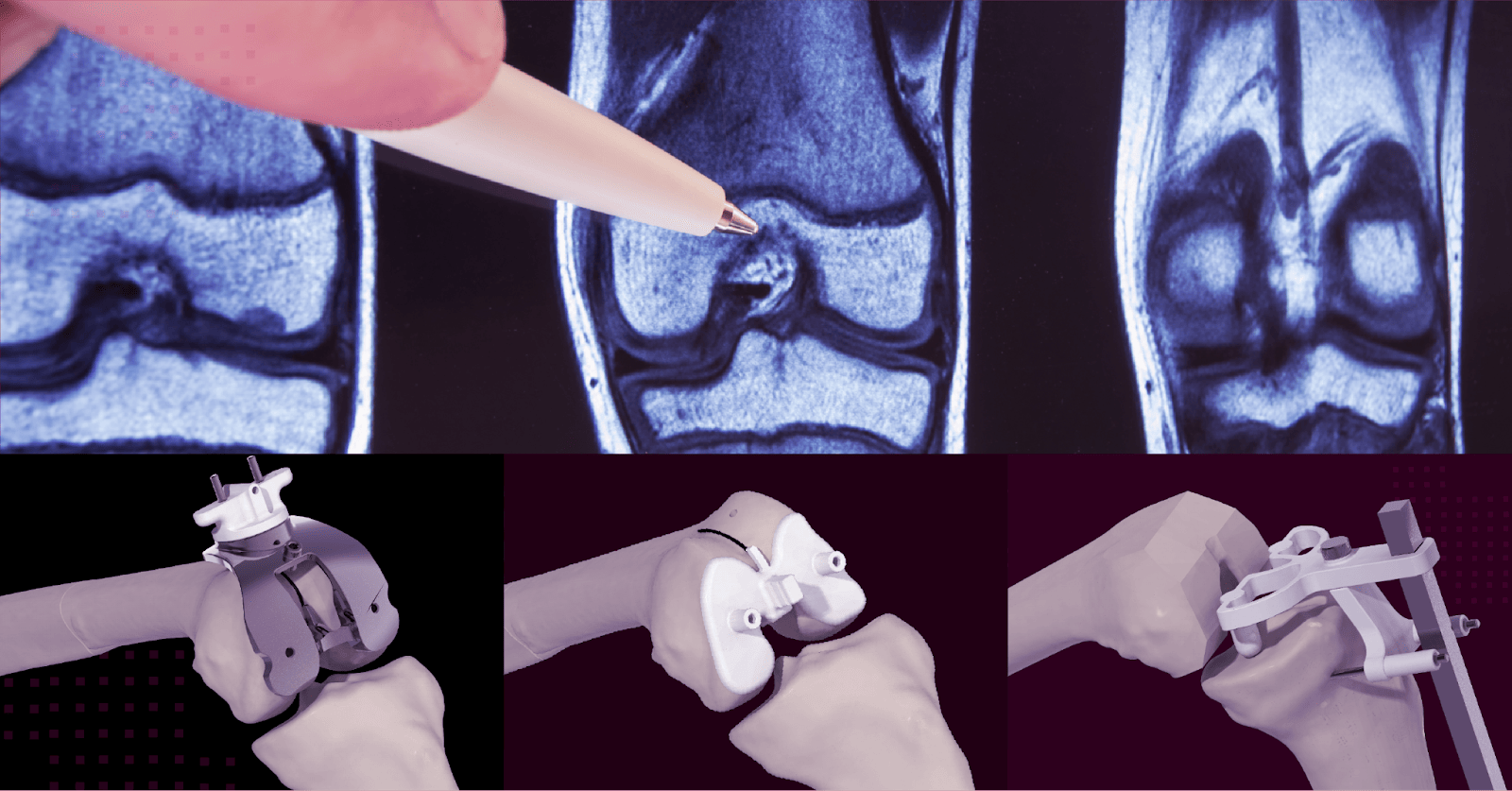
The patient-specific workflow begins with imaging. A CT scan captures the patient’s anatomy in three-dimensional detail. The data flows to engineering teams who design an implant matched precisely to the defect being addressed. The design is printed in biocompatible titanium, inspected, sterilized, and delivered to the operating room. The implant that arrives fits because it was designed to fit. The surgeon adapts technique to anatomy rather than forcing anatomy to accept a device that was never designed for that specific patient.
The 3D-printed implant technology enables geometries that traditional manufacturing cannot produce. Lattice structures with precisely controlled porosity allow bone to grow into the implant rather than merely around it. The research on lattice density and osseointegration demonstrates how these structures can be optimized for biological integration, creating implant-bone interfaces that more closely resemble natural anatomy than solid metal surfaces ever could. The technology does not just enable customization. It enables entirely new approaches to how implants interact with the body.
The clinical applications demonstrate where this capability produces the greatest impact. Total talus replacement addresses avascular necrosis of the ankle, a condition where the talus bone loses blood supply and collapses. Traditional options were limited: fusion that eliminated joint motion or amputation in severe cases. A patient-specific 3D-printed talus, matched to the individual’s anatomy and designed for osseointegration, offers a third path. The joint is preserved. Function is restored. The implant that made it possible did not exist until that patient needed it.
The acetabular revision system addresses a different challenge: hip replacement revision surgery where bone loss has created defects that standard components cannot span. The surgeon facing massive acetabular bone loss historically had limited options, none ideal. A patient-specific implant designed from CT imaging to address the exact geometry of the defect changes the surgical calculus entirely. What was previously a compromise becomes a solution.
Segmental bone reconstruction extends the approach to replacing entire sections of damaged bone. Tumor resection, trauma, or infection can leave defects too large for conventional techniques. The traditional approach involved bone grafting with uncertain outcomes or amputation when defects exceeded reconstructive capability. 3D-printed segments, matched to patient anatomy and designed for integration, offer reconstruction pathways that did not previously exist.
The technology platform underlying these applications continues to evolve. Material science advances produce alloys optimized for biological integration. Design software incorporates machine learning to predict optimal lattice structures for specific loading conditions. Quality control systems verify dimensional accuracy and material properties with precision that manual inspection cannot match. The technology stack that enables patient-specific implants improves with each generation.
The clinical evidence tracking outcomes from these implants is building the dataset that adoption requires. Multi-center studies measure bone in-growth, implant performance, and patient outcomes across applications. The Clinical Pulse provides ongoing updates as data accumulates. Surgeons evaluating whether to adopt these technologies can assess evidence rather than relying on theoretical promise alone.
The orthopedic implant that did not exist until the patient needed it sounds like science fiction. It is now clinical reality. Additive manufacturing has transformed the fundamental constraint that limited orthopedic surgery since its inception. The patient no longer adapts to the implant. The implant adapts to the patient. The technology has arrived. The transformation is underway.

Meet Abby, a passionate health product reviewer with years of experience in the field. Abby's love for health and wellness started at a young age, and she has made it her life mission to find the best products to help people achieve optimal health. She has a Bachelor's degree in Nutrition and Dietetics and has worked in various health institutions as a Nutritionist.
Her expertise in the field has made her a trusted voice in the health community. She regularly writes product reviews and provides nutrition tips, and advice that helps her followers make informed decisions about their health. In her free time, Abby enjoys exploring new hiking trails and trying new recipes in her kitchen to support her healthy lifestyle.
Please note: This article is for informational purposes only and does not constitute medical, legal, or financial advice. Always consult a qualified professional before making any decisions based on this content. See our full disclaimer for more information.